Ecommerce Email Marketing Agency
Flows that recover carts, campaigns that read like a person wrote them, and reporting on revenue rather than opens. Senior team, hourly pricing, no lock-ins.
What an Ecommerce Email Marketing Agency Actually Does
An ecommerce email marketing agency plans, builds and runs the email program for an online store: the automated flows that recover abandoned carts and welcome new subscribers, and the campaigns that bring customers back to buy again. The measure of success is revenue you can attribute to email, not open rates on a slide.
Email earns its keep because it is the one channel a store actually owns. Ad platforms rent you an audience and raise the price every year. Your list is yours, and mailing it costs a fraction of what re-acquiring the same customer through ads does.
Most stores we talk to are not starting from zero. They have a platform account someone set up during launch week, one dusty welcome email, and a campaign that goes out whenever someone remembers. The fix is rarely exotic: a small set of flows built properly, a realistic campaign cadence, and reporting that tells the truth.
We do this work alongside ecommerce website development, so tracking, product feeds and signup forms get built into the store rather than bolted on afterward. If your list has been ignored for a year, that is normal, and it is fixable.
Every engagement ships with these as a baseline.
Welcome, cart and post-purchase flows
Campaign planning, copy and design
Segmentation and list hygiene
SPF, DKIM and DMARC deliverability setup
Revenue-per-email reporting
Platform advice matched to your store
A four-phase build, milestones not timesheets.
Senior operators, weekly demos, no junior bench, no surprise change orders.
Diagnose
A 5-day audit of your stack, funnel and goals. You leave with a one-page report ranking the three highest-ROI moves to ship next.
- Audit report
- Priority roadmap
- 30-min walkthrough
Design
We map the system end-to-end before writing a line of code, lead capture, qualification, hand-off, fulfilment, reporting.
- System architecture
- Integration plan
- KPI definition
Build
Senior operators ship against milestone-based pricing, weekly demos, no surprise change orders. The work goes live.
- Production launch
- Documentation
- Team handover
Scale
Monthly improvement sprint, conversion tests, automation tuning, reporting against KPIs that move the business.
- Optimisation cycles
- Monthly reporting
- Continuous improvement
What's Included in the Email Program
The scope below is the standard buildout. We cut or extend it based on what your store already has in place.
Flow buildout
Welcome series, abandoned cart and post-purchase sequences first. Browse abandonment and win-back flows come once the core three are live and measured. Each flow ships with copy, design and trigger logic tested end to end.
Campaigns
A monthly calendar tied to your inventory and margins, not a fixed quota of sends. Product launches, seasonal pushes, and plain-text notes that sound like a person wrote them.
Segmentation
Buyers versus browsers, recent versus lapsed, high-value versus one-time. Fewer, better-targeted sends protect your sender reputation and your unsubscribe rate.
Deliverability
SPF, DKIM and DMARC configured, sending domain warmed up, list hygiene enforced. None of the rest matters if you land in spam.
Reporting
Revenue per email, flow performance and list growth in a monthly report. Where email needs to hand off to back-office systems (order tagging, support tickets, inventory alerts), we wire that up as part of our workflow automation work.
What Is Klaviyo, and Is It the Right Platform?
Klaviyo is an email and SMS platform built specifically for ecommerce. It syncs with Shopify and WooCommerce, tracks what each customer views and buys, and uses that history to trigger flows and build segments. That data model is why it dominates the store email conversation.
Is Klaviyo a CRM? Not really. It keeps rich customer profiles, so it overlaps with CRM territory, but it has no sales pipeline, deal stages or rep workflows. It is a marketing tool that knows a lot about your customers.
Does every store need it? No. Klaviyo’s pricing scales with list size, and a small store on a simpler platform can get most of the value at lower cost. Our recommendation is based on your store’s platform, list size and plans.
Our default advice: if you sell on Shopify or WooCommerce and email is going to be a serious channel, Klaviyo is usually the safe pick. If you are still testing the waters, start with the platform you already pay for, build the core flows, and migrate when the tool becomes the bottleneck rather than the to-do list.
Does Email Work for B2B Too?
Yes, but it is a different job. Ecommerce email optimizes for transactions: carts, repeat purchases, order value. B2B email marketing optimizes for conversations: a lead downloads something, gets a short nurture sequence, and lands in a pipeline where a human follows up.
We build both. For B2B clients the flows are lead nurture and onboarding sequences rather than cart recovery, and the list usually lives next to a sales pipeline. That is where email meets CRM implementation: the two systems need to agree on who a contact is, what stage they are in, and who is allowed to email them.
The honest caveat: B2B lists are smaller and results arrive slower. A 900-person list of the right buyers beats a 20,000-person list of nobody in particular, but it will never produce ecommerce-style dashboards. If a vendor is promising you store-like numbers from a B2B list, ask them how.
If your business sells to both consumers and businesses, we separate the audiences and the sending logic so one program’s behavior never drags down the other’s deliverability.
How Much Do Email Marketing Agencies Charge?
An ecommerce email marketing agency typically charges one of three ways: a monthly retainer, a percentage of email-attributed revenue, or hourly. Retainers tend to hide the scope, and revenue percentages give the agency a reason to over-mail your list. We bill hourly at $40-95 depending on who does the work, with scoped builds priced as fixed milestone projects.
In practice that looks like an initial flow buildout scoped as a fixed project (automation builds start at $750 each), then ongoing campaign and optimization work billed hourly against a monthly cap you approve up front. You see the hours. Nothing renews silently.
What moves the price: how many flows you need, whether your platform is already set up or needs a migration, how much design your brand requires, and whether SMS rides along. A store that needs three flows and two campaigns a month is a very different scope from one running full lifecycle marketing.
Full rates for everything we do are on the pricing page. Every engagement starts with a written proposal within 3 business days, priced by milestone, and typical projects ship in 4 to 12 weeks.
Who You're Hiring
Lumien is a senior-only team: 15+ years of combined experience, 60+ projects shipped, and no junior bench learning on your account. Email is one part of a stack we build end to end, which matters because email programs fail at the seams (tracking, product data, signup forms) more often than in the copy.
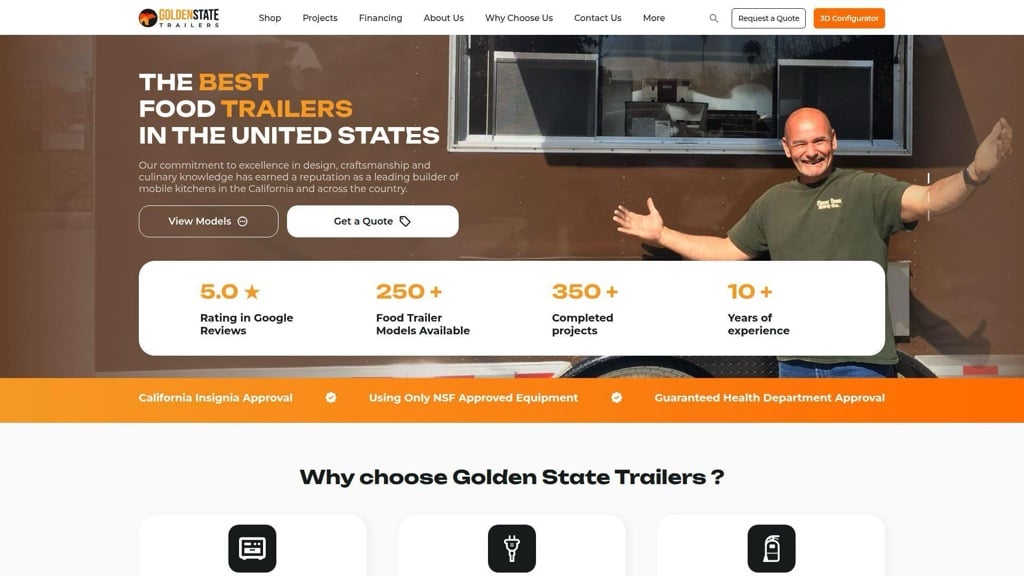
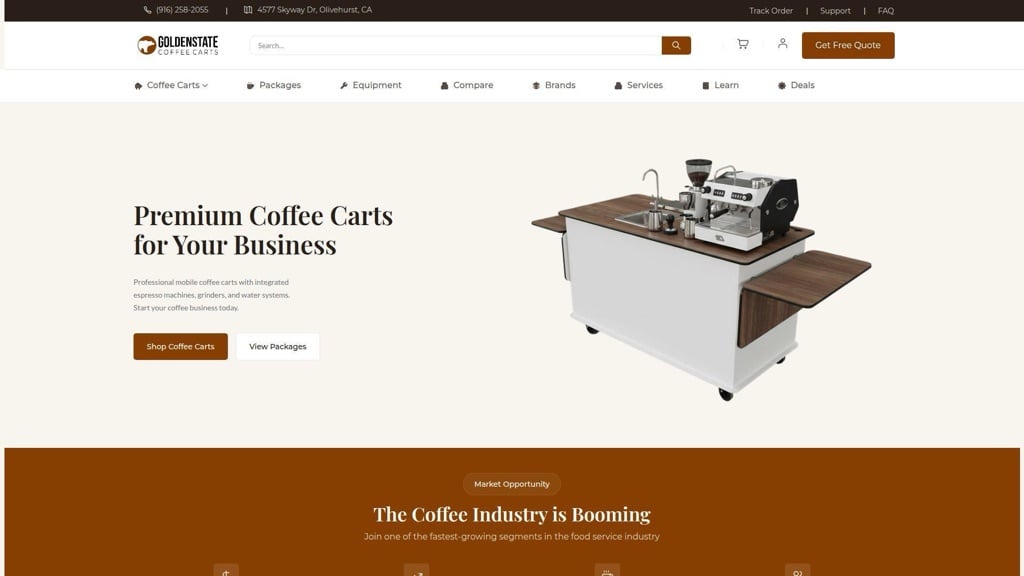
Our ecommerce-adjacent work is documented, not implied. We built the online presence for Golden State Trailers, a trailer dealer whose site runs a real parametric 3D product configurator, and for Golden State Coffee Carts. We would rather show you adjacent, verifiable work than invent an email case study.
The working rhythm: we reply within 24 hours on business days, you get a written proposal within 3 business days, and engagements ship in 4 to 12 weeks with milestone-based pricing. No long lock-ins, no reporting theater.
If your store’s email has been coasting, tell us your platform and list size and we will tell you what we would build first, in plain terms, before you spend anything.
What the work returns.
Real systems we have shipped with this service.
What operators ask before kicking off.
For depth on any of these, book a 30-minute strategy call, no deck, no junior intake.
How much do email marketing agencies charge?
Common models are monthly retainers, a percentage of email-attributed revenue, or hourly billing. Lumien bills $40-95 per hour depending on the work, and scoped flow buildouts are priced as fixed milestone projects, with automation builds starting at $750. You get a written proposal within 3 business days, so the number is on paper before anything starts.
What is Klaviyo?
Klaviyo is an email and SMS marketing platform built for ecommerce stores, with native integrations for Shopify and WooCommerce. It tracks what each customer browses and buys, then uses that history to trigger automated flows and build campaign segments. It is the default choice for serious store email, though not the only good one.
Is Klaviyo a CRM?
Not in the usual sense. Klaviyo stores detailed customer profiles and purchase history, which overlaps with what a CRM holds, but it has no sales pipeline, deal stages or rep workflows. If you need pipeline management, that is a separate CRM implementation project; Klaviyo covers the marketing side.
What email flows should an ecommerce store have?
Start with three: a welcome series for new subscribers, abandoned cart recovery, and a post-purchase sequence. Once those are live and measured, add browse abandonment and a win-back flow for lapsed customers. Three flows built properly beat eight flows built halfway.
What does email marketing cost beyond the agency fee?
Mainly the platform subscription, which scales with the size of your list and how much you send. Check the vendor’s current pricing page for exact numbers, because tiers change regularly. Budget some of your own time too: someone on your side needs to review the calendar and approve sends.
What results can we honestly expect from email?
It depends on your traffic, list size and offer, so we do not promise revenue percentages. For stores with steady traffic, flows reliably recover a share of abandoned carts and bring buyers back sooner than ads alone would. We report revenue per email every month, so you judge the channel on your numbers, not on industry averages.
Plan a Email Marketing build.
Tell us about your business and goals. We will scope a system and reply with a written proposal within 3 business days.
Related services
Performance Advertising
Search, Shopping and local campaigns run by a senior-only team. Management from $1,000/mo, ad spend paid straight to Google, honest reporting, and no long lock-ins.
SEO
Google Business Profile, citations, reviews, and on-page work that makes nearby customers find you. Senior-only team, honest scopes at $40-95/hr, and documented local case studies.
Social Media
Content, scheduling, community management, and honest monthly reporting, scoped as a clear package from published $40-95/hr rates. No vanity metrics, no growth promises we can't back.