IBM Stock Drops 25% as CEO Says Only 2% of Software Is at Risk from AI
IBM stock fell 25% in a single day after an earnings miss. CEO Arvind Krishna says only 2% of IBM software can be replaced by AI tools like Claude Code.
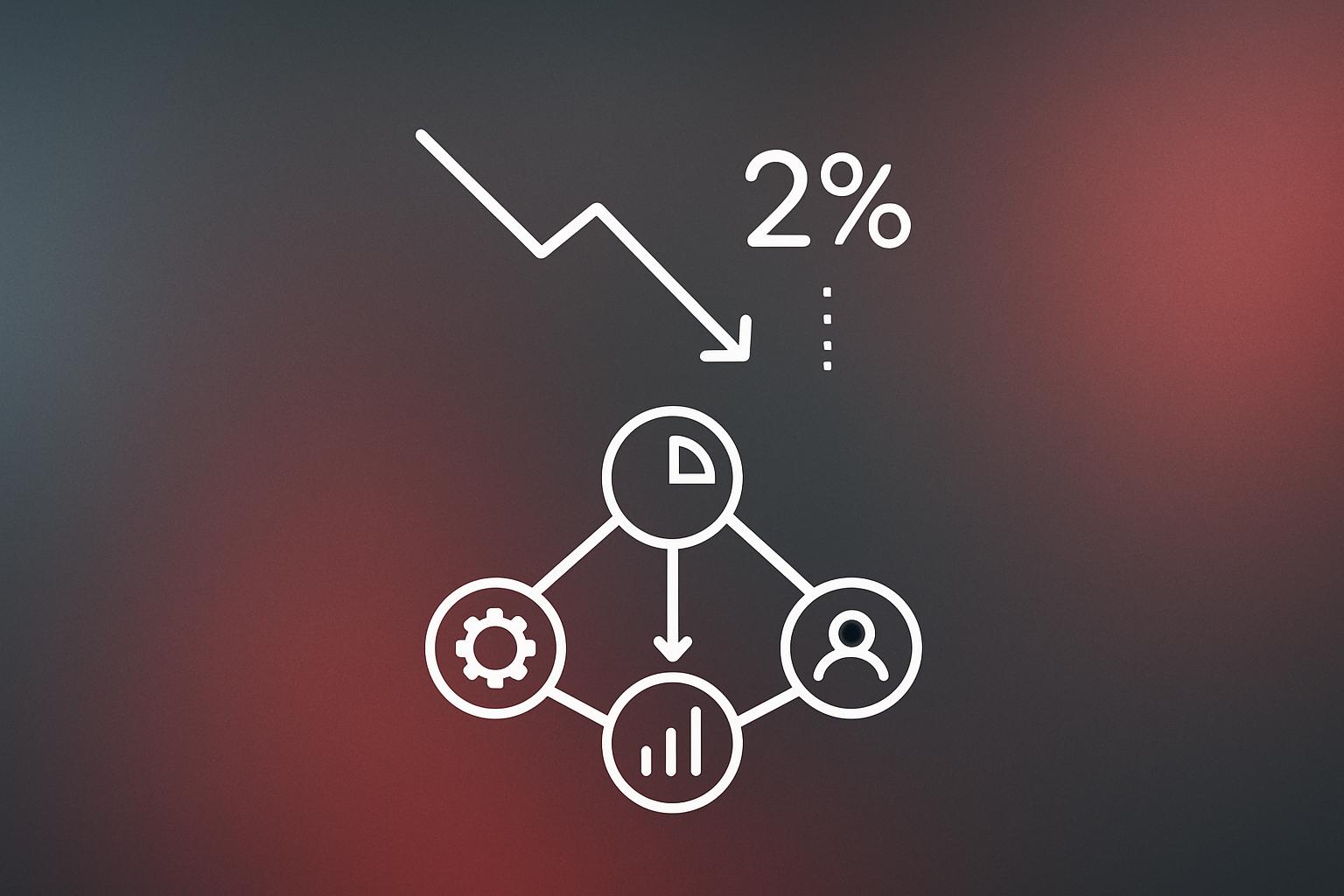
IBM shares dropped 25% on July 24, 2026, the company's largest single-day fall on record, wiping out more than $70 billion in market cap after CEO Arvind Krishna warned investors the company would miss its latest earnings targets. Revenue landed at $17.2 billion with gross profit of $9.9 billion, both below Wall Street expectations. Despite the sell-off, Krishna pushed back on fears that AI tools will gut IBM's software business, arguing only about 2% of its software catalogue is genuinely at risk of being replaced by AI.
What happened
| Metric | Figure |
|---|---|
| Q2 Revenue | $17.2 billion |
| Q2 Gross Profit | $9.9 billion |
| Single-day stock drop | 25% (biggest ever for IBM) |
| Market cap lost | Over $70 billion |
| IBM shares year-to-date | Down ~30% |
| Software revenue growth forecast (2026) | 6% to 8% (was double-digit in January) |
| Share of software replaceable by AI | ~2% (per Krishna) |
| Q2 slipped deals expected to return by year-end | ~75% |
IBM’s Q2 earnings report, released in late July 2026, missed Wall Street’s expectations on both revenue and profit. Krishna had flagged the shortfall in a letter to investors the previous week, pointing to weakness in the company’s infrastructure segment and margin pressure. The stock’s 25% single-day slide was described by IBM itself as its largest ever.
The company’s software business is central to IBM’s finances. According to the source, for every dollar IBM earns from its mainframe hardware business, it earns three dollars from software. Any credible AI threat to that software revenue therefore hits the company hard in the numbers.
Why only 2% is at risk, according to Krishna
Krishna drew a line between two types of software. Application software, the kind that automates specific business tasks, is vulnerable. Infrastructure software, which manages data, connects hybrid cloud environments, and runs underlying systems, is not only harder to replace but actually benefits when customers ramp up AI spending.
“The rest of our software really helps people get ready for AI, unlocking data in real time, reducing the cost and complexity of managing it, going across the hybrid infrastructure,” he told CNBC. He described AI as a potential “tailwind” for that infrastructure layer, similar to how a headwind’s opposite speeds up an aircraft.
He gave a concrete example of the 2% at risk: IBM’s Tririga lease management software, which Starbucks uses and pays roughly $2 million per year for. That kind of point-solution application software, Krishna said, “is subject to risk” from AI tools that could perform the same function without a dedicated SaaS (software-as-a-service) product.
Why the Q2 miss happened, and what comes next
Krishna and IBM CFO Jim Kavanaugh attributed the weak quarter to delayed spending, not cancelled contracts. Customers, they argued, are prioritising hardware purchases first: servers, storage, memory, and other data-centre equipment required for AI workloads. Software spending is being pushed back, not dropped.
Krishna noted that about a third of the deals that did not close in Q2 had already closed within the first three weeks of Q3. He called it “an indication, not yet full evidence, but a good indication that this was deferral and not destruction.” He added that IBM sees no evidence of clients abandoning its mainframe platform.
Why it matters
IBM is not an isolated case. The broader software sector is under pressure. The iShares Expanded Tech-Software Sector ETF (a fund tracking large software companies) has fallen 17%. In February 2026, IBM shares dropped 13% after Anthropic published a post about Claude Code’s ability to modernise Cobol, a programming language commonly used on mainframes.
The investor anxiety reflects a real question: if AI agents can replace packaged software for specific tasks, what happens to SaaS pricing power? For businesses that rely on IBM tools or invest in software stocks, the 2% figure from Krishna is worth scrutinising. It may be accurate for IBM’s specific portfolio today, but the category of “task-specific application software” is broad and growing.
For smaller businesses evaluating their own software stack, this dynamic is already playing out. AI tools are starting to handle functions that previously required dedicated subscriptions. Knowing which tools in your stack are infrastructure-level versus task-specific is increasingly a budget question, not just a technology one. Thinking through AI integration for your existing workflows before vendors reprice or discontinue products is worth doing now rather than later.
Our take
Krishna’s 2% figure is doing a lot of work in this narrative. It is reassuring, and it may well be correct for IBM’s specific mix of middleware and infrastructure software. But Tririga-style SaaS products, where AI can genuinely replicate the core function, are exactly the category growing fastest in most software portfolios. IBM’s mainframe revenue acting as a floor is real, but the ceiling on software growth has clearly been revised down fast: from double-digit growth to 6-8% in six months.
The “deferral not destruction” argument is plausible but not yet proven. Krishna himself called it an indication, not evidence. If the deals that slipped from Q2 do not show up by year-end, that framing will look a lot thinner. Keep watching IBM’s Q3 print.
For context on how AI coding tools are reshaping developer and infrastructure decisions more broadly, our coverage of AI guardrails affecting technical users shows that capability is advancing faster than enterprise procurement cycles can absorb.
What to do about it
- Audit your SaaS stack and categorise each tool as infrastructure-level (hard to replace) or task-specific application (at risk of AI substitution).
- Check contract renewal dates for task-specific tools and evaluate whether AI alternatives have reached feature parity before auto-renewing.
- Watch IBM’s Q3 2026 earnings to see whether the deferred deals actually close, which will confirm or undermine the deferral thesis.
- If you rely on IBM Tririga or similar lease/facility management SaaS, start a parallel evaluation of AI-native alternatives now rather than waiting for price increases.
The honest takeaway: IBM’s infrastructure software probably is resilient, but “2% at risk” should not make any SaaS vendor, or any SaaS customer, complacent about what AI agents can already handle today.
Frequently asked questions
How much did IBM stock drop after its Q2 2026 earnings miss?
IBM shares fell 25% in a single day, which the company described as its biggest single-day decline ever. IBM shares are down about 30% for the year overall, and more than $70 billion in market cap was wiped out.
What percentage of IBM software can AI replace?
According to IBM CEO Arvind Krishna, only about 2% of IBM's software is directly replaceable by AI tools. He cited IBM's Tririga lease management software, used by Starbucks for around $2 million per year, as an example of that at-risk category.
Why did IBM miss its Q2 2026 earnings?
IBM and CFO Jim Kavanaugh attributed the shortfall to delayed customer spending. Clients are prioritising data-centre hardware purchases (servers, storage, memory) needed for AI workloads before committing to software deals. Krishna called it deferral rather than lost demand.
What is IBM's software revenue growth forecast for 2026?
IBM now expects software revenue to grow 6% to 8% in 2026, down from the double-digit growth rate it had forecast in January 2026.