GitHub Copilot HydraFusion: Multi-Model Orchestration Per Coding Task
GitHub's Project HydraFusion builds a multi-model workflow per coding task in Copilot CLI. Here's how it works, what the benchmarks show, and how to enable it.
GitHub has launched Project HydraFusion, a research preview inside Copilot CLI that replaces the idea of picking a single AI model with a per-request workflow. For each prompt, the system chooses one of three execution patterns, potentially using models from different providers, and targets the lowest-cost path that still clears a quality threshold. It is live now for all Copilot plans, billed at each underlying model's standard token rate, with no self-hosted option available.
What happened
| Detail | Fact |
|---|---|
| Product | Project HydraFusion (research preview) |
| Where it runs | GitHub Copilot CLI only |
| Who can access it | All GitHub Copilot plan tiers |
| How to enable | /update, then /experimental on, then /model, select HydraFusion |
| Billing | Per token at each invoked model’s standard rate |
| Baselines used in benchmarks | Claude Opus 5, GPT-5.6 Sol at medium reasoning level |
GitHub shipped Project HydraFusion in September 2026. It follows Auto model selection, a feature GitHub released earlier in 2026 that routes a task to the single best-fit model. HydraFusion goes further: it treats the choice of workflow as an optimization problem, not just the choice of model.
The system reads capability signals across four dimensions: reasoning, code generation, debugging, and tool use. It then selects the simplest workflow expected to meet the quality bar, spending extra model calls only where they are likely to help.
How the three execution patterns work
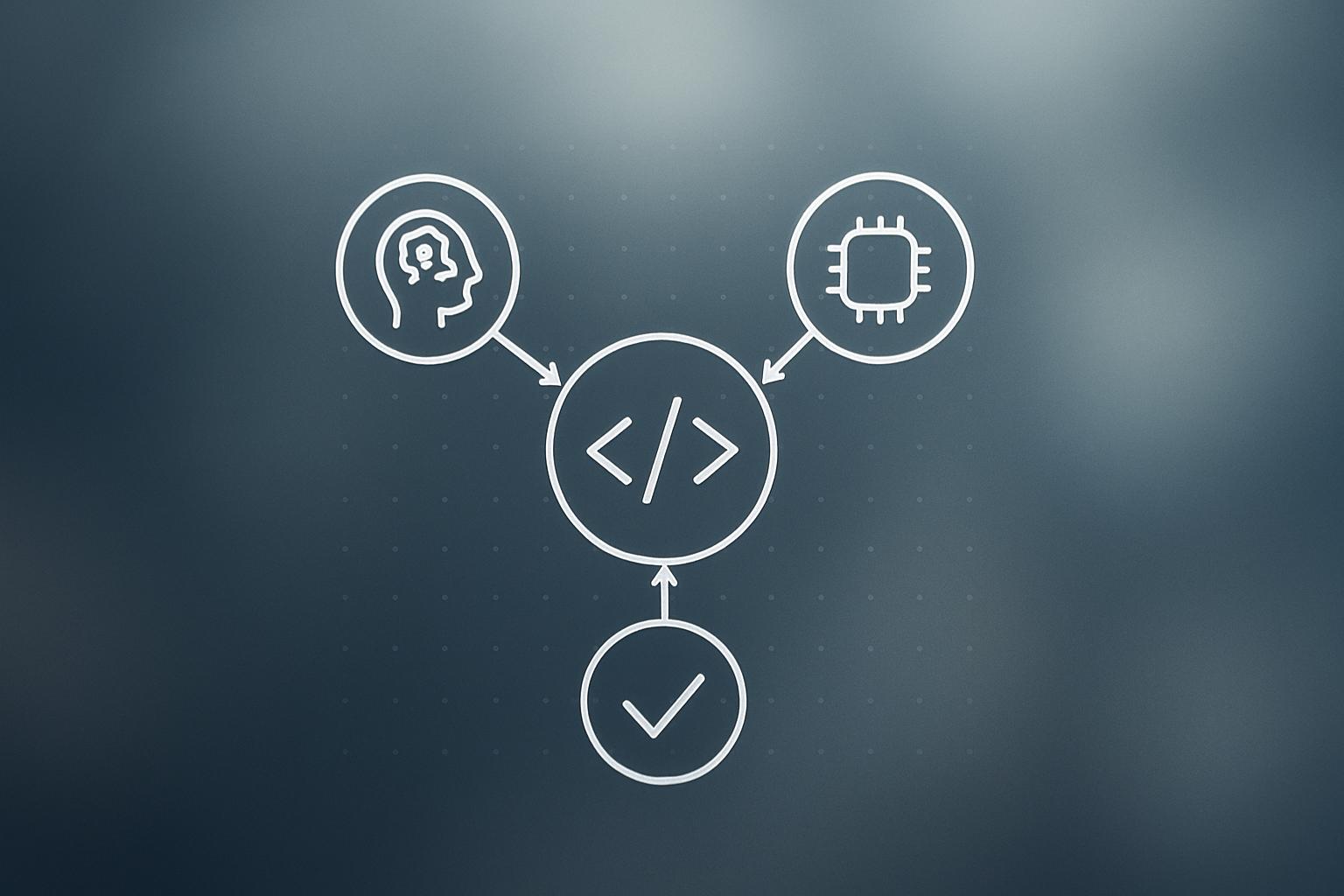
Every request resolves to one of three patterns:
- Single: One model handles the task from start to finish. Fastest and cheapest.
- Cascade: An efficient model drafts a solution. A quality gate checks the output. If it fails, the system escalates to a stronger model.
- Critique: One model drafts, then a read-only critic from a different model family reviews it. The original model then revises once based on that feedback. Critics cannot modify the repository.
The Critique pattern mirrors the Rubber Duck review approach. The key constraint: the critic runs in a tool-less context, so it reads but cannot write.
What do the benchmarks actually show?
GitHub evaluated fixed HydraFusion policies against Claude Opus 5 as the primary baseline, with all models running at medium reasoning level.
| Benchmark | Estimated cost vs Opus 5 | Quality vs Opus 5 |
|---|---|---|
| TerminalBench 2.1 | 67% lower | +4.9 points |
| DeepSWE | 36% lower | -1.5 points |
| CheckpointBench | 65% lower | -0.1 points |
CheckpointBench is GitHub’s internal multi-turn benchmark built from real Copilot sessions and anchored to immutable public commits, so runs are replayable. The DeepSWE and CheckpointBench results show HydraFusion is not always better on quality, but the cost gap is substantial.
Engineering guardrails worth knowing
The runtime enforces five constraints GitHub calls operating principles:
- Complete accounting across every leg of a workflow, including drafts, critiques, retries, and fallbacks.
- Bounded execution with explicit timeouts and cancellation per leg.
- Isolated review so critics cannot touch the repository.
- Fail-safe patching: no change is applied if a workflow is cancelled or fails validation.
- Validated routing that checks model bindings, fallbacks, and availability before execution starts.
Internally the runtime logs role, outcome, cost, latency, and diagnostics per leg. The developer sees one response and one permission-aware change set.
Why it matters
Most AI coding tools treat model selection as a static configuration. You pick a model in settings and it handles everything. HydraFusion moves that decision to runtime and makes it per-task. That matters because a quick autocomplete and a multi-file refactor do not deserve the same model stack.
The billing model is the honest part of the story. There are no bundled credits. If a Cascade or Critique workflow triggers two or three model calls, you pay for all of them at each provider’s standard rate. That keeps the economics transparent but means a poorly scoped task could cost more than a straight single-model call.
For teams already building AI integration into their development workflows, this is a meaningful shift: the orchestration layer moves inside the tool rather than sitting in a separate pipeline you maintain yourself.
Our take
The TerminalBench result is the one worth paying attention to: higher quality at 67% lower cost than Opus 5 is a real finding, not a rounding error. But DeepSWE and CheckpointBench tell a more complicated story. HydraFusion is cheaper in all three cases, but it is not reliably better. “Cheaper and roughly as good” is a legitimate value proposition for most everyday coding tasks. It is not a replacement for the strongest single model when precision is critical.
The constraint that matters most in practice is scope: Copilot CLI only, no open weights, no self-hosted path. If your team works in the IDE or in CI pipelines, you cannot use this yet. It is also a research preview, which means behavior can change without notice. We would treat it as something to test on lower-stakes tasks before relying on it for production work.
One thing we appreciate: the guardrails are specific and sensible. Timeout per leg, critic isolation, fail-safe patching. These are the kinds of constraints that matter when an agent is touching your repository. For context on how quickly the Copilot ecosystem is moving, GitHub has also recently added new models and agent merge capabilities to Copilot in a series of rapid updates.
What to do about it
- Run /update in Copilot CLI to make sure you have the latest version.
- Run /experimental on to enable research preview features.
- Run /model and select HydraFusion (Research Preview) from the list.
- Test it on a bounded task first: a bug fix or a small feature, not a full refactor.
- Watch your token spend for the first few sessions since Cascade and Critique patterns invoke multiple models.
If your team wants help thinking through how multi-model tools fit into a broader automation setup, the workflow automation services we offer cover exactly that kind of pipeline design.
Frequently asked questions
What is GitHub Project HydraFusion?
Project HydraFusion is a research preview feature in GitHub Copilot CLI that builds a per-request execution workflow instead of routing your prompt to a single model. It selects from three patterns: Single, Cascade (with a quality gate), and Critique (with a cross-family reviewer).
How do I enable HydraFusion in Copilot CLI?
Run /update to get the latest version, then /experimental on to enable research previews, then /model and select HydraFusion (Research Preview) from the list.
How does HydraFusion billing work?
You are billed per token consumed by whichever models the workflow invokes, at each model's standard rate. If a Cascade or Critique pattern triggers multiple model calls, you pay for all of them.
How does HydraFusion perform compared to Claude Opus 5?
On TerminalBench 2.1, HydraFusion scored 4.9 quality points higher at 67% lower estimated cost. On DeepSWE it scored 1.5 points lower at 36% lower cost. On CheckpointBench it scored 0.1 points lower at 65% lower cost. All comparisons used medium reasoning level.