Business Process & Workflow Automation Services
We map the repetitive work in your business and replace it with tested Make.com and Zapier workflows. From $750 per automation, with error handling and documentation your team keeps.
What Is Business Process Automation?
Business process automation is the practice of handing repetitive, rule-based work (copying leads into a spreadsheet, sending the same follow-up email, retyping invoice data) to software that does it the same way every time. Business process automation services are what you hire when you want that built properly: someone maps the process, builds the workflow in a tool like Make.com or Zapier, tests it against real data, and documents it so your team can run it without them.
That is the whole service. No transformation roadmap, no six-month discovery phase. We find the manual work that is costing you hours every week and replace it with an automation that starts at $750.
Lumien is a senior-only team, no junior bench, with 15+ years of combined experience and 60+ shipped projects. We run automations in our own operations daily, so we build the boring, reliable kind: workflows with error handling, alerts, and documentation, not demos that break the first time an input looks unusual.
If someone on your team retypes the same data into two systems, or Friday afternoons disappear into copying numbers between tools, you have a process worth automating. The rest of this page covers what we build, what it costs, and which tool fits.
Every engagement ships with these as a baseline.
Process audit and automation map
Make.com and Zapier scenario builds
CRM and app integrations
Error handling and failure alerts
Documentation and team handoff
Milestone-based pricing from $750
A four-phase build, milestones not timesheets.
Senior operators, weekly demos, no junior bench, no surprise change orders.
Diagnose
A 5-day audit of your stack, funnel and goals. You leave with a one-page report ranking the three highest-ROI moves to ship next.
- Audit report
- Priority roadmap
- 30-min walkthrough
Design
We map the system end-to-end before writing a line of code, lead capture, qualification, hand-off, fulfilment, reporting.
- System architecture
- Integration plan
- KPI definition
Build
Senior operators ship against milestone-based pricing, weekly demos, no surprise change orders. The work goes live.
- Production launch
- Documentation
- Team handover
Scale
Monthly improvement sprint, conversion tests, automation tuning, reporting against KPIs that move the business.
- Optimisation cycles
- Monthly reporting
- Continuous improvement
What's Included in Our Automation Services
Our business process automation services include the same six deliverables on every project.
Process audit
We sit with the people doing the work and map the actual process, not the org-chart version of it. You get a short list of automation candidates ranked by time saved against build cost.
Tool selection
Make.com, Zapier, or native features in the tools you already pay for. We recommend the cheapest option that will hold up, and we build in your accounts so you own everything.
The build
We build scenarios step by step and test them against real data, including the messy cases: empty fields, duplicates, odd formats, weekends.
Integrations
We connect your CRM, forms, email, calendars, spreadsheets, and accounting tools. Where an app has no ready-made connector, we work with its API directly.
Error handling
Every workflow gets failure routes: retries where they are safe, an alert to a human where they are not, and logs so you can see what ran. This is the part most DIY automations skip, and the reason they quietly stop working.
Documentation and handoff
Plain-language documentation of what each automation does, what it touches, and how to change it. We walk your team through it before we call the project done.
What Business Processes Can a Small Business Automate?
The honest answer: any process that repeats more than a few times a week and follows the same steps each time. These are our most common builds for small businesses:
- Lead routing. A form fill or missed call becomes a CRM record, the right person gets notified, and the lead gets a confirmation within a minute, whether it arrives at 2 p.m. or 2 a.m.
- Invoicing and payment reminders. A closed deal drafts the invoice, and overdue invoices trigger polite, escalating reminders without anyone keeping a list.
- Reporting. Numbers scattered across ad platforms, the CRM, and spreadsheets land in one weekly digest, so nobody spends Friday copying cells.
- Scheduling and follow-up. Appointment confirmations, reminders, and review requests fire on their own after each job.
- Data sync. The same customer record stays consistent across your CRM, mailing list, and accounting tool.
Operations-heavy service businesses feel the payoff fastest, because booking, dispatch, and follow-up stack up manual steps every day. Our work for FixHomeService, a home-services company in Czechia, shows where these builds earn their keep.
Some things should stay manual. A task that happens twice a year, or needs real judgment each time, is usually cheaper to leave with a person. We will tell you which is which in the audit.
Make.com and Zapier Consultants
We build on both platforms and have no stake in which one wins. The right answer depends on your processes, apps, and monthly volume.
Zapier has the largest app catalog and the gentlest learning curve. For short, linear workflows (when X happens, do Y and Z) it is often the fastest thing to ship, and your own team can usually maintain it afterward.
Make.com is the stronger tool for complex work: multi-branch logic, loops, data transformation, and heavy monthly volume, where its pricing is usually more forgiving. The trade-off is a steeper learning curve, which is why Make.com consultants exist.
Our default position: Zapier for simple glue, Make.com for anything with branches or volume, and neither if a native integration inside a tool you already pay for does the job for free. If you are already on one platform and it works, we will say so rather than migrate you.
Either way, you pay Make.com or Zapier directly, the accounts stay in your name, and every scenario we build stays yours to see, edit, and keep if we part ways. Hiring an automation consultant should not create a new dependency.
CRM Workflow Automation
The highest-value automations usually live in and around the CRM: lead capture, stage-change triggers, follow-up sequences, task creation, and data hygiene. CRM workflow automation is often the first project clients bring us, because the CRM is where manual work is most visible and expensive.
We speak from first-hand use here, not vendor slides. Lumien runs its own CRM console on monday.com with a Claude AI assistant, and our AI news publishing pipeline runs on Claude as well. The AI automation we recommend to clients is the kind we already operate ourselves, with the failure modes and running costs that never make it into product demos.
One caution from experience: automation built on top of a badly configured CRM just moves bad data faster. If your pipeline stages do not match how you actually sell, or half your records are duplicates, start with our CRM implementation services (from $3,000) and automate once the foundation is sound.
And when a workflow needs judgment rather than rules, like answering customer questions from your own documents, that is AI chatbot development and integration territory, priced from $4,000. We will tell you plainly which problem you have before you spend on either.
How Much Does Business Process Automation Cost?
Our business process automation services start at $750 per automation. The base price covers a straightforward workflow: one trigger, a handful of steps, two or three connected apps, plus the error handling and documentation we include on everything.
Four things move the price up from there: the number of apps and steps involved, custom API work where no ready-made connector exists, data cleanup needed before the workflow can run reliably, and approval checkpoints where a human has to stay in the loop. A multi-branch process spanning your CRM, scheduling, and accounting tools costs more than a form-to-spreadsheet workflow.
Ongoing changes and additions bill at $40 to $95 per hour. You also pay Make.com or Zapier their subscription fee directly.
Every project is priced by milestone, so you pay for finished, tested workflows rather than hours logged. We reply within 24 hours on business days and send a written proposal within 3 business days. Engagements ship in 4 to 12 weeks, and single automations sit at the short end of that range. The full numbers, including automation, CRM, and AI integration pricing, are public on our pricing page.
What the work returns.
Real systems we have shipped with this service.
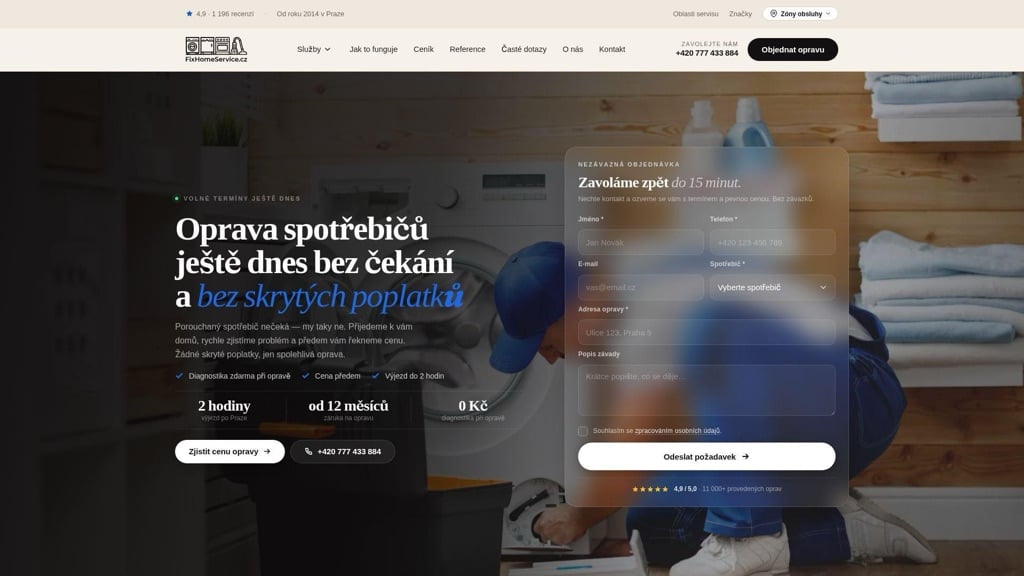
FixHomeService.cz, Appliance Repair Booking Platform
2025 · Czech Republic
Imperial Auto Service, GA4 & Conversion Tracking for Auto Repair
2025 · Ukraine
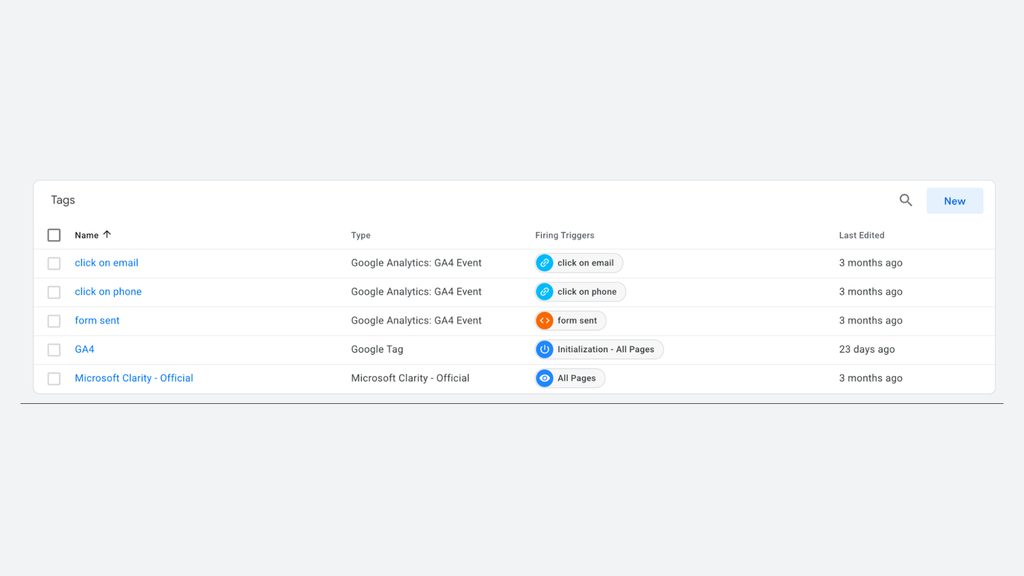
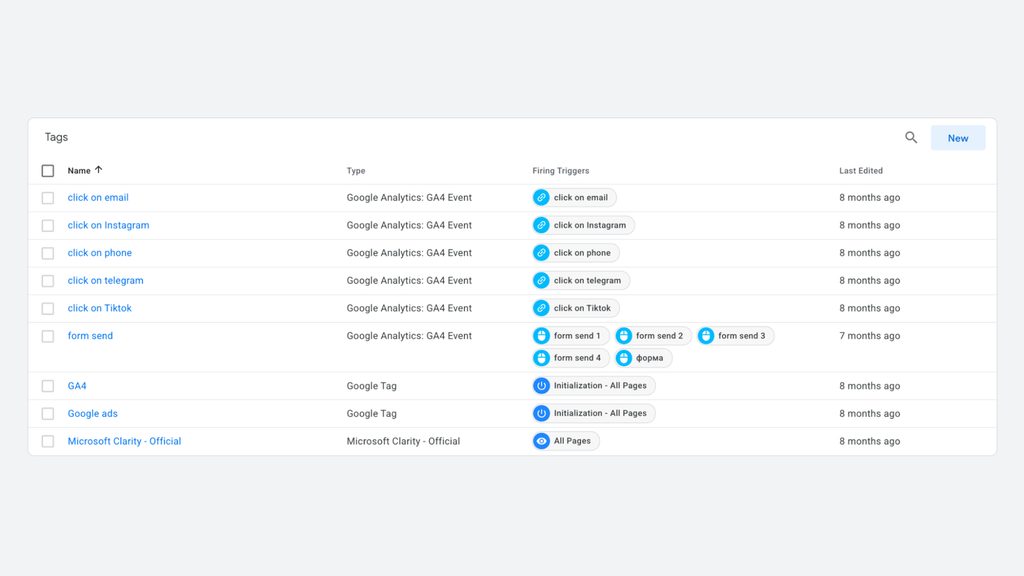
FixHomeService, GA4 & Conversion Tracking for Appliance Repair
2025 · Czech Republic
What operators ask before kicking off.
For depth on any of these, book a 30-minute strategy call, no deck, no junior intake.
What is workflow automation?
Workflow automation is software that runs a multi-step process for you: a trigger (say, a new form submission) starts a series of actions (create the CRM contact, notify sales, send a confirmation) that execute the same way every time. Tools like Make.com and Zapier let you build these without writing custom code. A good workflow also plans for failure: it retries, alerts a human, and logs what happened.
What is business process automation?
Business process automation applies the same idea to a whole process rather than a single task: quote to invoice, lead to booked job, order to fulfillment. For a small business it mostly means connecting the tools you already use so data moves between them without anyone retyping it. Workflow automation is the mechanism; business process automation is the goal.
What is Make.com?
Make.com (formerly Integromat) is a visual automation platform where you build scenarios that connect your apps and move data between them. It is stronger than most alternatives at branching logic, loops, and data transformation, and its pricing tends to be friendlier at high monthly volume. The trade-off is a steeper learning curve, which is why businesses often hire a consultant to build and document scenarios.
What business processes can be automated in a small business?
The usual candidates are lead capture and routing, follow-up emails, invoicing and payment reminders, appointment confirmations, review requests, weekly reporting, and keeping customer data in sync across tools. A simple test: if someone does the same steps more than a few times a week, it is worth pricing an automation. Rare, judgment-heavy tasks are usually cheaper to leave with a person.
How much does business process automation cost?
At Lumien, automation starts at $750 per workflow, and ongoing changes bill at $40 to $95 per hour. The price rises with the number of apps and steps, custom API work, and how much data cleanup is needed before the workflow can run reliably. You also pay the platform subscription (Make.com or Zapier) directly. We quote a fixed, milestone-based price in a written proposal within 3 business days.
Zapier or Make: which should we use?
It depends on complexity and volume. Zapier has the biggest app catalog and is the easiest to maintain in-house, so it wins for short, linear workflows. Make.com handles branching, loops, and heavy volume better, and usually costs less as usage grows. If you already pay for one and it does the job, we will say so rather than migrate you.
Plan a Workflow Automation build.
Tell us about your business and goals. We will scope a system and reply with a written proposal within 3 business days.
Related services
CRM Setup
We select, configure, and migrate your CRM so your team actually uses it. HubSpot and monday.com, data migration and training included, from $3,000 with milestone-based pricing.
AI Integration
Chatbots, ChatGPT and Claude integrations, and AI spend audits from $4,000. Built by a senior team that runs its own AI assistant in production, not a slide deck about one.
Care Plan
Updates, backups, security monitoring, and small fixes for one flat monthly fee, from $99/mo. Your site stays current and working, and you get a plain-English report every month.