Physical AI Simulation Engines Explained: MuJoCo, Isaac Sim and More
A practical breakdown of simulation engines for physical AI: MuJoCo, MuJoCo Warp, NVIDIA Isaac Sim, and Isaac Lab, and how to choose between them.
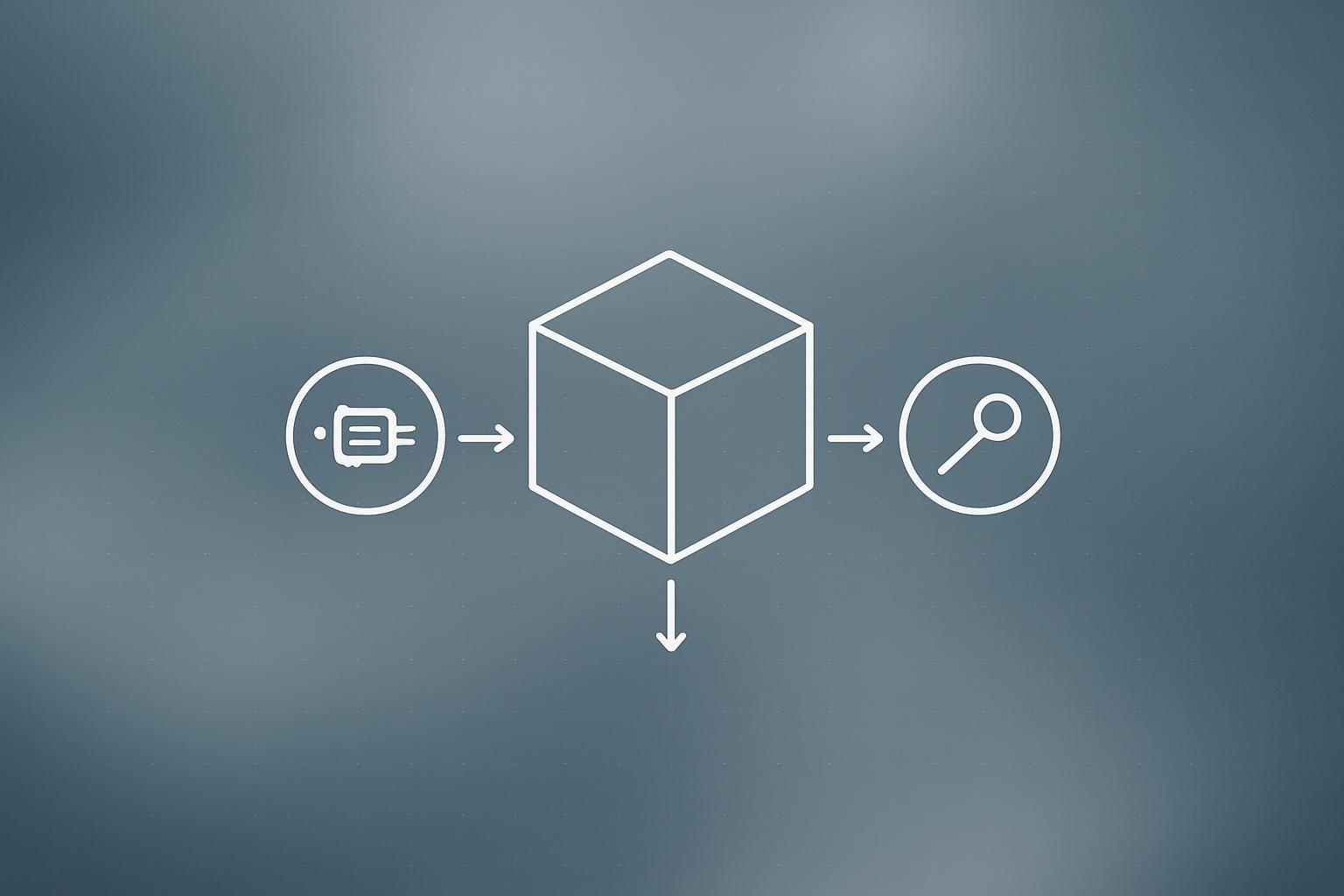
A new overview published on the Hugging Face Blog by NVIDIA researchers lays out why physical AI systems, like robots, rely so heavily on simulation and which engines developers should consider. Unlike large language models that train on internet-scale text, robots need hands-on interaction data that is slow and expensive to collect in the real world. Simulation closes that gap, and the engine you pick shapes what you can build. The post covers MuJoCo, MuJoCo Warp, NVIDIA Isaac Sim, and Isaac Lab in detail.
What happened
| Detail | Fact |
|---|---|
| Published | July 21, 2026 on Hugging Face Blog |
| Authors | Johnny Nunez Cano, Mitesh Patel, Asier Arranz, Lior Ben Horin, Raymond Lo (all NVIDIA) |
| Engines covered in depth | MuJoCo, MuJoCo Warp (MJWarp), NVIDIA Isaac Sim, Isaac Lab |
| Other engines mentioned | PyBullet, Drake, Genesis |
| Primary use cases | Humanoids, two-arm dexterous manipulation, aerial vehicles, ground robots, autonomous vehicles, quadrupeds |
| Edge deployment hardware cited | NVIDIA Jetson AGX Thor-class system |
NVIDIA researchers published a detailed state-of-the-field article on the Hugging Face Blog explaining why simulation has moved from a debugging tool to a central part of the physical AI development loop. The core problem is simple: robots cannot learn by reading the internet. They need to know what happens when a cup slips, a cable bends, or a gripper contacts an object at the wrong angle. Gathering that experience in the real world is slow, costly, and sometimes destructive.
Simulation solves this by generating photorealistic, physically accurate data at scale. Developers can teleoperate robots inside a simulator and use GPU parallelism to produce thousands of hours of robot experience at a fraction of real-world cost.
The three-computer model
The overview organizes the development pipeline around what it calls a three-computer paradigm:
- Training computer: A large GPU cluster that processes data and trains foundation AI models.
- Simulation computer: A GPU workstation or cluster using GPU-accelerated physics and RTX rendering to generate robot experience, sensor data, and simulated interactions.
- On-robot computer: An edge device, such as a NVIDIA Jetson AGX Thor-class system, that runs the trained policy during deployment.
Each computer handles a different tradeoff between latency, throughput, accuracy, and deployment requirements. The simulation layer is where most of the interesting tooling decisions happen.
Which simulation engine should you use?
According to the NVIDIA authors, the choice comes down to five questions:
- Do you need scalable synthetic data generation workflows?
- Do you need reinforcement learning (RL) training?
- What sensor types does the engine support?
- What 3D asset formats does it accept?
- What level of environmental fidelity and scale do you require?
MuJoCo
MuJoCo (Multi-Joint dynamics with Contact) is a fast, accurate, open-source physics engine designed for robotics, biomechanics, reinforcement learning, and control of articulated systems. It prioritizes physical correctness over visual realism. Its standout features include a deterministic pipeline, well-defined inverse dynamics with contacts, strong contact modeling, and generalized-coordinate simulation. It is not the best fit for photorealistic rendering or massive GPU-parallel workloads, but it remains a reference standard for precise dynamics work.
MuJoCo Warp (MJWarp)
MJWarp is a GPU-accelerated reimplementation of MuJoCo written in NVIDIA Warp, a Python framework for writing high-performance CUDA-accelerated differentiable kernels. The differentiable part matters: it means gradients can flow through the simulation, which is useful for gradient-based policy optimization rather than purely trial-and-error RL. MJWarp is specifically tailored for robot learning workloads that need to run many parallel simulation instances on a single GPU.
NVIDIA Isaac Sim and Isaac Lab
The overview also covers NVIDIA Isaac Sim and Isaac Lab, which sit at the higher-fidelity, higher-throughput end of the spectrum. Isaac Sim focuses on photorealistic rendering and sensor simulation (cameras, lidar, depth sensors), making it a strong fit for generating synthetic perception datasets. Isaac Lab is built on top of Isaac Sim and is designed specifically for scalable reinforcement learning, supporting batched simulation across many GPU environments simultaneously.
| Engine | Key strength | Primary use case |
|---|---|---|
| MuJoCo | Precise contact dynamics, deterministic | RL research, control algorithms |
| MuJoCo Warp (MJWarp) | GPU-parallel, differentiable | GPU-scale robot learning |
| NVIDIA Isaac Sim | Photorealistic rendering, sensor sim | Synthetic perception datasets |
| Isaac Lab | Batched GPU RL environments | Scalable reinforcement learning |
Why it matters
The gap between LLM-style AI (trained on freely available text) and physical AI (trained on scarce interaction data) is a structural constraint. Simulation is the main lever for closing it. The fact that industrial labs and academic groups are now building or contributing to simulation engines, rather than just using them, signals that simulation tooling has become a competitive frontier in robotics AI, not just infrastructure.
For businesses exploring physical AI, robotics automation, or even just AI-powered hardware products, understanding which simulation layer sits under the training pipeline is increasingly relevant when evaluating vendors or research partners. If you are curious how AI integration fits into non-robotics workflows, our AI integration services cover a range of practical business applications.
Our take
This is a solid, honest reference from the NVIDIA team, and the three-computer framing is genuinely useful for understanding where compute goes. The engine comparison table is the most practical part: MuJoCo for algorithmic correctness, MJWarp when you need GPU scale with gradients, Isaac Sim when you need sensor realism for perception training, and Isaac Lab when you want to run thousands of RL environments in parallel.
What the overview does not say, but is worth noting: the choice of simulation engine often locks you into a particular physics assumption about the real world. Sim-to-real transfer (getting a policy trained in simulation to actually work on hardware) is still one of the hardest open problems in robotics. Better simulation engines reduce the gap, but they do not eliminate it. Expect to see a lot more work on domain randomization and real-world fine-tuning alongside these engine developments.
For a broader look at where AI tooling is heading, check out our AI news coverage for ongoing updates.
What to do about it
- Identify your primary task type (perception, RL, control) before evaluating any engine, since each engine optimizes for a different axis.
- Start with MuJoCo if you need a deterministic, well-documented baseline for algorithm development.
- Move to MJWarp or Isaac Lab when you need to scale RL training across GPU clusters.
- Use Isaac Sim if your bottleneck is generating photorealistic synthetic images for perception models.
- Budget for sim-to-real transfer work regardless of which engine you pick, it will take longer than the simulation phase.
Pick the engine that matches your data bottleneck, not the one with the most features.
Frequently asked questions
What is MuJoCo used for in robotics?
MuJoCo (Multi-Joint dynamics with Contact) is an open-source physics engine used for robotics, biomechanics, reinforcement learning, and control of articulated systems. It is known for precise contact dynamics, a deterministic simulation pipeline, and accurate inverse dynamics, making it a standard tool for developing and testing robot control algorithms before real-world deployment.
What is the difference between MuJoCo and MuJoCo Warp?
MuJoCo is the original CPU-based physics engine focused on accuracy and determinism. MuJoCo Warp (MJWarp) is a GPU-accelerated reimplementation written in NVIDIA Warp that supports differentiable simulation and is designed for large-scale parallel robot learning workloads on GPU clusters.
What is NVIDIA Isaac Lab used for?
Isaac Lab is built on top of NVIDIA Isaac Sim and is designed for scalable reinforcement learning. It supports running many parallel simulation environments simultaneously on GPU hardware, making it suited for training robot policies at scale.
Why do physical AI systems need simulation for training?
Unlike language models that train on freely available internet text, physical AI systems like robots need interaction data from the physical world. Collecting that data in real life is slow, expensive, and sometimes dangerous. Simulation lets developers generate thousands of hours of robot experience using GPU-accelerated physics at a fraction of the real-world cost.