Pat Gelsinger Bets on Light-Based Chips to Revive Moore’s Law
Former Intel CEO Pat Gelsinger joins Playground Capital and bets on xLight, a startup using free-electron lasers to push chip lithography past ASML's 13.5nm limit.
Former Intel CEO Pat Gelsinger joined venture capital firm Playground Capital as general partner in March 2025, after spending 100 days evaluating government, university, and private equity roles following his late 2024 departure from Intel. He took a board seat at xLight, a Playground portfolio startup developing new chip lithography techniques using free-electron lasers, and has framed the bet as the clearest path to reviving Moore's Law at a time when AI is pulling the semiconductor industry toward $1 trillion in revenue ahead of schedule.
What happened
| Detail | Fact |
|---|---|
| Gelsinger left Intel | Late 2024 |
| Joined Playground Capital | March 2025, as general partner |
| Board seat taken at | xLight (Playground portfolio company) |
| Current ASML lithography wavelength | 13.5 nanometers |
| xLight target wavelengths | 5, 4, 3, or 2 nanometers (using free-electron lasers) |
| Semiconductor industry revenue milestone | $1 trillion, now expected next year (was 2030) |
After leaving Intel, Gelsinger held 100 meetings in 100 days to figure out his next move. He told WIRED he ruled out public company roles (no more earnings calls), politics, and private equity before settling on venture capital. His reasoning: private equity writes larger checks but focuses less on the underlying technology. He wanted to be at the edge of the science.
Playground Capital specializes in deep tech, backing startups built on new or unproven science. Gelsinger said one of the main reasons he chose Playground specifically was xLight, a portfolio company working on a fundamentally different approach to chip manufacturing.
Why lithography matters for AI chips
Moore’s Law, the prediction by Intel co-founder Gordon Moore that transistor counts on a chip would roughly double every two years, drove the semiconductor industry for decades. That pace has slowed because shrinking transistors further at the atomic scale has become extremely difficult and expensive.
Lithography is the process of etching circuit patterns onto chips using light. The smaller the wavelength of light used, the finer the features you can print, and the more transistors you can fit on a chip. ASML, the Dutch company that dominates this market, currently uses 13.5-nanometer wavelength light in its extreme ultraviolet (EUV) machines.
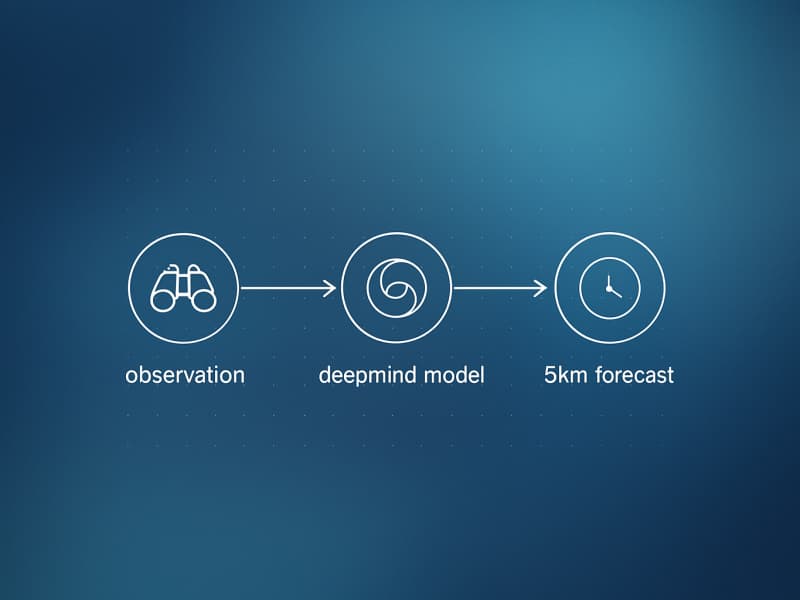
xLight is working with free-electron lasers, a technology that could potentially produce light at wavelengths of 5, 4, 3, or even 2 nanometers. Gelsinger described the company’s strategy as complementary, not competitive, to ASML: the first goal is to connect xLight’s light source to existing ASML machines and improve their output. Gelsinger also noted that xLight has received investment from the US government alongside Playground’s backing.
He is not dismissive of other approaches, such as new material structures, superconducting materials, or ferroelectric materials, but he argues all of them still depend on lithography to be manufactured. In his view, lithography improvements unlock every other semiconductor advance.
Is the deep tech VC boom sustainable?
Gelsinger made a pointed observation about the broader VC landscape. He acknowledged that AI disrupting the software industry has driven many venture firms toward hardware and deep tech bets. But he argued most of those firms have lost the ability to evaluate these investments properly, because deep tech diligence requires engineering expertise, not just financial pattern matching.
Playground’s investment team, he said, is made up of engineers, PhDs, and professors who run what he described as a rigorous technical review process: assessing what the hard problem actually is and whether the founding team can articulate it in depth. His view: you almost never find a lone startup pursuing a genuinely novel idea. Usually two or three companies are working on the same concept at the same time, so the real question is which team is the strongest.
The AI-driven semiconductor boom has also changed the return math. Gelsinger noted that global semiconductor revenues were previously targeting $1 trillion by 2030. That milestone now looks likely to arrive next year. That scale means a portfolio company does not need to dominate its market to generate strong returns, it just needs a meaningful share of a much larger pie. This is the kind of structural shift that our AI integration work for clients keeps running into: the hardware layer matters more than most business owners realize.
Our take
Gelsinger is a credible voice here. He spent years trying to modernize Intel’s manufacturing processes and understands the lithography roadmap in detail. His framing of xLight as a complement to ASML rather than a replacement is smart positioning: ASML’s machines are a near-monopoly in advanced chip manufacturing, and any startup that tries to displace them wholesale faces an almost impossible sales cycle. Hooking a better light source into ASML’s installed base is a far more tractable near-term path.
That said, free-electron lasers are large, expensive, and complex. Moving from lab-scale demonstration to production-ready semiconductor tooling is a well-known graveyard for deep tech startups. The US government co-investment is a positive signal, but it also reflects geopolitical motivation as much as pure technical confidence. Watch for xLight to publish peer-reviewed results or announce a pilot with a named chipmaker before treating this as a confirmed breakthrough.
For business owners and operators, the practical implication is simpler: faster, denser chips eventually become cheaper AI inference, which feeds into the cost of every AI tool you use. Tracking these bets at the semiconductor layer is worthwhile even if the payoff is three to five years out. We cover related developments on the Lumien AI news desk as they emerge.
What to do about it
- Follow xLight and Playground Capital’s announcements for pilot partnerships with chipmakers, which would be the first concrete validation milestone.
- Watch ASML’s investor communications for any mention of third-party light source integration, which would signal industry acceptance of the approach.
- Review your AI tool stack’s compute costs annually. If lithography advances on schedule, inference pricing should drop meaningfully by the late 2020s.
- If you are evaluating AI infrastructure investments for your business, talk to an advisor who understands the hardware dependency chain, not just the software layer.
The chip problem is abstract until cheaper compute hits your invoice. Keep one eye on the physics.
Frequently asked questions
What is Pat Gelsinger doing after leaving Intel?
Gelsinger joined Playground Capital as a general partner in March 2025. He took a board seat at xLight, a deep tech startup working on advanced chip lithography using free-electron lasers.
What does xLight do and why does it matter?
xLight is developing new lithography technology that could use free-electron lasers to produce light at wavelengths as small as 2 nanometers, compared to the current industry standard of 13.5 nanometers used by ASML. Smaller wavelengths allow finer chip features, potentially reviving transistor density improvements.
How is AI changing the semiconductor industry?
According to Gelsinger, AI demand has accelerated the semiconductor industry's revenue growth so much that the $1 trillion milestone, previously targeted for 2030, now looks likely to arrive next year.
Is xLight trying to replace ASML?
No. Gelsinger described xLight's strategy as complementary to ASML. The near-term goal is to connect xLight's light source to existing ASML machines to improve their performance, not to build a competing standalone system.