MIT Laser System Streamed Artemis II at 260 Mbps from Deep Space
MIT Lincoln Laboratory's infrared laser system downlinked nearly 0.5 TB of data at up to 260 Mbps from the Artemis II Orion mission in April 2026.
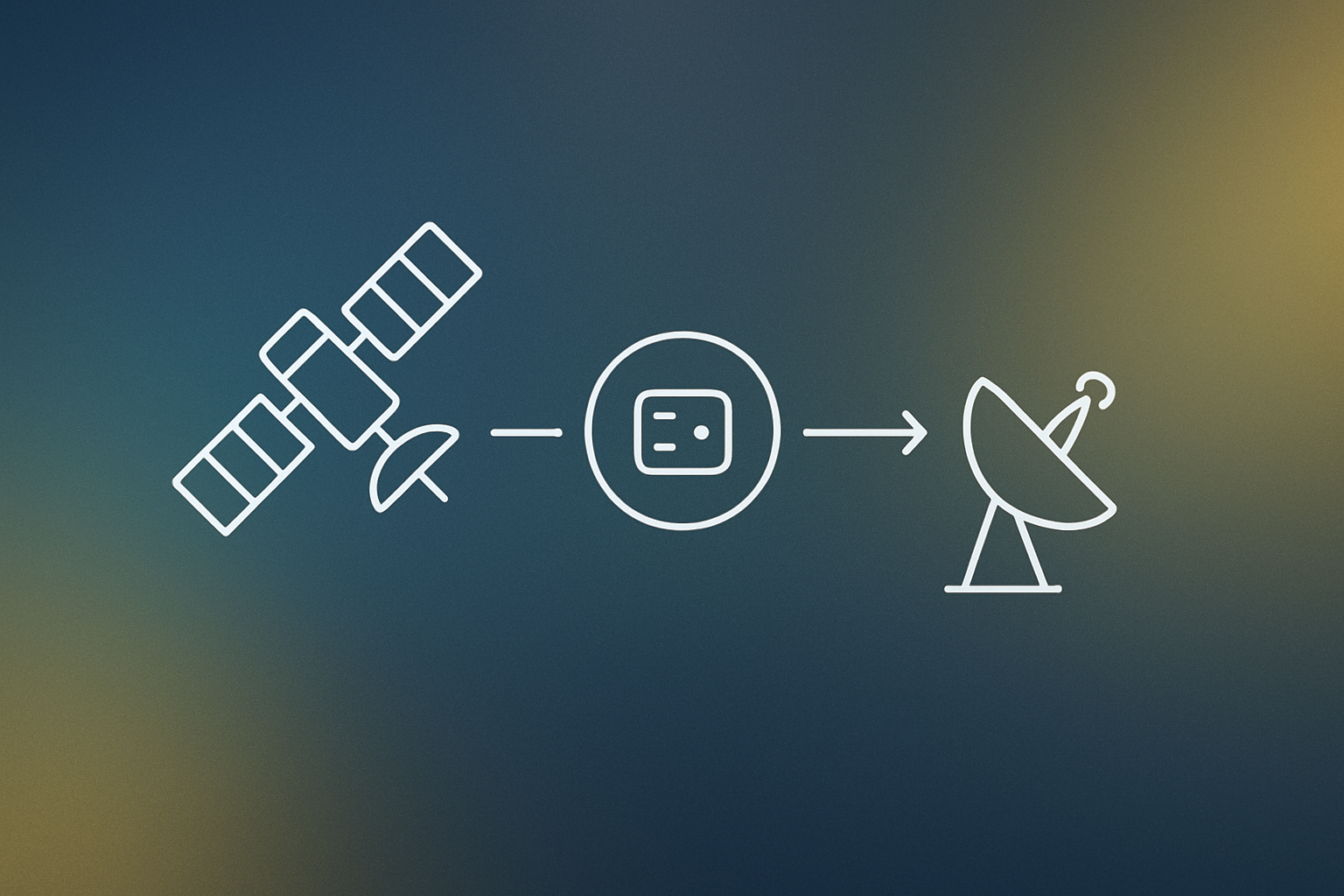
During the Artemis II Orion mission in April 2026, the spacecraft sent crystal-clear video back to Earth at speeds comparable to a home internet connection. The technology behind those livestreams was the Orion Artemis II Optical Communications System (O2O), built by MIT Lincoln Laboratory with NASA Goddard Space Flight Center. Using infrared lasers instead of radio waves, the system downlinked nearly half a terabyte of data at up to 260 megabits per second, a significant jump from the grainy footage astronauts sent home during the Apollo era.
What happened
| Detail | Fact |
|---|---|
| Mission | Artemis II Orion, April 2026 |
| System name | Orion Artemis II Optical Communications System (O2O) |
| Built by | MIT Lincoln Laboratory and NASA Goddard Space Flight Center |
| Technology | Infrared laser light |
| Peak downlink speed | 260 megabits per second |
| Total data downlinked | Nearly half a terabyte |
| Speed advantage over radio | 10 to 100 times more data per second |
The Apollo-era missions of the 1960s and 1970s relied on radio-frequency systems, which produced low-resolution images and slow video. The O2O system replaces that approach with infrared laser pulses, which can carry far more information across the same timeframe. At 260 Mbps from deep space, that is roughly comparable to a mid-range home broadband connection.
Lead systems engineer Farzana Khatri, a senior staff member in Lincoln Lab’s Optical and Quantum Communications Group, described the mission goal plainly: extend the high-bandwidth connections that internet users have on Earth to astronauts in deep space.
What the footage actually showed
The data the O2O system returned was not just a technical benchmark. The footage included views of craters and basins on the far side of the moon that had never been captured this clearly, a crescent Earth setting behind the lunar surface, a total solar eclipse lasting nearly an hour, and flashes from tiny meteoroids hitting the moon.
Why it matters
Radio bandwidth has been a hard ceiling on what astronauts can send home since the first moon landings. Science data, medical telemetry, and high-definition video all compete for the same narrow pipe. Laser-based optical communications removes that ceiling, at least in principle, enabling a much richer flow of data from crewed deep-space missions.
For anyone building products or services around space data, live planetary footage, or satellite imagery, this kind of infrastructure shift opens new possibilities for real-time content that was not feasible before. The same underlying trend toward higher-bandwidth, lower-latency data pipelines applies to how AI systems and web services handle large media assets, something our team explores regularly in AI integration work with clients.
Our take
This is a genuine engineering milestone, not a press release milestone. Moving from “grainy Apollo footage” to “260 Mbps laser downlink” in one architectural shift is the kind of step-change that tends to enable a decade of follow-on applications people have not imagined yet. The comparison to home internet speeds is useful precisely because it reframes the problem: deep-space communication was a bandwidth problem, and this solves a large chunk of it.
The caveat worth watching is reliability over longer missions. Artemis II demonstrated O2O’s utility on a single crewed mission. Scaling that to multi-month deep-space journeys, where laser alignment and atmospheric interference become harder to manage, is the next real test. We will keep tracking developments like this alongside broader infrastructure shifts on the Lumien news desk.
Frequently asked questions
How fast was the Artemis II data downlink?
The O2O system downlinked data at up to 260 megabits per second, roughly on par with a home broadband connection, and returned nearly half a terabyte of data in total.
Why use lasers instead of radio waves for space communication?
Infrared laser light can transmit 10 to 100 times more data per second than radio waves, allowing high-definition video and large science datasets to be sent from deep space.
Who built the Artemis II optical communications system?
The Orion Artemis II Optical Communications System (O2O) was developed by MIT Lincoln Laboratory in collaboration with NASA Goddard Space Flight Center.
What did the Artemis II cameras capture?
The system returned footage of craters and basins on the far side of the moon, a crescent Earth setting behind the moon, a nearly hour-long total solar eclipse, and flashes from meteoroids striking the lunar surface.