Google’s EnvHarness Adapts AI Training Environments to the Agent’s Weaknesses
Google Cloud AI Research releases EnvHarness, an Apache-2.0 tool that wraps static agent benchmarks to target policy weaknesses. +9 points OOD on ALFWorld, 9.8% fewer steps on SWE-bench.

A team from Google Cloud AI Research, Washington University in St. Louis, and UNC Chapel Hill has released EnvHarness, an open-source Python library (Apache-2.0) that wraps static agent training environments so they adapt to a policy's current weaknesses instead of staying frozen. Tested across five benchmarks including ALFWorld and SWE-bench Verified, the system delivers up to 9.0 additional accuracy points on out-of-distribution tasks and cuts average execution steps by 9.8 percent, without modifying the underlying simulator or its human-written verifiers.
What happened
| Detail | Fact |
|---|---|
| Authors | Google Cloud AI Research, Washington University in St. Louis, UNC Chapel Hill |
| License | Apache-2.0 |
| Benchmarks tested | ALFWorld, WebArena, SWE-bench Verified, OfficeQA, SpreadsheetBench |
| ALFWorld OOD gain | +9.0 points (62.4 to 68.3 average; OOD split) |
| SWE-bench Verified resolved rate | 49.88% to 52.58% (+2.7 points) |
| SWE-bench avg. steps | 55.01 to 49.61 (9.8% reduction) |
| vs. SWE-smith (domain-specific generator) | +2.46 points, 5.11 fewer steps |
| RL result (Qwen3-8B-base, GRPO) | ALFWorld in-distribution: 81.4 to 87.9 |
| Difficulty targeting accuracy | In-band coverage rises from 6% to 80% when targeting 0.4-0.6 success rate |
The core problem EnvHarness solves is simple but expensive: once an LLM agent gets good at a benchmark, that benchmark stops teaching it anything. The normal workaround is generating brand-new environments, but generation pipelines are domain-specific, and the LLM-written verifiers they produce need heavy filtering and are never fully reliable.
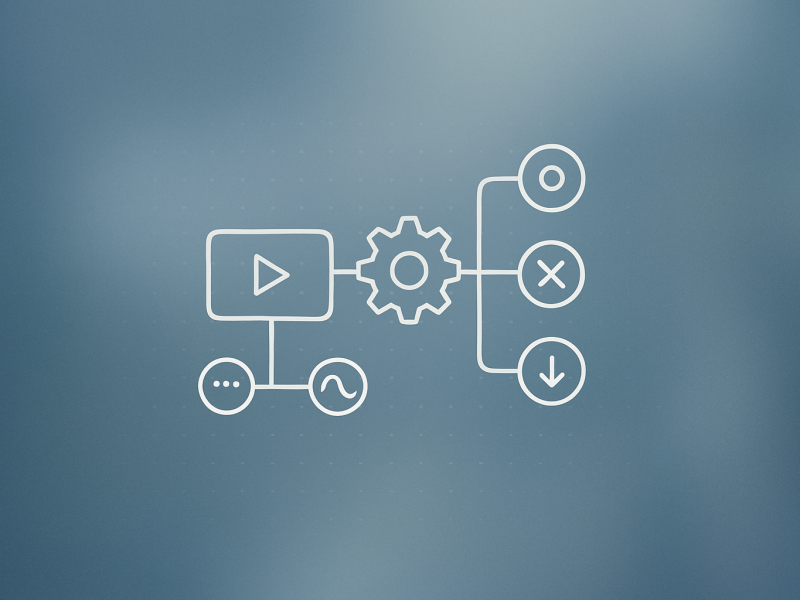
EnvHarness takes the opposite approach. Instead of authoring new environments, it wraps existing ones in plug-in components that operate only through the standard reset() and step() interface. The underlying simulator, task definitions, and human-built verifiers stay completely untouched. Three composable components ship out of the box:
- Stage: replays a fixed action sequence after reset, so an episode begins at a harder starting state (for example, a target object hidden inside a closed drawer instead of sitting in the open).
- Contract: installs per-step hooks on actions, transitions, and observations to block actions, rewrite responses, or truncate what the agent can see.
- Chain: links a second environment into the same episode under a shared step budget, with success requiring both verifiers to pass.
How EnvRigger picks which wrappers to write
Choosing what to modify requires knowing where the policy fails. EnvRigger, an LLM “designer” built into the system, handles this automatically in four stages: it watches five baseline rollouts, diagnoses a systemic flaw in the policy, writes the wrapper components as real Python code, and validates them on five fresh rollouts. Candidates that are either unsolvable or trivially easy are rejected, with up to five revision rounds per task. Generated code compiles in an isolated subprocess, so a bad mutation creates a recorded trace rather than crashing the run.
The result is that EnvHarness co-evolves each batch of training environments against the current policy state. At 300 environments the method reaches a 54.79 resolved rate, versus 52.13 for originals and 50.37 for generated environments, according to the paper.
Why it matters
On SpreadsheetBench and WebArena, the paper notes that skills mined from unmodified environments actually fall below the no-skill baseline. Reshaping is what makes skill mining useful at all on those benchmarks. That is a meaningful finding: it suggests static benchmarks are not just plateauing but actively misleading in some domains.
For teams working on AI integration for production workflows, EnvHarness matters for a narrower but real reason. Any agent being trained or fine-tuned for a repeatable task (document processing, code review, spreadsheet automation) can in principle benefit from environments that ramp difficulty in line with the agent’s actual capability, rather than requiring a team to hand-craft new scenarios.
The RL results using Qwen3-8B-base under GRPO (Generalized Reward Policy Optimization, a reinforcement learning method) show that training in reshaped environments beats training in original environments on three of four metrics. The one regression is the out-of-distribution ALFWorld split, which drops slightly from 89.6 to 88.8. That trade-off is worth knowing before committing to reshaping for a purely OOD objective.
Our take
The wrapping-not-authoring framing is genuinely clever. Keeping human-built verifiers intact removes the weakest link in environment generation: an LLM that both sets tasks and grades them creates a closed loop where failure modes are invisible. By separating those concerns, EnvHarness makes the quality bar verifiable in a way that pure generation pipelines do not.
The 6%-to-80% jump in difficulty targeting is the number we find most useful in practice. If you are training an agent and want it to spend time near the edge of its ability rather than solving easy tasks repeatedly, that kind of automatic calibration saves significant human iteration. The caveat is real though: you need a resettable simulator. That rules out a large class of real-world tasks immediately.
For most businesses right now, this is a research result to watch rather than deploy next quarter. But for teams already running agent eval loops, the Apache-2.0 release and the six reproduction environments are a low-friction starting point. You can read about how we approach practical agent tooling on our AI news coverage page.
What to do about it
- Check whether your agent’s training environment exposes a
reset()andstep()interface. If not, that is the prerequisite to address first. - Review the paper (arxiv 2608.19880) and the Apache-2.0 GitHub repo to assess whether your domain matches one of the six included reproduction environments.
- Run EnvRigger on a small rollout batch to identify which failure mode it diagnoses. Compare that diagnosis to what your team believes the agent’s weakness is.
- Test skill gains on held-out tasks before and after reshaping, particularly if your use case involves spreadsheet or web-based automation where unmodified environments underperform.
If your environment is resettable and you are already measuring agent performance with eval loops, EnvHarness is worth a direct test before building a bespoke environment generator.
Frequently asked questions
What is EnvHarness and what does it do?
EnvHarness is an Apache-2.0 Python library from Google Cloud AI Research that wraps existing agent training environments with plug-in components. It adapts where an episode starts, what actions are available, and what the agent can observe, without touching the original simulator or verifiers.
What benchmarks was EnvHarness tested on?
EnvHarness was evaluated on ALFWorld, WebArena, SWE-bench Verified, OfficeQA, and SpreadsheetBench, spanning four domains.
What performance gains does EnvHarness achieve?
On ALFWorld, it raises average performance from 62.4 to 68.3 with a +9.0 point gain on out-of-distribution tasks. On SWE-bench Verified, the resolved rate rises from 49.88% to 52.58% while average execution steps fall 9.8%, from 55.01 to 49.61.
What are the limitations of EnvHarness?
EnvHarness requires a resettable environment, which rules out live user accounts and physical robots. It also incurs LLM token costs for the EnvRigger designer loop.