Google Cloud Launches Gemini Enterprise for Legal: Agentic AI Built for Law Firms
Google Cloud's Gemini Enterprise for Legal brings agentic AI to law firms with purpose-built skills, MCP connectors, and a partner ecosystem. Here's what it does.
Google Cloud has launched Gemini Enterprise for Legal, a purpose-built agentic AI product aimed at law firms and in-house legal teams. Announced alongside a parallel Financial Services edition, the product is currently in preview with four law firm launch customers: Cleary, Freshfields, Weil, and Williams & Connolly. It ships with specialized legal skills, secure connectors to 11 legal platforms, and a partner ecosystem of consulting firms and legal tech providers, all running on the governed Gemini Enterprise platform.
What happened
| Detail | Fact |
|---|---|
| Product name | Gemini Enterprise for Legal |
| Status | Preview |
| Launch customers | Cleary, Freshfields, Weil, Williams & Connolly |
| Platform connectors | 11 legal platforms via MCP |
| Consulting partners | Accenture, Deloitte, KPMG, and others |
| Sibling product | Gemini Enterprise for Financial Services |
Google Cloud has packaged Gemini into an industry-specific product for legal work. The pitch is straightforward: general-purpose AI tools do not enforce ethical walls, data isolation, or verified legal authority, which are requirements that legal teams cannot skip. Stitching together point solutions to fill those gaps creates what Google calls an “integration tax,” leaving firms with brittle workflows and unresolved compliance gaps.
Gemini Enterprise for Legal is positioned as a single, governed environment that handles those requirements natively rather than as bolt-ons.
What the product actually does
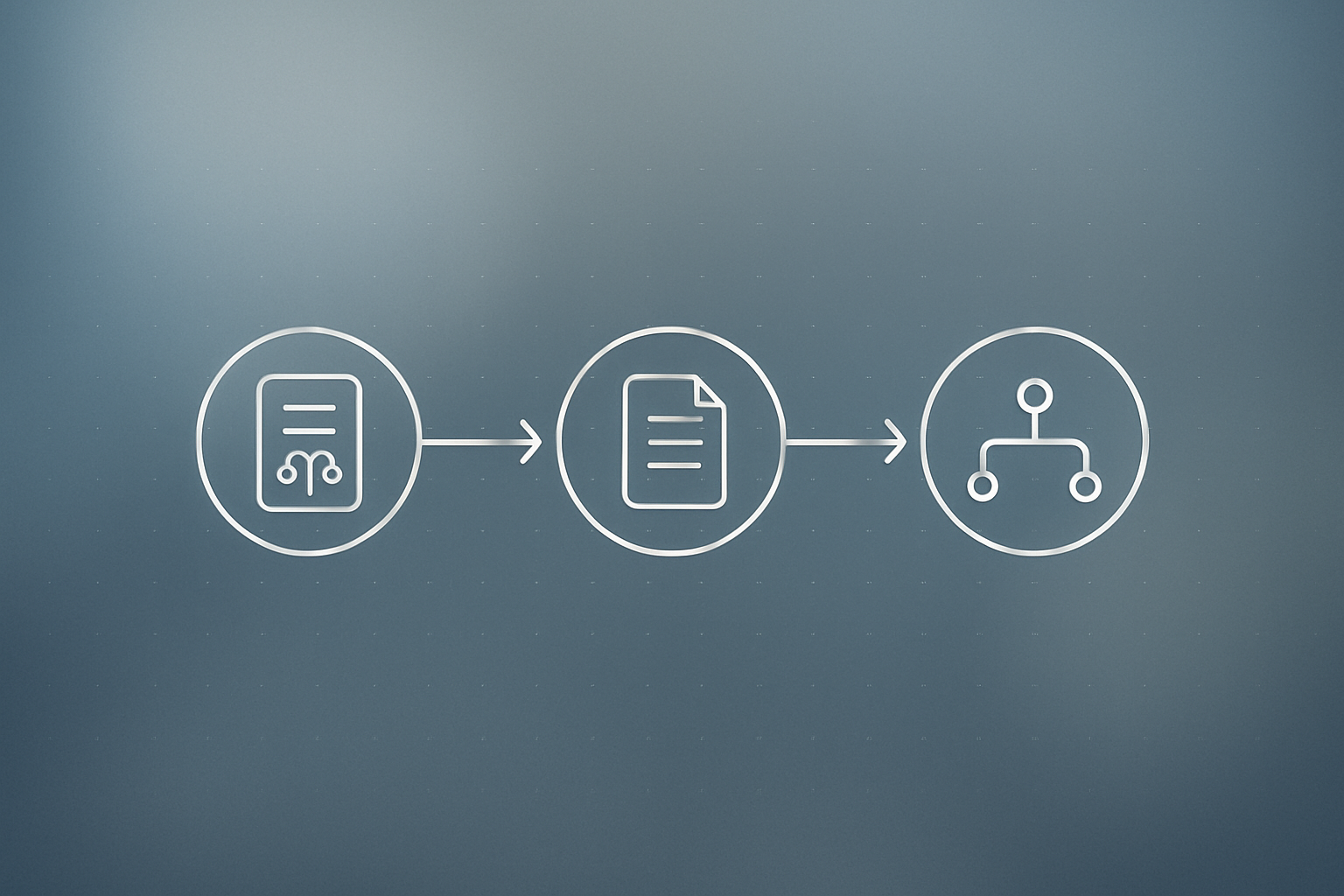
The product ships with four components: purpose-built skills for legal agents, secure connectors, a third-party agent ecosystem, and the underlying Gemini Enterprise control plane.
Skills and workflows
The built-in skills cover tasks that consume significant attorney time:
- Legal brief drafting and citation verification
- Contract lifecycle management, including inbound vendor agreements, NDAs, and M&A documentation benchmarked against firm playbooks
- Regulatory horizon scanning, which tracks legislative updates, court dockets, and supervisory bodies and flags exposure gaps
- Data Subject Access Request (DSAR) fulfillment, which compiles personal data across enterprise systems to meet regulatory timelines
- Motion-to-seal preparation, including intelligent redaction of sensitive terms and PII
- Contracting playbook creation from legacy agreement archives
Connectors
The product uses Model Context Protocol (MCP) integrations, a standardized way for AI models to read and act on external data sources, to connect to 11 platforms: Courtroom5, DocuSign, Everlaw, Free Law Project’s CourtListener database, Harvey, iManage, Legora, NetDocuments, RelativityOne, Solve Intelligence, and Thomson Reuters. When a firm connects its document and matter management system, its existing ethical walls are automatically inherited by the AI agents.
Partner ecosystem
Third-party agents and consulting partners round out the package. Named consulting and systems integration partners include Accenture, Deloitte, Devoteam, KPMG, Tribe AI, Valtech, Zazmic, Zencore, and 66degrees. Legal-tech providers include Eudia and Factor Law.
Why it matters
Legal is one of the sectors where AI adoption has been loud but implementation has been slow, largely because confidentiality and privilege rules create real liability when AI tools pull data the wrong way. A purpose-built product that inherits ethical walls from existing matter management systems directly addresses the thing that has caused cautious law firms to stall.
The launch customers are not small boutiques. Freshfields, Cleary, and Weil are among the largest and most technically sophisticated firms in the world. Their willingness to go into preview suggests Google has addressed at least the basic governance objections.
For businesses that rely on outside counsel or run in-house legal teams, this matters because it signals that the cost and turnaround time for routine legal work, contract review, NDA drafts, regulatory monitoring, should start falling as firms adopt these tools. That has downstream pricing implications for legal services. If you are interested in how AI integration applies to your own business workflows, the same pattern of governed, domain-specific agents is spreading across industries.
It is also worth watching alongside broader agentic AI adoption trends, where research shows most firms have not yet scaled multi-agent systems. Legal is now getting a packaged on-ramp.
Our take
Google is doing something smart here: taking the hard compliance and governance work that every law firm would have to do themselves and baking it into the product. The MCP connector list is specific enough to be useful rather than a vague “integrates with everything” promise.
The caution is that this is still a preview, and the launch customer list, while impressive, is self-selected. The real test is whether a mid-size firm without a 20-person IT team can actually deploy this without a six-month integration project. The presence of Accenture and Deloitte in the partner list suggests those deployments will not be self-serve.
For businesses outside of legal, the pattern is worth noting. Google is building Gemini Enterprise as a governed platform with industry-specific layers on top. Financial Services is already announced as the second. That architecture means more of these vertical packages will follow. If your industry has strict data handling requirements that have kept you on the sidelines with AI, watch what Google does here.
What to do about it
- If you run or work with a law firm, register interest in the preview through Google Cloud now to get early access data before committing to any competing legal AI tool.
- Audit which legal platforms your firm already uses from the connector list (iManage, DocuSign, Thomson Reuters, etc.) since existing integrations will reduce deployment friction.
- If you are evaluating AI for other regulated workflows, use this launch as a benchmark for what “governed AI” should look like: data isolation, audit logging, and inherited access controls, not just a terms-of-service checkbox.
- Talk to your consulting partners early. Deployment partners like Deloitte and KPMG will fill their calendars fast as preview access broadens.
The bottom line: domain-specific, governed AI packages are becoming the realistic path for regulated industries, and legal is now the clearest example of what that looks like in practice.
Frequently asked questions
What is Gemini Enterprise for Legal?
It is a purpose-built agentic AI product from Google Cloud designed for law firms and legal teams. It includes specialized skills for legal tasks, secure connectors to 11 legal platforms, and a governed platform with audit logging and data isolation. It launched in preview with Cleary, Freshfields, Weil, and Williams & Connolly as initial customers.
Which legal platforms does Gemini Enterprise for Legal connect to?
The product connects via Model Context Protocol (MCP) to Courtroom5, DocuSign, Everlaw, Free Law Project's CourtListener, Harvey, iManage, Legora, NetDocuments, RelativityOne, Solve Intelligence, and Thomson Reuters.
What legal tasks can Gemini Enterprise for Legal automate?
It covers contract review and negotiation, regulatory horizon scanning, DSAR fulfillment, legal brief drafting, citation verification, motion-to-seal preparation, NDA drafting, and contracting playbook creation.
Is Gemini Enterprise for Legal available now?
It is currently available in preview. Google Cloud has not announced a general availability date. Launch customers include four major law firms: Cleary, Freshfields, Weil, and Williams & Connolly.