Ex-SpaceX Engineers Build AI-Driven Robotic Steel Factory by 2027
Startup 1872, founded by three ex-SpaceX engineers, opened Factory One in Cincinnati on July 22 to automate steel fabrication using AI and robots by 2027.
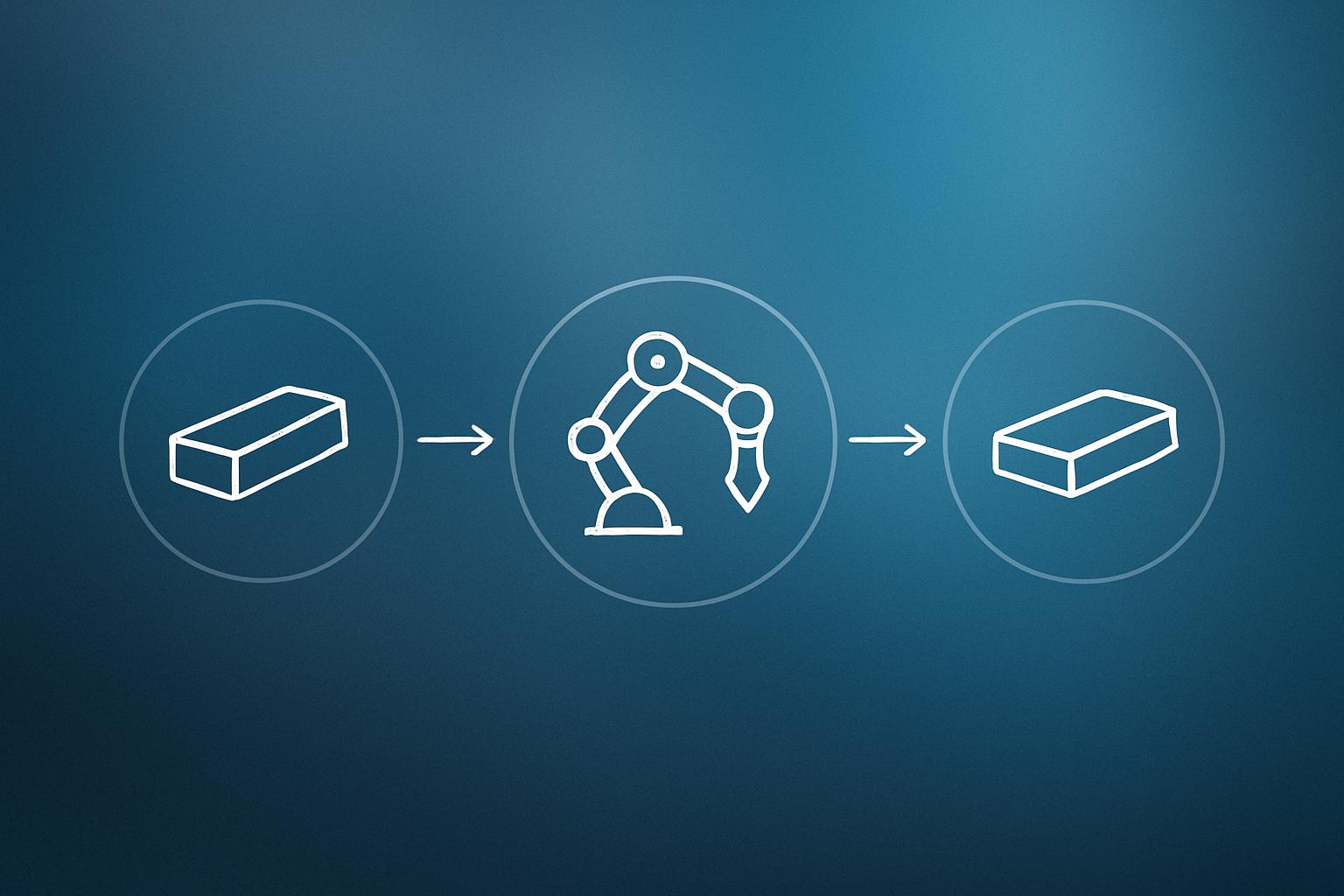
A startup called 1872, founded by three former SpaceX engineers, opened its first facility in Cincinnati, Ohio on July 22, 2026, with plans to automate most of the steel fabrication process by 2027. The company is using AI software and robots to manufacture steel skids, the rectangular frames that serve as portable foundations for modular buildings. Its first wave of customers are businesses building AI data centers and small modular nuclear reactors, two sectors with heavy demand for prefabricated infrastructure components.
What happened
| Detail | Fact |
|---|---|
| Company name | 1872 |
| Launch date | July 22, 2026 |
| Location | Factory One, Cincinnati, Ohio |
| Founders | Three former SpaceX engineers |
| First product | Steel skids (rectangular steel frames) |
| Prototype factory target | 2027 |
| Autonomy goal | Up to 80% of manufacturing operations |
| Target markets | AI data centers, small modular nuclear reactors |
The three co-founders moved from building rocket engines at SpaceX to tackling a much older problem: steel fabrication is still heavily manual and difficult to automate at scale. Their startup, 1872, held a ribbon-cutting at Factory One on July 22 and is now working toward a fully operational prototype factory by 2027.
The initial product is a steel skid, a modular rectangular frame that acts as a moveable base for buildings or equipment. These components are in high demand from companies racing to build out AI data center capacity and small modular nuclear reactor (SMR) sites, both of which rely on modular, deployable infrastructure that can be produced in volume.
Why it matters
AI infrastructure buildout is creating a real bottleneck in physical manufacturing. Data center developers need enormous quantities of prefabricated steel components, and the traditional fabrication process does not scale easily. 1872 is betting that the same principles SpaceX applied to rocket production, tight software integration, iterative automation, and a willingness to ship hardware fast, can be applied to a far older industry.
Small modular nuclear reactors are another growth market here. SMRs are designed to be factory-built and deployed in modules rather than constructed on-site, which makes consistent, automated steel fabrication a genuine prerequisite rather than a nice-to-have.
The convergence of physical AI infrastructure demand and robotic manufacturing is a trend worth watching. As we covered in our look at why agentic AI is driving hardware shortages at AWS, the physical supply chain behind AI compute is increasingly the constraint, not the software. A factory that can automate steel skid production at scale feeds directly into that gap.
Our take
The 80% autonomy framing from CEO Dan Summers is the most honest thing in this announcement. Most industrial automation projects die chasing the last 20%: the edge cases that require human judgment and the diminishing return on investment to eliminate them. Summers told Ars: “We may achieve 80 percent autonomous operations, and we may decide that it makes sense to stop there because there’s just diminishing returns to go to full 100 percent.” That pragmatic ceiling is actually a sign the team understands manufacturing, not just software.
What we’d watch: whether a 2027 prototype factory can produce steel skids at a cost that beats traditional fabrication shops. The technology is plausible. The unit economics are unproven. SpaceX pedigree opens doors with investors and customers alike, but steel buyers are price-sensitive in a way rocket customers are not.
For businesses in construction, data center buildout, or modular infrastructure, this is a company worth tracking. If 1872 hits its 2027 target, it could meaningfully shorten lead times on prefabricated structural components. If you are thinking about how AI automation applies to your own operations, our AI integration services page outlines how we approach this for business clients at a much smaller scale.
What to do about it
- If you are sourcing steel skids or modular infrastructure components, contact 1872 directly to get on their early customer list before the 2027 factory ramp.
- Watch the SMR sector for procurement timelines. Small modular nuclear projects are early-stage but moving fast, and steel supply is already a planning constraint.
- Benchmark your own fabrication or supply chain processes now. If a startup can automate 80% of steel fabrication, similar pressure will hit adjacent manufacturing categories within a few years.
- Follow the unit economics, not the press releases. When 1872 publishes cost-per-skid figures, that is the number that matters.
The real test for 1872 is not whether robots can weld steel. It is whether they can do it cheaper and faster than the shops already doing it by hand.
Frequently asked questions
What does the startup 1872 make?
1872 makes steel skids, which are rectangular steel frames used as moveable foundations for modular buildings. The company is automating their production using AI software and robots, targeting customers building AI data centers and small modular nuclear reactors.
Who founded 1872 and when did it launch?
1872 was founded by three former SpaceX engineers. The company officially launched on July 22, 2026, with a ribbon-cutting ceremony at its Factory One facility in Cincinnati, Ohio.
What is the automation target for 1872's factory?
CEO Dan Summers has stated the company is aiming for around 80% autonomous operations by 2027, noting that chasing full 100% autonomy may produce diminishing returns.
Why are AI data centers a customer for robotic steel fabrication?
AI data centers require large volumes of prefabricated structural components like steel skids to build out modular infrastructure quickly. Automated fabrication can shorten lead times and increase production volume compared to traditional manual steel fabrication.