The AI Model Race Is Over. Enterprises Now Ask “Where Does It Run?”
Enterprise AI focus has shifted from picking the best chatbot to choosing deployment infrastructure. Here's what that means for costs, data privacy, and India's AI market.
The debate over which AI model is "best" is fading fast. According to a piece by Ashish Kumar of OptiValue Tek published on 24 August 2026, enterprise buyers are now asking harder, more practical questions: where does the AI actually run, who owns the data, and what does it cost at scale? Two data points illustrate the shift clearly. HCLTech announced a ₹14,257 crore AI data centre in Bhubaneswar, and Sarvam AI closed a $234 million round at a $1.5 billion valuation, both pointing toward AI as infrastructure rather than a browser-based service.
What happened
| Fact | Detail |
|---|---|
| HCLTech data centre announcement | ₹14,257 crore facility in Bhubaneswar, via Sarvam AI (July 2026) |
| Sarvam AI Series B raise | $234 million of a $300 million round; valuation $1.5 billion |
| Claude usage in India | Second-largest Claude.ai market after the US; ~5.8% average usage share |
| Sarvam AI daily activity | Over 2 million conversations per day; voice systems process over 500,000 hours of audio monthly |
| Primary use case for Claude in India | Professional and technical tasks, including computer and math work |
Two years ago, the dominant enterprise AI discussion was a simple horse race: ChatGPT vs. Claude vs. Gemini. According to Kumar, that conversation has matured. The new questions are operational: where does the model run, what data does it touch, who audits it, and what does it actually cost when thousands of employees or automated systems use it every day?
The HCLTech and Sarvam investments are the clearest signal. A ₹14,257 crore data centre is not a software purchase. It is a bet that Indian enterprises will treat AI the same way they treat compute or networking: as owned or leased infrastructure, not a cloud API they call from a browser.
Why deployment location now matters more than model quality
For many businesses, a cloud-hosted model is fine. You get powerful AI without building anything. But financial institutions, insurers, hospitals, and government bodies face a different set of constraints: data localisation rules, sector-specific regulations, and audit requirements. For them, “the best model” is often the one they are legally permitted to use, not the one that tops a benchmark.
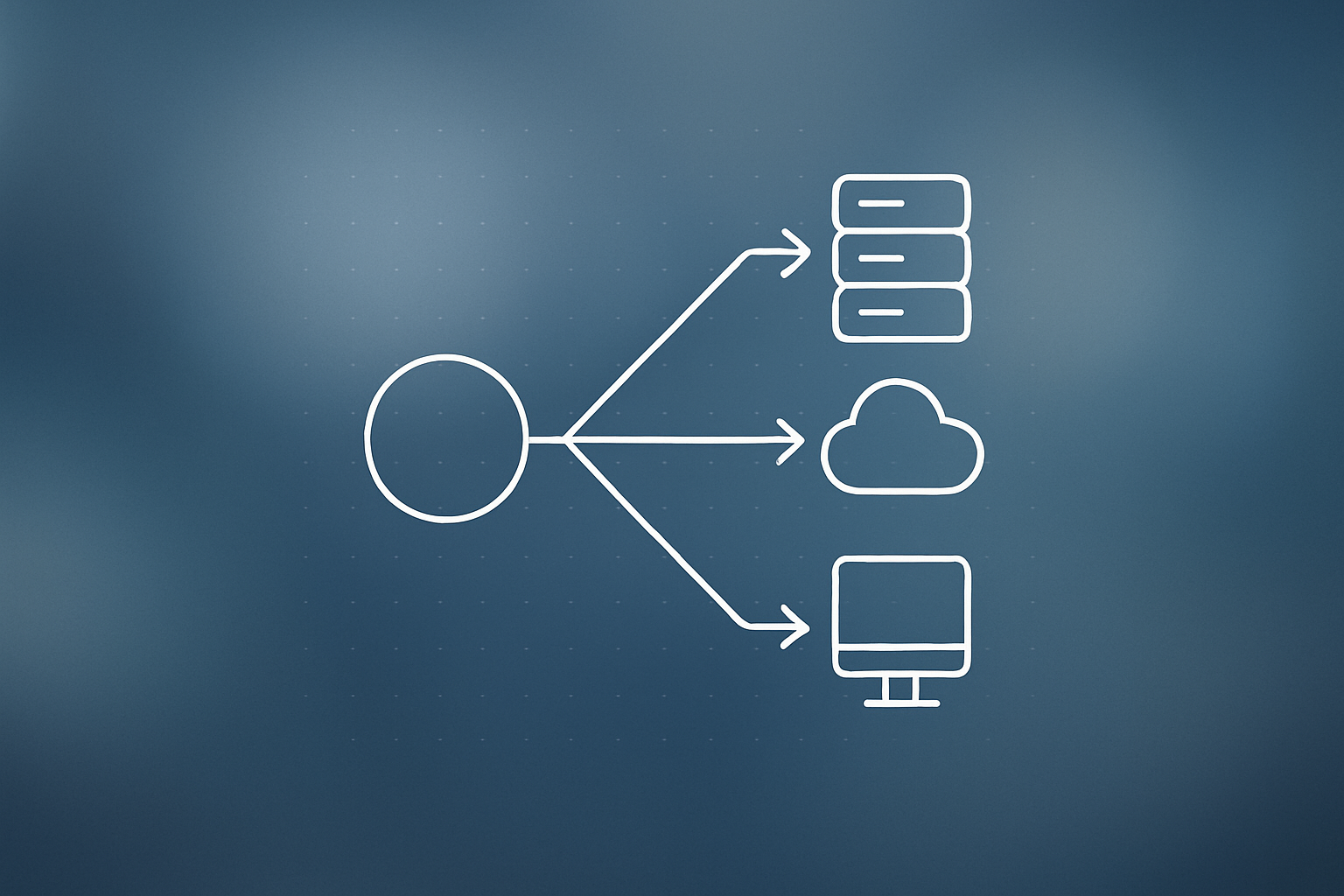
Sarvam AI is positioning itself directly in this gap. Its platform supports public cloud, private cloud, and on-premises deployments. The $234 million raise suggests investors believe there is a large market in helping enterprises control their own AI stack rather than depending on infrastructure built outside India.
This mirrors a broader pattern we track in China’s open-source AI push, where local deployment and sovereignty are driving adoption as much as raw model capability.
What the cost question looks like in practice
AI looks cheap at the pilot stage. A handful of employees experimenting with a chatbot costs almost nothing. The economics change sharply when AI runs across thousands of users or powers automated workflows around the clock. Compute, networking, storage, integration engineering, energy, and security all become line items that add up fast.
Kumar argues this will shift how organisations select models. Instead of picking whatever scores highest on a leaderboard, they will calculate cost per useful output and choose accordingly. A cheaper, locally-hosted model that handles routine tasks in Hindi may deliver better unit economics than routing every query through a frontier model at global API prices.
If you are assessing AI costs for your own business, it is worth speaking to someone who has actually run these numbers. Our AI integration service includes a scoping exercise that maps tasks to appropriate models before any spend is committed.
India’s specific angle: local language, not largest model
Sarvam makes an explicit claim worth noting: India does not need the world’s biggest AI model to capture the opportunity. The competitive advantage, in their view, comes from AI that works fluently in local languages, serves public systems, and fits the actual workflows of Indian businesses and government bodies.
The usage numbers back this up. Sarvam’s platform handles over two million conversations per day, and its voice systems process more than half a million hours of audio every month. That is real-world traction built on localisation, not on having the highest parameter count.
Meanwhile, global labs are not ignoring India. Anthropic reports that India is the second-largest Claude.ai market globally, with about 5.8% average usage share. Indian Claude users lean heavily toward professional and technical tasks: coding, mathematics, engineering work. This fits a country where technology services are a core economic pillar.
The likely outcome, according to Kumar, is not a single winner. Businesses will run multiple models in parallel: a global frontier model for complex reasoning or code review, a local model for customer-facing tasks in regional languages. The “one-model enterprise” is probably already dead.
Our take
The shift Kumar describes is real, and it is further along than most vendor conversations acknowledge. We have seen it ourselves: clients who started by asking “should we use ChatGPT or Claude?” are now asking “can we run this on-premises, and what happens to our data if the API provider changes its terms?”
The honest answer is that most businesses do not need to resolve this at the infrastructure level yet. What they do need is a clear task map: which jobs in the business should AI touch, what data those jobs involve, and whether a cloud API is acceptable for each one. That analysis is unglamorous, but it prevents expensive rebuilds later.
The Sarvam and HCLTech investment story is mostly relevant to larger Indian enterprises and public-sector buyers. For smaller businesses, the practical takeaway is simpler: stop optimising for model quality in the abstract and start optimising for cost per completed task in your actual workflow. See our client case studies for examples of how that kind of scoping plays out in practice.
What to do about it
- Map your AI use cases by data sensitivity: separate tasks that involve personal, financial, or regulated data from those that do not.
- Price the at-scale cost of your current AI setup: multiply your per-query or per-seat cost by realistic usage volumes for one year.
- Test one local or open-source model against your most frequent routine task and compare the cost per useful output to your existing tool.
- Review your vendor contracts for data residency and audit rights before expanding AI access to more employees or automated systems.
- Revisit model selection every six months: the cost and capability landscape is moving fast enough that last year’s choice may not be this year’s best fit.
The practical takeaway: the right model for your business is the one that handles your specific tasks within your data constraints at a cost that holds up when you scale.
Frequently asked questions
What is Sarvam AI and how much did it raise?
Sarvam AI is an Indian AI platform company focused on cloud, private cloud, and on-premises AI deployments. It raised $234 million as part of a $300 million Series B round at a valuation of $1.5 billion.
Is India a big market for Claude AI?
Yes. Anthropic says India is the second-largest Claude.ai market globally after the United States, with approximately 5.8% average usage share. Indian users rely on Claude heavily for professional and technical tasks such as coding and mathematics.
Why are enterprises moving away from cloud-only AI models?
Regulated industries such as finance, insurance, healthcare, and government face data localisation rules, sector regulations, and audit requirements that cloud-only AI models may not satisfy. This drives demand for private cloud and on-premises deployment options.
How do AI costs change as adoption scales inside a company?
At the pilot stage AI costs are low, but as usage spreads across thousands of employees or automated systems, compute, networking, storage, integration, energy, and security costs all become significant operational expenses. Organisations increasingly evaluate cost per useful output rather than benchmark performance.