Cursor Router Cuts AI Coding Costs 30-50% by Matching Tasks to Models
Cursor Router is now available for Teams and Enterprise plans. It classifies each coding request and routes it to the right model, cutting costs 30-50% without downgrading hard tasks.
Cursor has made Cursor Router generally available for Teams and Enterprise customers. The system classifies each request before a model is called, then sends it to whichever model fits the task. Cursor says online A/B tests showed 60% cost savings, and early-access enterprise accounts saw 30-50% reductions in AI spend. The core idea is that about 60% of developers stick to one model for everything, which means routine work gets priced at frontier rates unnecessarily.
What happened
| Detail | Value |
|---|---|
| Availability | Generally available, Teams and Enterprise plans |
| Training dataset | 600,000+ live requests |
| Evaluation scale | Millions of live requests (online A/B test) |
| Reported savings (A/B test) | 60% |
| Reported savings (enterprise early access) | 30-50% |
| Reward signal | User satisfaction (AFC) |
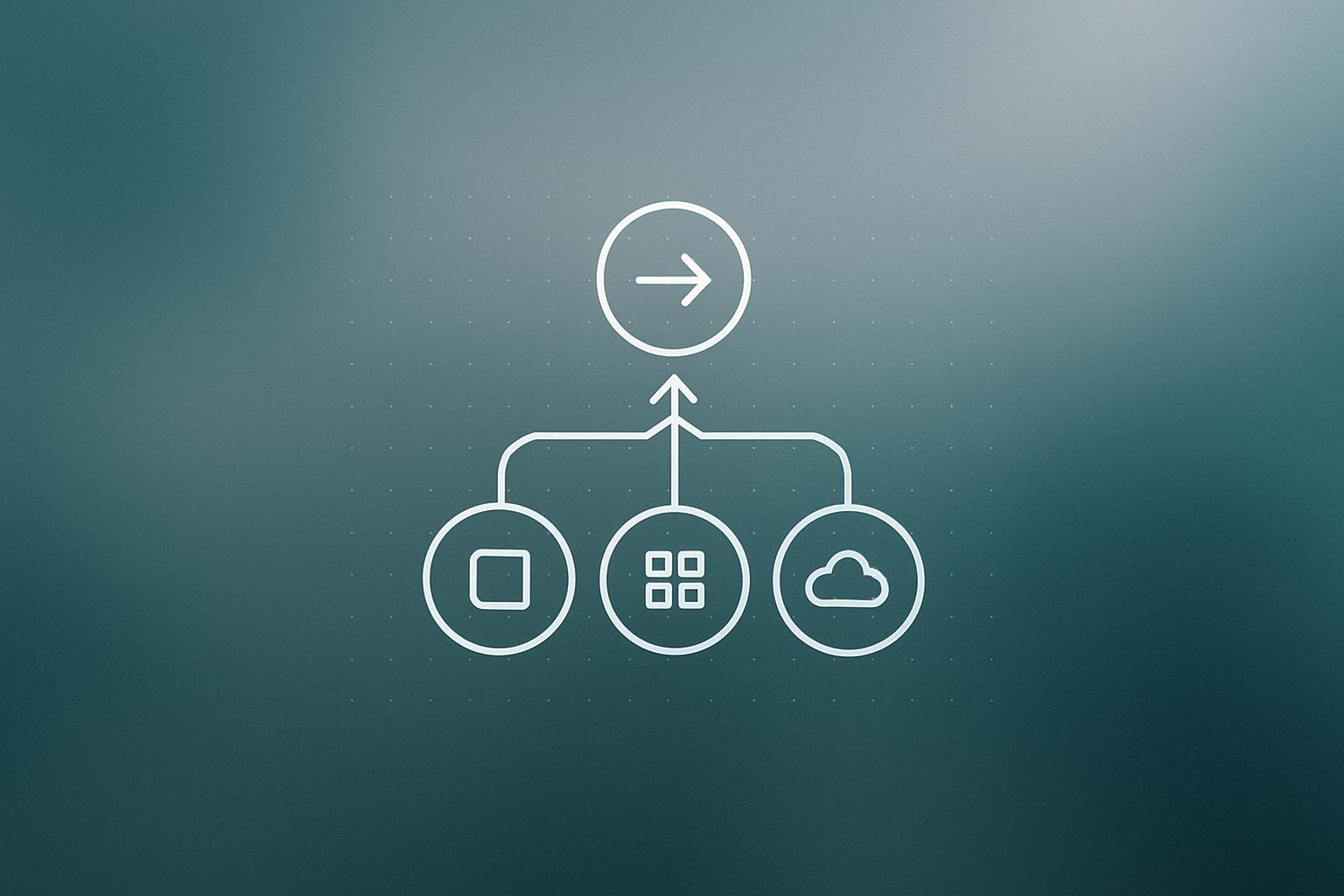
Cursor Router is not a fallback chain or a retry layer. It is a classifier that runs before any model call. For every request, it reads four inputs: the query itself, surrounding context, task complexity, and domain. It then combines those signals with learned knowledge of how each available model behaves.
Cursor publishes three dispatch rules that come out of that classification:
- Simple work goes to the most cost-efficient model available.
- UI updates go to the model with the strongest visual judgment.
- Complex, long-horizon problems go to frontier reasoning models.
The savings come from the first two tiers, not from downgrading hard problems. Difficult requests still reach the most capable models. What changes is that routine requests no longer travel the same expensive route.
Why does prompt cache matter here?
Switching models mid-conversation invalidates the prompt cache. Every time a different model handles a follow-up message, the full context must be re-processed rather than retrieved from cache, which costs real tokens. Most routing systems ignore this and overstate their savings as a result.
Cursor Router was trained on a dataset where routing creates cache misses, and the reported cost figures already include those additional charges. That is a meaningful detail for any team comparing router products. The numbers you see from Cursor reflect a real-world scenario, not a lab ideal.
Cursor also notes the classifier is designed to be updated as new models ship. That matters because the frontier model lineup changes roughly every month. A static router trained once becomes stale quickly.
Why it matters
The problem Cursor is addressing is a spend pattern, not a capability gap. According to Cursor, around 60% of developers pick one model and use it for everything: autocomplete, refactors, architecture questions, and one-line fixes alike. That collapses a range of tasks onto a single price point, usually the highest one.
For teams paying per-token on enterprise contracts, this adds up fast. AI spend growing faster than output quality is a real conversation happening in engineering and finance teams right now. A router that intelligently differentiates simple tasks from hard ones, and prices accordingly, is a straightforward solution to a budget problem that most teams are only just starting to track carefully.
If you are exploring how to manage AI tooling costs more broadly, our AI integration services cover model selection and cost architecture for business workflows.
Our take
The cache-miss accounting is what separates this from marketing. Most “smart routing” pitches skip that cost entirely, which makes their savings figures look better than they really are. Cursor showing its work there is a sign the system was built by people who have actually operated it at scale, not just described it in a slide deck.
The 30-50% enterprise savings figure is more credible than the 60% A/B test number, because A/B tests can be structured to favor the outcome you want. Either way, the direction is right. Treating every request as a frontier task is wasteful, and most coding assistants have not addressed this yet.
The “model churn” design choice is smart. Any router that cannot adapt as GPT-5 or Claude 4 or Gemini 3 arrives becomes a liability within months. Whether Cursor can keep that promise at pace with the industry is the real question to watch. We covered a similar dynamic in Google’s recent multi-tier Gemini release, where the point was also to match model cost to task weight.
What to do about it
- Check whether your team is on a Cursor Teams or Enterprise plan. Router is only available on those tiers.
- Enable Cursor Router in your workspace settings and let it run for two to four weeks before comparing spend reports.
- Monitor cache-hit rates in your billing dashboard to see whether model switching is adding cost back in.
- Review which model your developers have set as their default. If most are on a single frontier model, Router will have the most room to reduce spend.
The practical takeaway: treat AI spend like cloud compute, you need tiered pricing matched to workload, not one instance type for everything.
Frequently asked questions
What is Cursor Router?
Cursor Router is a request-level classifier built into Cursor that evaluates each coding request before calling a model, then routes it to the most appropriate and cost-efficient model based on the query, context, task complexity, and domain.
How much does Cursor Router reduce AI costs?
Cursor reports 60% cost savings in online A/B tests and 30-50% savings for early-access enterprise accounts. These figures include the cost of prompt-cache misses caused by switching models mid-conversation.
Which Cursor plans include Cursor Router?
Cursor Router is generally available for Teams and Enterprise plan customers.
Does Cursor Router send hard problems to cheaper models?
No. According to Cursor, complex long-horizon problems are still routed to frontier reasoning models. The savings come from routing simple and routine tasks to less expensive models, not from downgrading difficult requests.