beafk.app: Orchestrate Claude Code, Codex and Grok from Your Phone
beafk.app lets developers run and orchestrate Claude Code, Codex, Grok Build and Kimi Code from their phone. Code stays on your own machine. Launched on Product Hunt August 2026.
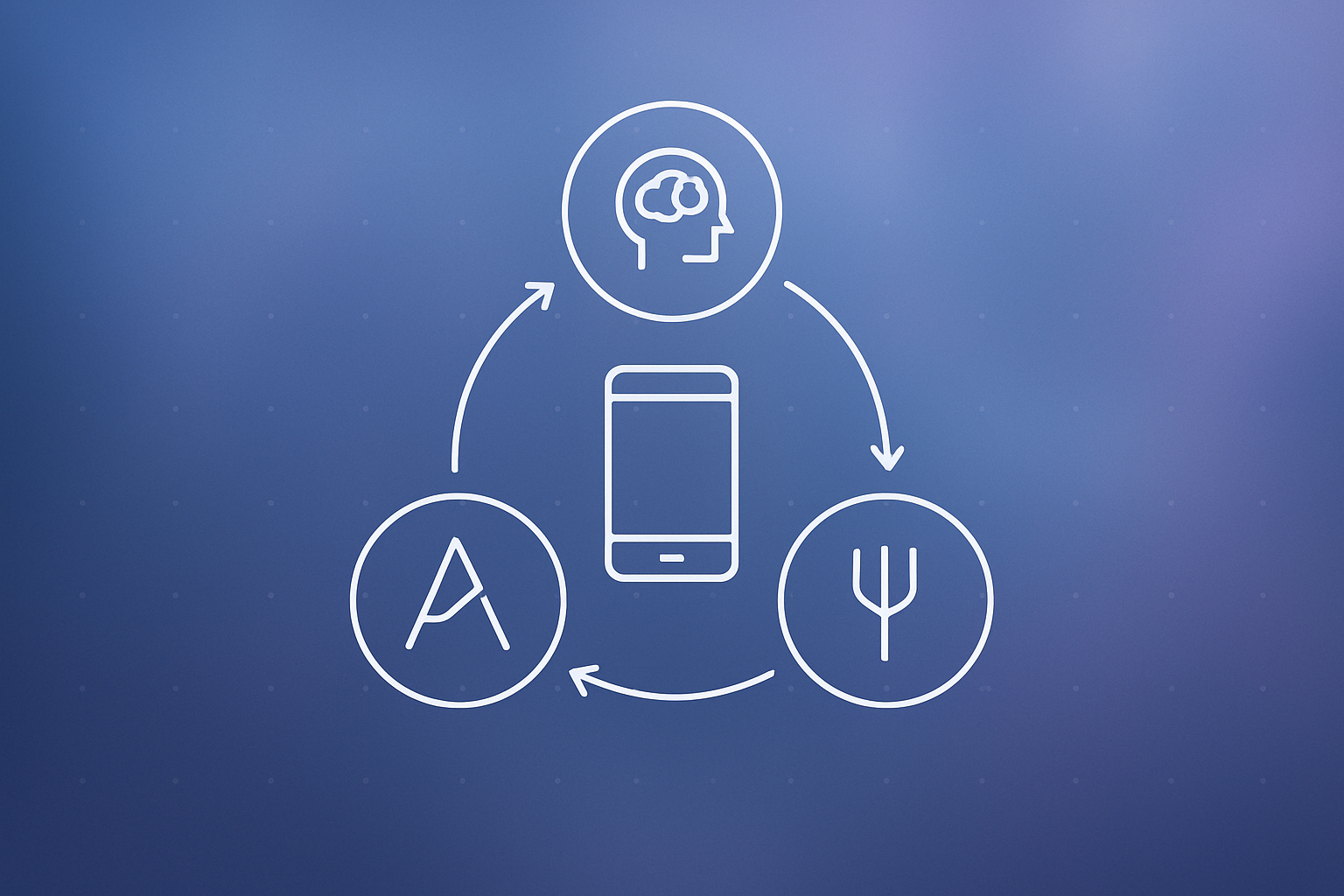
beafk.app launched on Product Hunt on August 29, 2026, offering developers a mobile-first workspace to run and coordinate multiple AI coding agents from a smartphone. The tool supports Claude Code, Codex, Grok Build, and Kimi Code natively on a developer's own machine, connecting the phone directly to that machine via Tailscale. Code, credentials, and agent conversations never leave the user's hardware. Pricing is based on machines, not seats, and a seven-day free trial requires no credit card.
What happened
| Detail | Fact |
|---|---|
| Launch date | August 29, 2026 (Product Hunt) |
| Supported agents | Claude Code, Codex, Grok Build, Kimi Code |
| Network method | User’s own Tailscale network + short-lived certificate |
| Development started | July 22, 2026 |
| Built using beafk itself | 37 days, entirely from a phone after the first web UI commit |
| Pricing model | Per machine, not per seat |
| Trial | 7 days, no credit card required |
beafk (pronounced “be AFK”, short for Away From Keyboard) is a new tool from founder Bogdan Serebryanov that lets developers start AI coding sessions, monitor progress, and intervene from a phone rather than sitting at a desk. The core idea is that if agents are doing most of the coding, developers should not have to organize their day around being near a computer.
The product came out of Bogdan’s own frustration. He was already using AI coding agents heavily, but still found himself tethered to his desk to babysit sessions, answer agent questions, and switch between tools. The birth of his son sharpened that problem into a product.
How it works technically
beafk does not route agent traffic through its own servers. The user’s phone connects directly to their development machine over their own Tailscale network (a private, encrypted mesh VPN). beafk issues a short-lived certificate to authorize the connection. After that, development traffic stays off beafk’s infrastructure entirely. Source code, agent conversations, and credentials remain on the user’s machine.
A key architectural choice is the delegation model. A lead agent can hand off sub-tasks to other agents, meaning different models can handle different parts of a job. The primary agent’s context window does not fill up with every intermediate step from the delegated work. Developers watch delegated sessions and step in from the mobile interface when needed.
The tool also syncs shared configuration (skills and MCP servers) across supported coding CLIs, so developers do not have to repeat setup when switching between agents. For teams, workspaces support admins and members, administrators can restrict access to specific machines, and a signed, hash-chained audit log records all certificates issued.
Was it actually built this way?
Bogdan says yes. Development began July 22, 2026. He used a mobile terminal to create only the first version of the web interface. The subsequent 37 days of work were done through beafk itself, from his phone. According to him, that also meant more time with his family and more trips to the gym.
“I was building a product because I wanted to be AFK, and then I actually got to be AFK while building it.”
That is a credible self-validation story, though it is still a press release from the founder. Independent developer feedback will be the real test, which is why the Product Hunt launch is described as primarily a feedback-gathering exercise.
Why it matters
The pattern of “multiple AI agents working in parallel” is growing fast. Tools like this fit into the broader shift toward AI integration in developer workflows, where the bottleneck is no longer model capability but coordination and oversight. Most current multi-agent setups still require a desktop to manage properly.
The privacy angle matters too. Many AI coding tools route your code through a vendor’s API and cloud infrastructure. beafk’s Tailscale-based direct connection means the vendor never sees your source. For teams working on proprietary or regulated codebases, that is a meaningful distinction, not a marketing point.
The per-machine pricing model also breaks from the per-seat norm. For a solo developer with multiple machines, or a small team with a few build servers, that could work out cheaper or more expensive depending on setup. It is worth doing the math before signing up.
Our take
The idea is sound. AI coding agents are genuinely useful but genuinely annoying to babysit. A well-designed mobile interface for multi-agent orchestration fills a real gap. The Tailscale-based architecture is a smart privacy choice, and the audit log for team workspaces shows some maturity in the design.
That said, this is a very early-stage product from a solo founder, launched via a paid press release, with 37 days of development history. The agent ecosystem it depends on (Claude Code, Codex, Grok Build, Kimi Code) is itself moving fast, and compatibility maintenance will be constant work. Businesses considering this for team use should test the free trial thoroughly before committing, and watch how the product handles agent API changes over the next few months.
If you are already experimenting with AI agents in your development pipeline, this is worth a look. If you are just starting to explore what AI can do for your dev team, the workflow automation layer is probably a better first step before adding multi-agent orchestration complexity.
What to do about it
- Sign up for the seven-day free trial at beafk.app (no credit card needed) and test it against a non-critical project first.
- Verify your Tailscale setup is working correctly before connecting your dev machine.
- Test the delegation model with two agents on a discrete task to see whether context management actually works as described.
- Check the audit log feature if you are evaluating this for a team, and confirm it meets your internal access-control requirements.
- Follow the product on Product Hunt to track early user feedback before making a longer commitment.
The seven-day free trial is the right place to start. Let the product prove itself on a real task before it earns a machine slot in your team’s workflow.
Building an automation like this? Most client workflows we ship run on Make (referral link, it supports our reporting). If you would rather have it built and monitored for you, that is our workflow automation service.
Frequently asked questions
What is beafk.app and what does it do?
beafk.app is a mobile-first workspace that lets developers run and orchestrate multiple AI coding agents, including Claude Code, Codex, Grok Build, and Kimi Code, from their smartphone. The agents run on the developer's own machine, and the phone connects to that machine directly via Tailscale.
Does beafk store my code or credentials on its servers?
No. beafk uses a Tailscale-based direct connection. After issuing a short-lived certificate to authorize the phone-to-machine link, development traffic does not pass through beafk's infrastructure. Code, credentials, and agent conversations stay on the user's machine.
How much does beafk cost?
Pricing is based on machines, not seats. beafk offers a seven-day free trial with no credit card required. Specific pricing tiers were not disclosed in the launch announcement.
Can beafk be used by developer teams, not just solo developers?
Yes. Team workspaces support admins and members, administrators can control access to individual machines, and a signed, hash-chained audit log tracks all certificates issued by the workspace.