AI Meets Lean Six Sigma: What Process Optimization Really Looks Like Now
AI is being woven into Lean Six Sigma and BPM frameworks. Here's what the $113B process optimization market shift means for how businesses actually run.
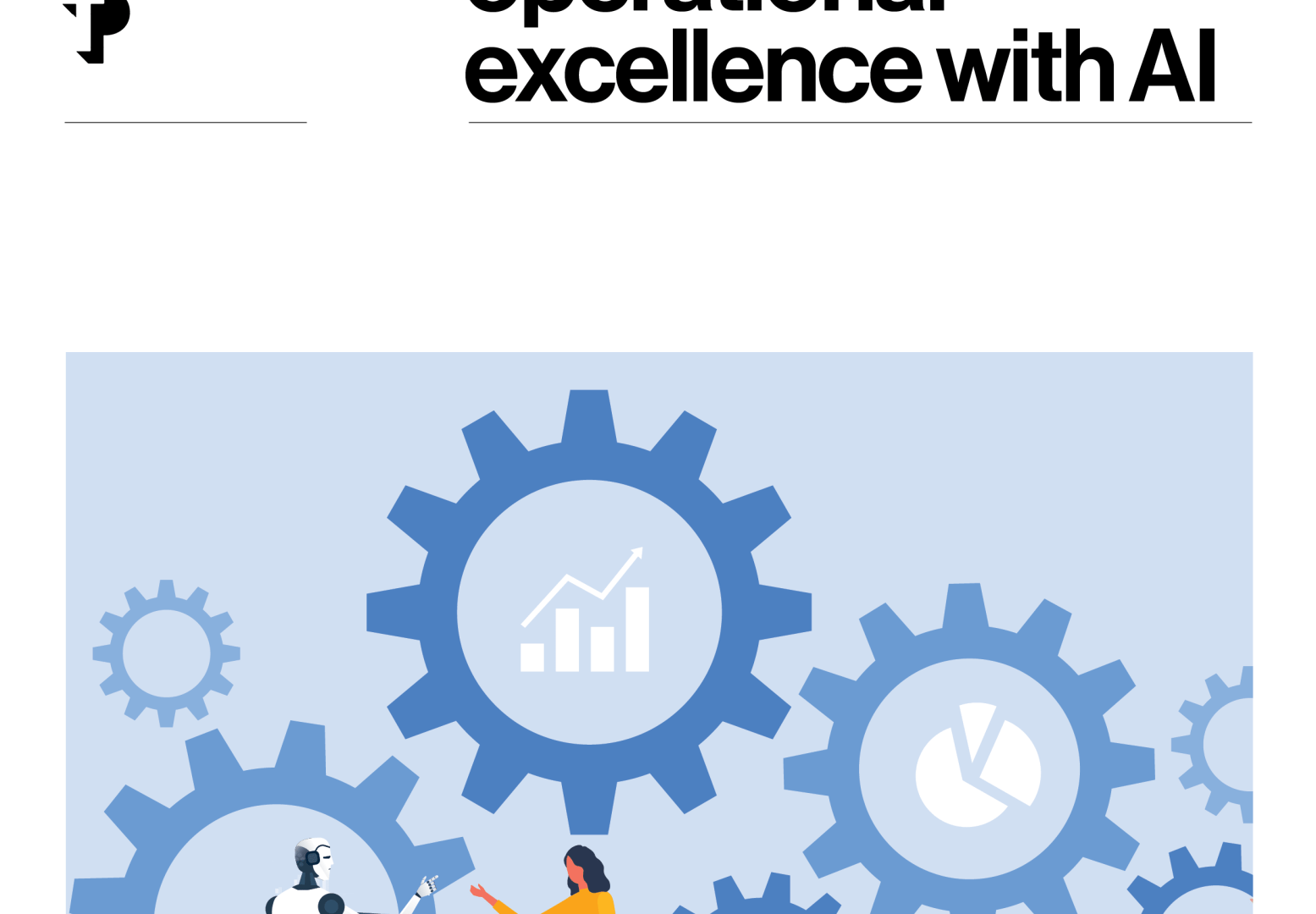
Companies are pushing AI into established process improvement frameworks like Lean Six Sigma and business process management (BPM), according to a report from MIT Technology Review. The market for AI-powered process optimization is projected to surpass $113 billion within the next decade, and 88% of business leaders in one study say they are actively working to embed AI into their operational workflows. The question is no longer whether to combine AI with structured process methods, but how to do it without losing the discipline those frameworks were built on.
What happened
MIT Technology Review published a report examining how companies are folding AI into long-standing process excellence methodologies. The two most prominent frameworks in focus are Lean Six Sigma and business process management (BPM).
Lean Six Sigma was built on statistical rigor and quality control. BPM created structured, end-to-end maps of how work moves across departments. Together, they gave organizations a repeatable way to measure, analyze, and build accountability into daily operations.
Now, according to the report, those frameworks are being updated to accommodate AI tools. The market for AI-driven process optimization is projected to exceed $113 billion over the next decade. A separate study cited in the report found that 88% of business leaders are actively trying to integrate AI into their process improvement work.
Why it matters
Lean Six Sigma and BPM took hold precisely because they imposed structure on messy, sprawling operations. They worked because they demanded measurement and accountability, not just intent.
Adding AI to that equation is not automatically an improvement. The risk is that teams reach for AI tools before they have clean processes, good data, or a clear definition of what “better” looks like. AI amplifies what is already there, including the mess.
That said, the scale of investment here is hard to ignore. A projected $113 billion market signals that large organizations are committing real budget to this combination. For smaller businesses, that means the tooling, consulting frameworks, and software platforms built around AI process optimization will become cheaper and more accessible over time.
Here is what the two core frameworks bring to the table, and where AI is being applied to each:
| Framework | Original strength | Where AI is being applied |
|---|---|---|
| Lean Six Sigma | Statistical quality control, reducing variation | Automated anomaly detection, predictive quality monitoring |
| BPM | End-to-end workflow mapping across departments | Process mining, automated workflow triggers, real-time bottleneck identification |
Our take
At Lumien, we work with businesses that are somewhere between “we use AI a bit” and “we have a real operational system.” The gap between those two places is usually not a technology problem. It is a process problem that AI cannot fix on its own.
The framing in this report is honest about that tension. Lean Six Sigma and BPM were never glamorous. They were slow, deliberate, and built around getting measurements right before drawing conclusions. That discipline is exactly what most AI deployments skip.
The 88% figure for business leaders wanting to embed AI into operations is worth treating with some skepticism. Wanting to do it and having the data quality, process documentation, and staff capability to do it well are very different things. The $113 billion projection covers a decade, which means the bulk of real adoption is still ahead. Early movers will have time to iterate before the market matures.
If your business has already done the work of mapping processes and measuring outcomes, AI tools will genuinely accelerate what you can see and act on. If you have not, adding AI first is putting the cart well before the horse.
What to do about it
Before evaluating any AI process tool, do one concrete thing: pick a single workflow, write down every step, and identify where you currently measure performance. If you cannot answer those questions in an hour, your process documentation is the bottleneck, not your AI stack. Fix that first, then revisit the tooling.
Frequently asked questions
What is AI-powered process optimization?
AI-powered process optimization uses artificial intelligence tools to analyse, monitor, and improve business workflows. It is often applied within existing frameworks like Lean Six Sigma or BPM to automate measurement, flag bottlenecks, and surface quality issues faster than manual methods.
How big is the AI process optimization market?
According to MIT Technology Review, the market for AI-powered process optimization is projected to exceed $113 billion within the next decade.
How does AI fit into Lean Six Sigma?
Lean Six Sigma focuses on reducing process variation through statistical rigor. AI can support this by automating anomaly detection and predictive quality monitoring, making it faster to identify where a process is drifting out of acceptable limits.
Are most businesses actually using AI in their operations?
According to one study cited by MIT Technology Review, 88% of business leaders say they are working to embed AI into operational processes. However, wanting to integrate AI and having the process documentation and data quality to do it effectively are different challenges.