Indonesia Opens First University AI Center with NVIDIA, Indosat, and UGM
Indonesia's first university AI center launched in Yogyakarta by UGM, Indosat, and NVIDIA. Focuses on TB detection, precision farming, and disaster response.
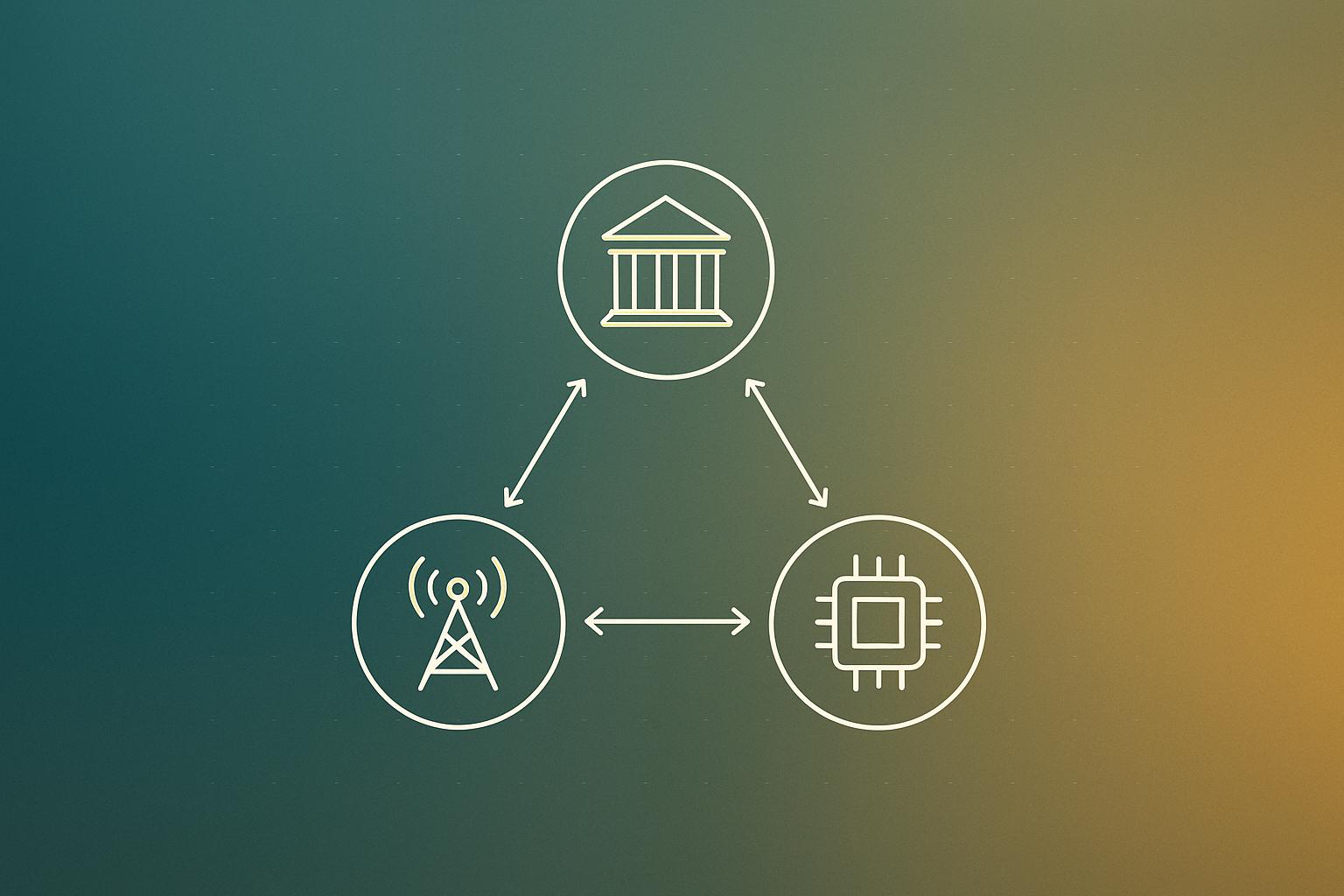
Indonesia's Ministry of Communication and Digital Affairs, Indosat Ooredoo Hutchison, NVIDIA, and Universitas Gadjah Mada this week launched the UGM Indosat NVIDIA AI Technology Center (NVAITC) in Yogyakarta. It is the country's first university-based AI center, set up under Indonesia's national AI Center of Excellence initiative. The center gives UGM students and researchers access to enterprise-grade GPU compute, pretrained models, and technical mentorship, with three initial projects targeting tuberculosis detection, precision farming, and disaster response.
What happened
| Detail | Fact |
|---|---|
| Center name | UGM Indosat NVIDIA AI Technology Center (NVAITC) |
| Location | Yogyakarta, Indonesia |
| Partners | Universitas Gadjah Mada, Indosat Ooredoo Hutchison, NVIDIA, Ministry of Communication and Digital Affairs |
| Compute platform | NVIDIA full-stack AI platform plus GPU Merdeka (Indosat’s sovereign GPU-as-a-service) |
| Initial projects | eNose-TB, SmartAgri, Tech4Disaster |
| TB cases in Indonesia (annual) | Over 1 million new cases |
| Agriculture share of workforce | Nearly 30% |
The center is the first of its kind at an Indonesian university, and it sits inside Indonesia’s broader AI Center of Excellence initiative, which aims to move the country from being a consumer of AI to a producer of it. Indonesia is the world’s fourth-most populous nation, so the scale of the problems researchers are working on is real.
Researchers and students at UGM now get access to NVIDIA’s full-stack AI platform, NVIDIA Nemotron open models, development frameworks, and pretrained models, delivered through Indosat’s GPU Merdeka platform. GPU Merdeka is Indosat’s sovereign GPU-as-a-service offering, meaning the compute capacity sits within Indonesian infrastructure rather than being routed through foreign cloud providers. The center also connects Indonesian researchers to NVIDIA’s global network of expertise and technical mentorship.
What are the three projects the center is working on?
eNose-TB: breath-based tuberculosis screening
Indonesia records over 1 million new TB cases every year. TB is treatable, but it kills when it goes undetected, and rural clinics often lack the specialists and lab equipment needed to catch it early. UGM’s Faculty of Medicine Public Health and Nursing team, led by dr. Dian Kesumapramudya Nurputra, is building eNose-TB, an AI-powered electronic nose that screens for TB by analyzing breath samples. The goal is affordable, fast screening that works in remote settings without specialist staff or expensive labs.
SmartAgri: precision farming for Indonesian smallholders
Agriculture employs nearly 30% of Indonesia’s workforce, and most of those farmers are smallholders working with limited data about their own fields. SmartAgri combines satellite imagery, sensor data, and local agricultural knowledge using multimodal AI (models that process multiple types of input at once), paired with edge computing. The output is specific recommendations on irrigation timing and method, calibrated to Indonesian terrain and crop types.
Tech4Disaster: geospatial AI for disaster early warning
Indonesia sits on the Pacific Ring of Fire, making it one of the highest-risk countries on earth for earthquakes, volcanic eruptions, and tsunamis. Tech4Disaster is building a geospatial AI platform that uses NVIDIA accelerated computing to process satellite and sensor data quickly, giving emergency responders earlier warning and better coordination tools before and during disasters.
Why it matters
What has held Indonesian researchers back historically is not ideas or talent but access: access to the compute, models, and infrastructure needed to move from research insight to working product. This center directly addresses that constraint. By pairing sovereign GPU infrastructure with NVIDIA’s model ecosystem and UGM’s research capacity, the partnership creates a path from local problem to local solution without depending on foreign cloud budgets.
For businesses watching AI development in Southeast Asia, this signals that Indonesia intends to build AI capability domestically, not just procure it. That has implications for regional AI supply chains, talent pools, and future procurement decisions. It is also a template: government funding, telco infrastructure, big AI vendor tooling, and a research university, all pointing at specific national problems.
For context on how AI agents are increasingly being deployed on real infrastructure, our coverage of how AI agents behave when given real compute and tasks is worth reading alongside this.
Our take
The center is credible precisely because it skipped the vague mandate. Three specific projects, three specific problem domains, named researchers. That is unusual for a launch announcement in this space, which usually stays at the level of “fostering innovation.”
The TB screening project is the most interesting from a product standpoint. Breath-based AI screening for a disease infecting one million people a year, deployable without specialist staff, is exactly the kind of high-leverage application that justifies building sovereign GPU infrastructure. If eNose-TB works at the community clinic level, the model scales across other respiratory conditions and other resource-limited settings globally.
The sovereign compute angle matters commercially too. GPU Merdeka keeping compute inside Indonesian infrastructure is a deliberate policy choice, not just a branding decision. Governments across Southeast Asia are watching how this plays out. If your business is building AI products for regulated industries or public-sector clients in the region, sovereignty of compute is becoming a procurement question, not just a technical one. If you want to understand how AI integration works at an infrastructure and application level, this kind of government-backed center is setting the baseline expectations for what “enterprise-grade” means in emerging markets.
What to do about it
- Watch the eNose-TB, SmartAgri, and Tech4Disaster projects for published results. They will be early indicators of what NVIDIA Nemotron models and GPU Merdeka can actually deliver on real-world problems.
- If you sell AI products or services into Southeast Asia, start asking procurement contacts whether sovereign compute requirements are part of their evaluation criteria.
- Track Indonesia’s AI Center of Excellence initiative for follow-on center announcements. This is explicitly described as a model to replicate across the country.
- If you are building AI tools for healthcare, agriculture, or disaster response anywhere, review what UGM’s teams publish. Multimodal approaches to resource-constrained environments are a transferable design pattern.
The center’s practical test is whether these three projects ship working products within two years. Check back then.
Frequently asked questions
What is the UGM Indosat NVIDIA AI Technology Center?
It is Indonesia's first university-based AI technology center, launched in Yogyakarta by Universitas Gadjah Mada, Indosat Ooredoo Hutchison, NVIDIA, and Indonesia's Ministry of Communication and Digital Affairs. It gives UGM researchers and students access to enterprise-grade GPU compute, pretrained AI models, and technical mentorship.
What is GPU Merdeka?
GPU Merdeka is Indosat Ooredoo Hutchison's sovereign GPU-as-a-service platform. It provides accelerated computing infrastructure hosted within Indonesian infrastructure, used to power AI workloads at the UGM Indosat NVAITC.
What projects is the Indonesia AI center working on?
Three initial projects: eNose-TB (AI-powered breath analysis for tuberculosis screening in rural areas), SmartAgri (multimodal AI for precision farming advice to Indonesian smallholders), and Tech4Disaster (geospatial AI for natural disaster early warning and emergency coordination).
How many TB cases does Indonesia have per year?
Indonesia records over 1 million new tuberculosis cases every year, according to NVIDIA's announcement of the UGM Indosat NVAITC launch.