Zyphra ZUNA1.1: Open EEG Model Now Handles 0.5 to 30-Second Inputs
Zyphra released ZUNA1.1, a 380M-parameter open EEG foundation model under Apache 2.0 that accepts variable-length inputs from 0.5 to 30 seconds.
Zyphra released ZUNA1.1 this week under the Apache 2.0 license. It is a 380M-parameter foundation model for scalp EEG (electroencephalography, the recording of electrical brain activity) that can now accept variable-length signal windows from 0.5 to 30 seconds. The predecessor, ZUNA1, was limited to fixed 5-second segments. The update also expands the training corpus from roughly 2 million to 3.5 million channel-hours of public EEG data and adds three new dropout training patterns to make the model more robust to messy, real-world recordings.
What happened
| Detail | Value |
|---|---|
| Release date | July 17, 2026 |
| Model name | ZUNA1.1 |
| Parameters | 380M |
| License | Apache 2.0 |
| Input length range | 0.5 to 30 seconds |
| Token resolution | 0.125 s / 32 samples at 256 Hz |
| Training corpus | ~3.5M channel-hours (up from ~2M) |
| Install command | pip install zuna |
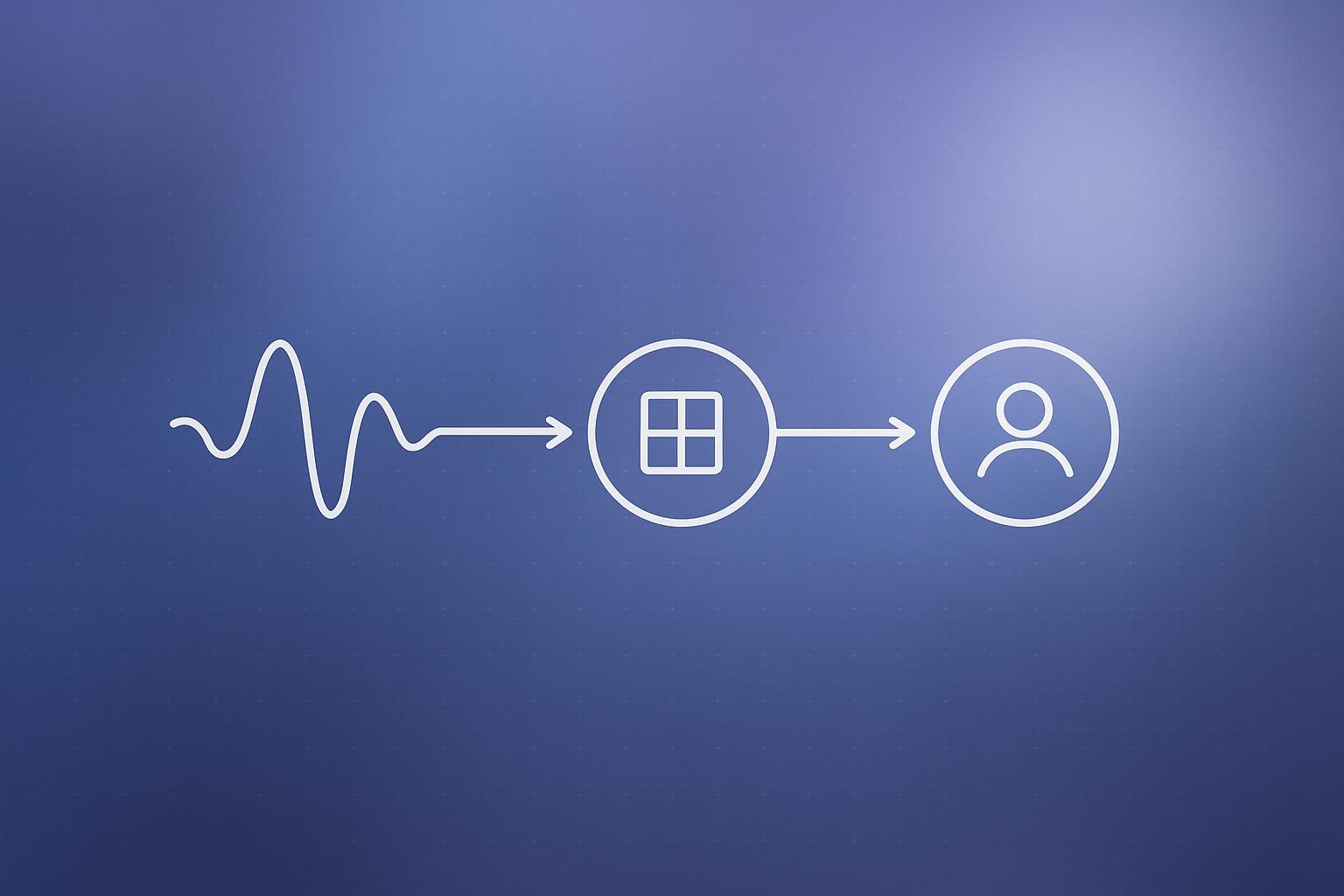
ZUNA1.1 is a masked diffusion autoencoder for scalp EEG. Given a partial set of electrode channels, it can denoise signals, reconstruct channels that have dropped out, and even predict signals at electrode positions that were never physically recorded. That last capability works because each token in the model carries a 4D rotary positional encoding over the electrode’s 3D scalp coordinates plus a coarse time index. The model learns positions, not array slot numbers, so it is agnostic to which electrode layout you use.
Weights are hosted on Hugging Face. Inference and preprocessing code are on GitHub. The model runs on a consumer GPU and is described as acceptable on CPU for many workloads. Zyphra also offers a free browser-based EEG Playground. The release is for research use only.
What changed from ZUNA1
The architecture is nearly identical. The differences are almost entirely in how the model was trained:
| Attribute | ZUNA1 | ZUNA1.1 |
|---|---|---|
| Input length | Fixed 5 s | 0.5 to 30 s |
| Dropout schemes in training | 1 (uniform random whole-channel) | 4 (channel, time, channel x time, scattered) |
| Training corpus | ~2M channel-hours | ~3.5M channel-hours |
| Quality filtering | Whole-recording level | Per-channel, per-second score |
| Preprocessing variants | Single | Two (0.1-45 Hz bandpass; 0.01 Hz highpass + notch) |
| Extra normalization layers | No | Yes |
| Reconstruction NMSE | Baseline | Equal or better |
Variable-length support works through batching. During training, Zyphra samples a segment length per example and packs multiple segments per batch up to a fixed token budget. Flex attention with a sample-aware mask prevents tokens from one segment attending to tokens from another. The model treats a 0.5-second clip and a 30-second stretch the same way, with no configuration change between them.
The shift from whole-recording quality filtering to per-channel, per-second scoring is what drove the corpus expansion. ZUNA1 discarded entire recordings when a channel was noisy. ZUNA1.1 computes a quality score per channel per second and applies a threshold at load time, rescuing usable signal that the older approach threw away.
How the reconstruction results look
On held-out five-second test sets (used to keep the comparison fair against ZUNA1), ZUNA1.1 matches or beats ZUNA1 on reconstruction NMSE (normalized mean squared error, a standard measure of signal fidelity). Both models clearly outperform classical spherical-spline interpolation from MNE, a widely used EEG analysis library.
Zyphra also ran a region-based test where all electrodes from one brain region were removed and then reconstructed from the remaining seven regions. That setup is closer to real clinical conditions than random dropout. ZUNA1.1 outperformed both spherical-spline interpolation and ZUNA1 on that test.
Why it matters
EEG research and neurotechnology products have historically been bottlenecked by the fragmentation of hardware. A four-electrode consumer headband and a 256-channel research cap produce signals that are structurally incompatible for most models. ZUNA1.1’s coordinate-based positional encoding sidesteps that problem. A single model can serve both.
The Apache 2.0 license is also significant. It allows commercial use without the restrictions attached to many academic model releases, though Zyphra states the current release is for research only. For teams building brain-computer interface prototypes or clinical data pipelines, having a permissively licensed, pretrained starting point is non-trivial.
For context on how quickly the open AI model landscape is expanding, the recent release of Kimi K3, the largest open-weights general AI model, shows a broader pattern: permissively licensed foundation models are arriving across more specialized domains, not just text and image.
Our take
ZUNA1.1 is a focused engineering update, not a headline-grabbing leap. The flexibility improvements (variable length, richer dropout patterns, finer quality filtering) are exactly the kind of unglamorous work that makes a model actually usable in practice rather than just on benchmark datasets. Zyphra is honest about what they benchmarked and what they only claim as a goal, which is rare enough to be worth noting.
For most businesses, this is not directly relevant today. But if you are building in the consumer health tech, neurofeedback, or clinical monitoring space, a permissively licensed 380M-parameter EEG model that handles messy real-world data is a meaningful foundation to evaluate. The AI integration work required to connect a model like this to a production pipeline is substantial, but you are no longer starting from scratch.
The research-only designation is the main practical blocker for commercial teams. Watch whether Zyphra loosens that restriction in future releases.
Frequently asked questions
What is ZUNA1.1 and what does it do?
ZUNA1.1 is a 380M-parameter EEG foundation model released by Zyphra under the Apache 2.0 license. It denoises, reconstructs missing channels, and upsamples scalp EEG signals across arbitrary electrode layouts, accepting input windows from 0.5 to 30 seconds.
How is ZUNA1.1 different from ZUNA1?
The main difference is flexible input length. ZUNA1 only accepted fixed 5-second segments. ZUNA1.1 handles 0.5 to 30 seconds. It also uses four dropout training patterns instead of one, and its training corpus grew from roughly 2M to 3.5M channel-hours of public EEG data.
Is ZUNA1.1 free to use commercially?
The model is released under the Apache 2.0 license, which permits commercial use. However, Zyphra states the current release is for research use only.
How do I install and run ZUNA1.1?
Install with pip install zuna. Weights are on Hugging Face and inference code is on GitHub. You can run reconstruction directly on .fif files using the reconstruct_fif function. The model supports both GPU and CPU inference.