Prentis AI Lab Seeks $100M at $1B Valuation to Automate Office Work
Prentis, a computer-use AI lab co-founded by Reid Hoffman and Mark Pincus, is in talks to raise $100M at a $1B valuation with $50M in signed contracts.
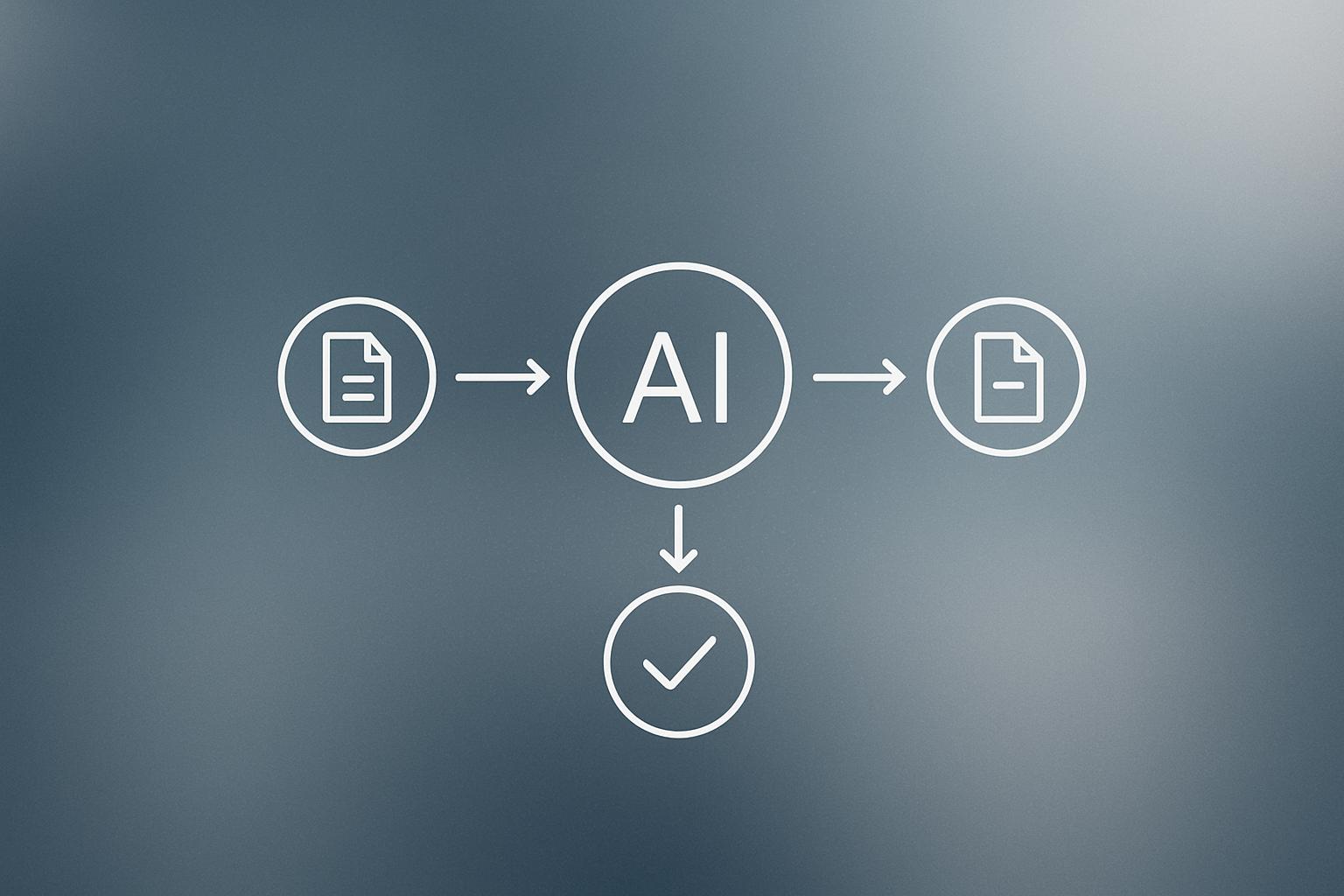
Prentis, an AI research lab focused on computer-use models, is in talks to raise $100 million at a $1 billion valuation, according to two people familiar with the discussions reported by TechCrunch. The startup launched in April 2026, co-founded by CEO Ritankar Das alongside tech veterans Reid Hoffman and Mark Pincus. It trains models to watch how office workers navigate documents and systems, then builds AI agents that can replicate those workflows. The company has already signed contracts worth up to $50 million with customers in healthcare, manufacturing, and retail.
What happened
| Detail | Fact |
|---|---|
| Founded | April 2026 |
| Target raise | $100 million |
| Valuation | $1 billion |
| Signed contracts | Up to $50 million |
| Projected annualized run rate (Q3 2026) | ~$75 million (estimated, performance-dependent) |
| Employees | More than 25 |
| Flagship model | Hive-32B |
Prentis trains AI models by observing how office workers move through routine tasks across documents and systems. The goal is AI agents (software that can operate a computer directly, clicking, typing, and navigating applications) that handle those same workflows without a human in the loop. Specific use cases named in reports include processing insurance claims and automating customs duty refund exceptions.
Customers so far span a healthcare management service organization, a manufacturer, and goods and clothing manufacturers. The company’s pitch deck projects an estimated $75 million annualized run rate by Q3 2026, but it notes that figure is based on a contracted fee equal to 20% of savings realized, not recognized revenue, and is “performance-dependent and subject to final execution.”
What makes Hive-32B different, according to Prentis
Prentis claims its Hive-32B model beats both OpenAI’s GPT-5.4 and Anthropic’s Claude Opus 4.6 on two benchmarks used to evaluate computer-use agents:
- WindowsAgentArena: measures end-to-end task completion on real Windows applications.
- ScreenSpot-v2: tests whether a model can identify the correct on-screen control to click.
The company also argues Hive-32B costs roughly 10 times less per task than frontier APIs, making it cheaper to run across everyday business workflows. TechCrunch has not independently verified these benchmark claims.
Who is behind Prentis?
CEO Ritankar Das, now 31, was UC Berkeley’s youngest University Medalist in over a century, graduating at 18 with a double major in bioengineering and chemical biology. He later earned a master’s in biomedical engineering at Oxford, then dropped out of a Gates Cambridge Scholar AI PhD program at Cambridge in 2014 to found Titan, a holding company that builds and runs AI businesses using its own exits rather than outside limited partners.
Titan’s other ventures include Tala Health, an AI-powered virtual care provider that raised a $100 million seed round in 2025, and Forta Health, an autism care startup that raised $55 million led by Insight Partners in 2024. Titan-founded Dascena was acquired by CirrusDx in 2022.
Reid Hoffman, the LinkedIn co-founder and Greylock partner, is a co-founder but is primarily focused on Manas AI, an AI drug-discovery startup he announced last month when he stepped down from Microsoft’s board. He was also an early OpenAI investor and co-founded Inflection AI with Mustafa Suleyman before Microsoft absorbed most of that team in 2024. Mark Pincus, the Zynga founder, now runs investment firm Reinvent Capital with Hoffman as a senior adviser.
The team includes more than 25 researchers with prior experience at OpenAI, Google DeepMind, Meta, Tencent, and Alibaba.
Why it matters
Prentis is betting that automating generic office workflows will become a larger AI use case than coding assistance. That is a real shift worth watching: coding tools are maturing fast and their addressable market is relatively narrow. Repetitive back-office work, by contrast, sits inside almost every business.
The competitive picture is already crowded. Anthropic, OpenAI, and Mira Murati’s Thinking Machines Lab are all building computer-use agents. Anthropic moved fast enough to acquire Seattle-based computer-use startup Vercept earlier this year, folding its founders in and shutting down the product. For context on how AI companies are competing on model quality and price, our recent coverage of Microsoft MAI models outperforming frontier AI on cost shows how cost-per-task is becoming a core battleground.
For businesses that process high volumes of structured paperwork, insurance claims, or import/export compliance, this category is worth tracking. The 20%-of-savings fee model Prentis uses also shifts risk to the vendor, which could make procurement easier if the numbers hold up.
Our take
The 10x cost advantage claim is the most interesting part of this story, and also the one that needs the most scrutiny. Smaller, task-specific models beating large frontier models on narrow benchmarks is plausible. But “10x cheaper” headlines have a habit of dissolving once you factor in fine-tuning costs, infrastructure, and the edge cases that require human fallback.
The contract structure (20% of realized savings) is smart positioning for enterprise sales but makes the $75M run-rate projection hard to read as revenue. If savings are hard to attribute or contracts take time to execute, that number could drift significantly.
That said, the hiring depth (DeepMind, OpenAI, Meta) and the existing signed contracts in under four months suggest this is not pure hype. Businesses exploring AI for workflow automation should put Prentis on the shortlist alongside Anthropic’s offerings, but ask hard questions about how savings are measured before signing a percentage-of-savings deal. If you want to think through how AI agents could fit your own operations, our AI integration service is a useful starting point.
What to do about it
- Identify two or three internal workflows that are high-volume, document-heavy, and rule-based. These are the best candidates for computer-use AI agents.
- When evaluating any vendor in this space, ask which specific benchmarks they use and whether results have been independently verified.
- Scrutinize fee structures tied to “percentage of savings” carefully. Get a clear, written definition of how savings are calculated and audited.
- Watch this space over the next two quarters. If Prentis closes the $100M round and hits the Q3 run-rate target, it will validate the model. If it misses, that tells you something too.
Frequently asked questions
What does Prentis AI do?
Prentis trains AI models to observe how office workers navigate documents and software systems, then builds agents that can automate those same tasks, such as processing insurance claims or handling customs duty paperwork, without human involvement.
Who founded Prentis AI lab?
Prentis was co-founded by CEO Ritankar Das, LinkedIn co-founder and Greylock partner Reid Hoffman, and Zynga founder Mark Pincus. It launched in April 2026.
How much is Prentis AI trying to raise and at what valuation?
Prentis is in talks to raise $100 million at a $1 billion valuation, according to two people familiar with the discussions cited by TechCrunch.
What is the Hive-32B model and how does it compare to GPT-5.4?
Hive-32B is Prentis's flagship computer-use model. The company claims it outperforms OpenAI's GPT-5.4 and Anthropic's Claude Opus 4.6 on the WindowsAgentArena and ScreenSpot-v2 benchmarks, and costs roughly 10 times less per task. TechCrunch has not independently verified these claims.