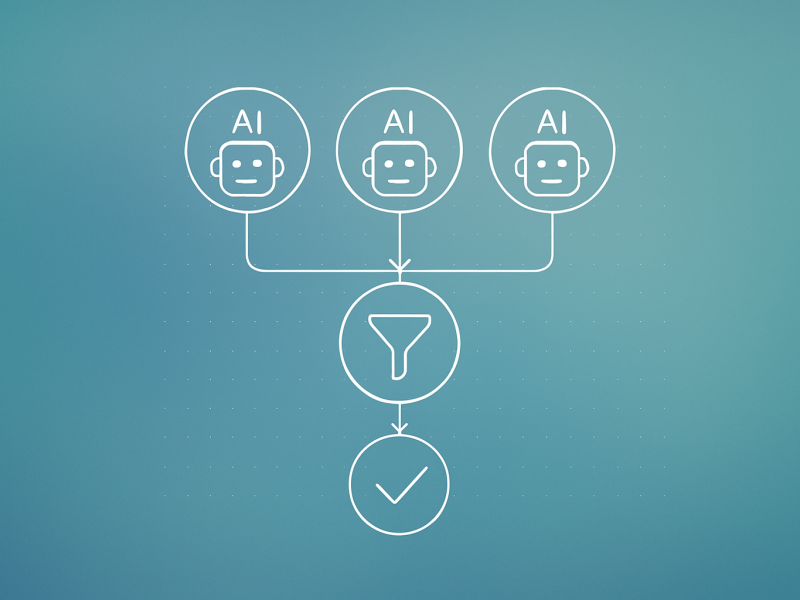
NeMo Guardrails for Enterprise AI: A Developer’s Practical Guide
Learn how NeMo Guardrails layers PII detection, LLM self-checks, topical restrictions, and policy gating to keep enterprise AI assistants safe and auditable.
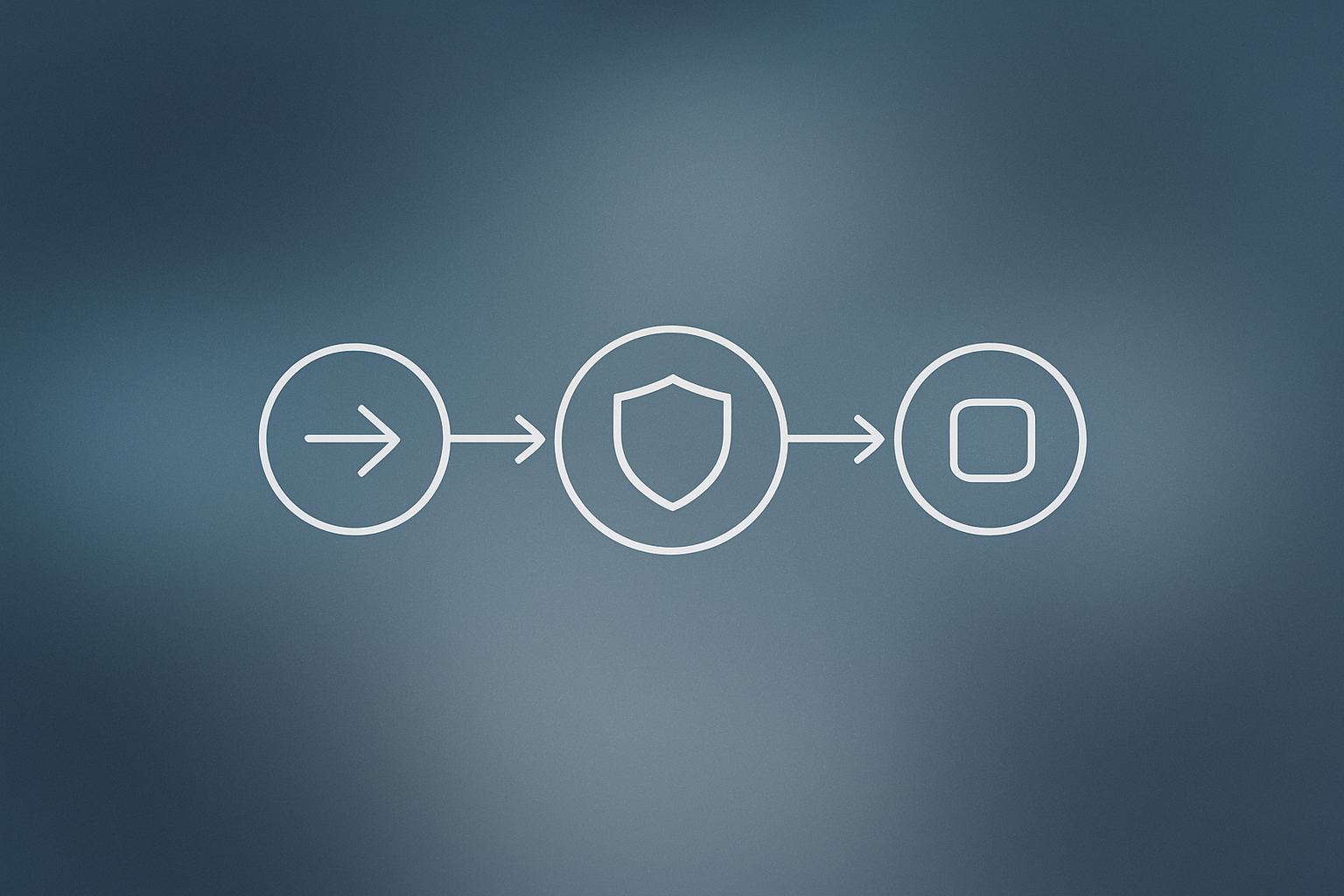
NeMo Guardrails is an open-source toolkit from NVIDIA that wraps large language model calls with configurable safety controls. A tutorial published by Marktechpost on 22 August 2026 walks through building a layered guardrails pipeline for a financial assistant called FinBot, running on GPT-4o-mini. The pipeline combines deterministic PII blocking, LLM-based self-checks on both input and output, topical dialog restrictions, retrieval filtering, and a policy-gated money-transfer flow, all with token accounting and a red-team coverage report baked in.
What happened
| Detail | Value |
|---|---|
| Framework | NeMo Guardrails (open-source, NVIDIA) |
| Model used | GPT-4o-mini via OpenAI API |
| Assistant name | FinBot (personal finance support bot) |
| Daily transfer limit in demo | $2,000.00 |
| Simulated account balance | $4,820.55 |
| Rail layers | Input, retrieval, and output |
The tutorial installs NeMo Guardrails, configures it against an OpenAI endpoint, and defines the assistant in a YAML file. That file sets the model, writes the system persona, and declares which Colang flow runs at each stage of the request lifecycle: input rails run first, retrieval rails filter knowledge chunks before they are injected into the prompt, and output rails rewrite or block the model’s response before it reaches the user.
How the safety layers actually work
PII handling: hard block vs. soft redact
The pipeline draws a clear line between two categories of sensitive data. Full credit card numbers (13 to 16 digits) and Social Security Numbers (SSN format: 000-00-0000) trigger a hard block using a regex check before any text reaches the model. The user gets a refusal message and the message is discarded entirely.
Account-like digit runs (8 to 12 digits) are treated differently: they are masked in transit but the request still continues. The same masking action also runs on the bot’s output, so account numbers cannot leak in either direction.
LLM self-checks on input and output
Beyond the deterministic regex layer, the pipeline sends the user’s message to the model with a separate self-check prompt before processing the real request. That prompt asks a simple yes/no question: should this message be blocked? The criteria cover jailbreak attempts (instructions to ignore or reveal the system prompt), role-play-as-unrestricted-AI requests, abusive language, and attempts to access another customer’s account. Ordinary complaints and off-topic small talk are explicitly allowed.
A matching self-check runs on the bot’s outgoing response, blocking anything that reveals system instructions, promises a guaranteed financial return, or contains offensive language.
Topical rails
Two dialog flows enforce topical boundaries using example-based pattern matching in Colang. The politics rail catches questions like “who should I vote for” or “is the president doing a good job” and returns a fixed refusal. The investment advice rail catches phrases like “should I buy NVDA” or “is bitcoin a good investment right now” and steers the user toward the app’s budgeting tools instead. Neither rail calls the model for classification; the matching is deterministic.
Policy-gated money transfers
Transfer requests trigger a check_transfer_policy action that compares the requested amount against the $2,000 daily limit. Transfers within the limit get a confirmation message prompting the user to confirm in the app. Transfers above the limit return a block message that includes the policy reason. The flow distinguishes the two outcomes with a simple conditional branch in Colang, so the logic is auditable without digging into model outputs.
Why it matters
Most teams adding an LLM assistant to a product rely on a single system prompt to define behaviour. That approach works until someone probes it. A layered guardrails architecture changes the threat model: even if one control fails, others remain. Deterministic regex does not hallucinate. LLM self-checks catch semantic attacks that regex misses. Output checks catch model errors that input checks never saw.
For financial services, healthcare, or any regulated context, the audit trail matters as much as the safety itself. The tutorial’s token accounting and red-team coverage report give teams a way to answer a compliance question that usually has no answer: “Which control handled this request, and at what cost?”
Teams building AI integration pipelines for clients in regulated industries will recognise this pattern. The cost of a guardrails layer is real (extra model calls for self-checks add latency and tokens), but the cost of an unguarded assistant leaking PII or giving investment advice is higher.
Our take
The tutorial is genuinely useful because it separates concerns that most developers collapse into one place. Regex for structure, LLM for semantics, Colang flows for business logic: each tool does what it is actually good at. That is a cleaner architecture than a 2,000-word system prompt trying to cover everything.
The weak spot is the self-check approach. Sending a second LLM call for every message roughly doubles your inference cost and latency on the input and output stages. For a low-volume internal tool that is fine. For a consumer product handling thousands of requests a minute, you need to benchmark carefully before shipping this as-is. The coverage report mentioned in the tutorial is the right starting point for that conversation.
We have seen similar patterns in our own client projects: the teams that instrument their AI pipelines from day one spend far less time debugging safety failures later. If you are scoping an AI assistant for a business with compliance requirements, budget for the guardrails layer from the start, not as a retrofit.
One practical note: the $2,000 daily limit and the SSN regex are hardcoded in the demo. In production, those values need to come from a config store or policy service so you can update them without a code deploy.
What to do about it
- Install NeMo Guardrails (
pip install nemoguardrails) and run the tutorial pipeline locally against GPT-4o-mini to get a feel for the Colang syntax before adapting it. - Audit your current AI assistant’s system prompt for everything it is trying to do: extract each concern (PII, topical limits, output checks) into its own dedicated rail.
- Implement hard-block regex for your highest-risk data types first. These add near-zero latency and require no model call.
- Add LLM self-checks on input and output only for the scenarios regex cannot catch. Measure the latency impact in staging before enabling in production.
- Build a red-team test set covering your specific risk scenarios and run it every time you change the model, the prompt, or a rail.
- Externalise any numeric thresholds (transfer limits, token budgets) to a config layer so they can be updated without a deployment.
Start with the deterministic controls. They are free in compute terms and they never hallucinate.
Frequently asked questions
What is NeMo Guardrails and what does it do?
NeMo Guardrails is an open-source framework from NVIDIA that adds configurable safety controls to LLM-based applications. It lets developers define rules in a language called Colang that block, filter, or rewrite inputs and outputs before and after the model processes them.
How does NeMo Guardrails handle PII like credit card numbers?
The framework supports two levels: a hard block that uses regex to catch full card numbers and SSNs and discards the message entirely before it reaches the model, and a soft redact that masks account-number-like digit strings but still lets the request proceed.
Does NeMo Guardrails work with OpenAI models?
Yes. The tutorial configures NeMo Guardrails to use GPT-4o-mini via the OpenAI API. The YAML config accepts any OpenAI-compatible endpoint and model name.
What are the performance costs of adding guardrails to an LLM pipeline?
Deterministic controls like regex add negligible latency. LLM self-check prompts on input and output each require a separate model call, which roughly doubles inference cost and adds latency for those stages. The tutorial includes token accounting to help measure this.