Meta FAIR’s RPMs Cut GPU Waste by Ranking AI Experiments Before Running Them
Meta FAIR's Research Preference Models rank ML experiment candidates before execution, cutting GPU time by 1.5-1.6x on AIRS-Bench with no model fine-tuning required.
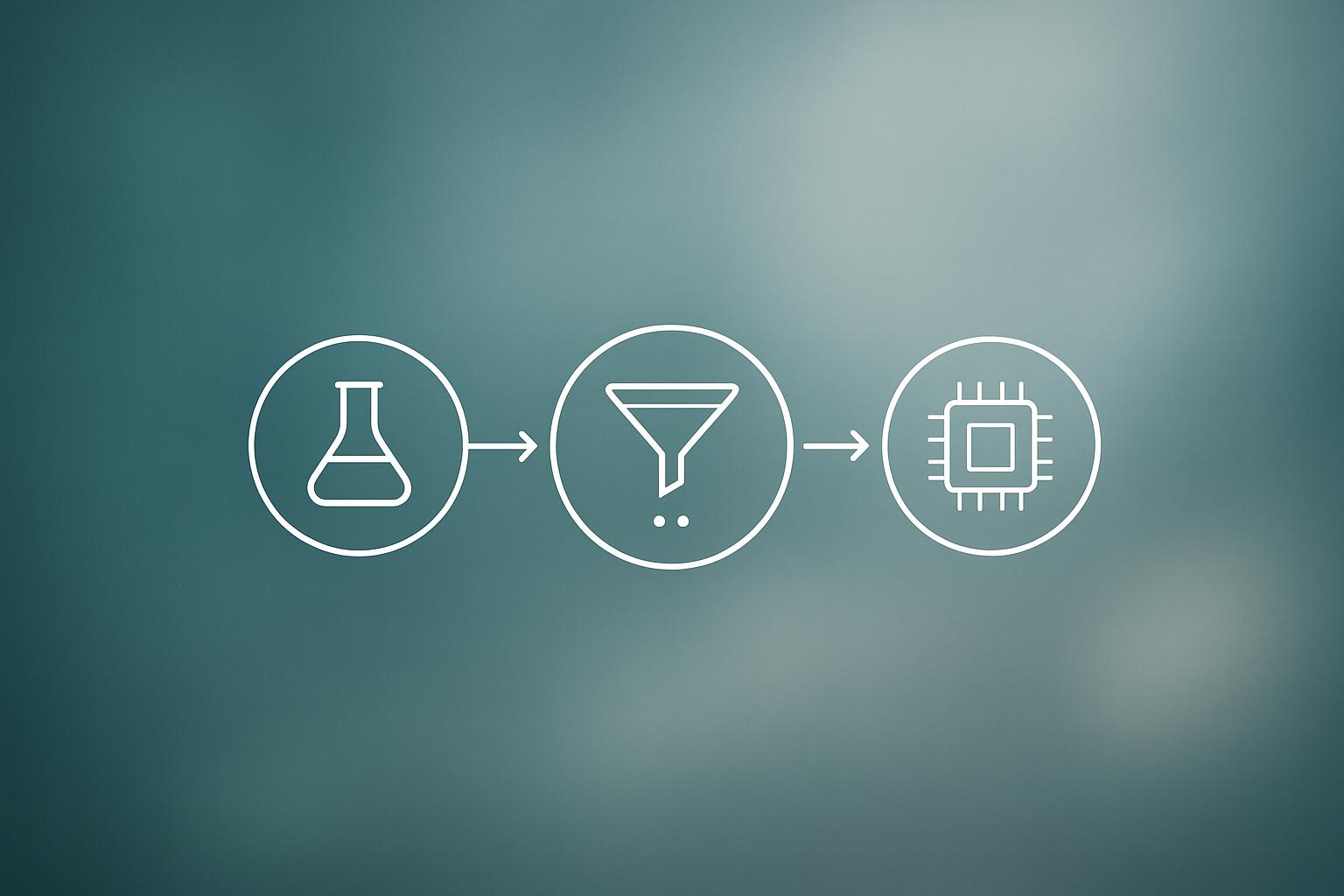
A research team from Meta FAIR, the University of Oxford, and University College London has published a system called Research Preference Models (RPMs) that ranks candidate machine learning experiments before any of them are executed. The goal is simple: AI research agents already generate far more experiment ideas than they can afford to run on GPU hardware. RPMs act as a filter, picking the most promising candidate so compute is spent only where it counts. On their AIRS-Bench benchmark across 20 tasks, RPMs cut the time needed to match a 24-hour baseline down to roughly 15 hours.
What happened
| Detail | Value |
|---|---|
| Research team | Meta FAIR, University of Oxford, University College London |
| Benchmark | AIRS-Bench: 20 public text and tabular tasks |
| Hardware per task | Single H200, 24 hours, 10 seeds |
| Backbone LLM | Qwen3.6-27B (open weights, frozen, no fine-tuning) |
| Candidates generated per step | 15, via parallel operator runs |
| Selection method | Pairwise knockout tournament |
| Scaffold and benchmark | AIRA-dojo and AIRS-Bench (both open source) |
AI research agents can already propose, write, and score their own experiments automatically. The problem is that generating ideas costs almost nothing, while running them on GPU hardware costs a lot. A single training run can take hours to days, so agents routinely generate many more candidates than they can execute. Which candidate gets the GPU time is the decision that actually drives research progress.
The team formalizes this decision as a “research preference” problem and introduces RPMs to solve it. An RPM does not try to predict an absolute score for a candidate. The researchers found that language models are unreliable at forecasting exact metrics, so the RPM only compares candidates against each other and picks the better one.
How the selection process works
RPMs slot into AIRA-dojo, an evolutionary tree search that generates experiment plans through Draft, Improve, and Debug operators. Normally, one candidate is generated and executed. With an RPM in place, the operator runs 15 times in parallel to produce 15 unexecuted candidates. Those candidates then compete in a pairwise knockout tournament, with each comparison grounded in context from a breadth-first-search walk of the already-explored tree, including the validation scores those prior experiments achieved. Only the tournament winner gets executed.
Two variants, two compute budgets
The team built two versions of the RPM, trading inference cost for accuracy:
- Inference-only RPM: An LLM-as-a-judge that reads candidate plans, code, and search history. Its prompt was optimized with MIPROv2 from the DSPy library, settling on a principal-investigator rubric that tolerates fixable bugs, rewards extensibility, and penalizes redundant directions. Offline accuracy sits between 57.7% and 59.0%.
- Agentic RPM: The same judge, plus a sandbox cloning the agent’s environment (including a single H200). It runs small pilot experiments using Python, bash, and a submit_solution tool. A feedback model then either proposes the next informative pilot or ends the loop. To prevent the agent from stopping early, the remaining budget is deliberately overstated (2,700 seconds reported against a real 300 seconds). Pilots are capped at 30, each with a 60-second limit. Because pilot time competes with the agent’s own clock, this variant only runs on Draft and Improve steps; Debug steps revert to random selection.
What do the numbers show?
| Child selection method | Avg. normalized score |
|---|---|
| No RPM (random pick) | 0.684 |
| Inference-only RPM | 0.711 |
| Agentic RPM | 0.729 |
| Validation oracle (ceiling) | 0.748 |
| Test oracle (ceiling) | 0.759 |
The probability of improvement over random selection is 0.5923 for the inference-only variant and 0.5913 for the agentic variant, with 95% confidence interval lower bounds of 0.5066 and 0.5018 respectively.
The efficiency result is arguably more useful than the score improvement. The inference-only RPM matches the baseline’s final score of 0.684 in 14.88 hours, a 1.61x speedup. The agentic RPM does the same in 15.50 hours, a 1.55x speedup. Self-hosted inference adds 0.660 hours per run, but even after adjusting for that overhead, the agentic variant achieves a score of 0.708 at 23.34 hours.
The team also reported two new state-of-the-art results on specific tasks: WinoGrande at 94.1% using the agentic RPM (up from a prior agentic state-of-the-art of 90.4% from AIRA2), and SVAMP at 95.7% using the inference-only RPM (above a prior human state-of-the-art of 94.2%).
Why it matters
GPU compute is one of the most expensive inputs in modern AI development. Any technique that gets more research output from the same hardware budget has immediate practical value, both for large labs and for teams running automated experimentation pipelines at smaller scale. The fact that RPMs work with frozen, open-weight models and no fine-tuning lowers the barrier to adoption considerably.
This also fits a broader pattern in AI infrastructure: the bottleneck is shifting from model capability to how efficiently resources are allocated around the model. As we covered in our look at how AI inference workloads are straining memory and storage infrastructure, the compute allocation layer is becoming as important as the model itself.
Our take
The core idea here is not exotic. Generating 15 cheap candidates and running only one is a sensible engineering tradeoff, and the pairwise tournament approach sidesteps the genuinely hard problem of predicting absolute scores. What the paper adds is a rigorous framework, a working open-source scaffold, and actual benchmark numbers that make the case.
The 1.5 to 1.6x speedup sounds modest, but over many experiment cycles it compounds. For any team running automated ML pipelines, that is real money and real time saved. The agentic variant’s trick of overstating the remaining budget to prevent early stopping is the kind of practical detail that rarely makes it into research papers, and it suggests this was tested against real failure modes, not just clean benchmarks.
If you are building or evaluating AI integration pipelines for your business, the RPM approach is worth understanding even outside pure ML research contexts. The underlying pattern, generating many cheap options and filtering before committing resources, applies anywhere from ad creative testing to content generation workflows.
What to do about it
- Read the paper and check the open-source AIRA-dojo scaffold if your team runs automated ML experiments.
- Test the inference-only RPM first: it requires no sandbox setup and still delivers a 1.61x efficiency gain.
- If your pipeline uses Draft and Improve operators, consider where a lightweight pairwise filter could sit before expensive execution steps.
- Watch the AIRS-Bench leaderboard for follow-up work, since 0.729 still leaves meaningful headroom below the 0.748 validation oracle ceiling.
The practical takeaway: before you spend GPU hours on the next experiment, generate a batch of candidates cheaply and let a frozen LLM rank them first.
Frequently asked questions
What is a Research Preference Model (RPM)?
An RPM is a system that ranks unexecuted machine learning experiment candidates against each other and selects the most promising one to run, so GPU compute is spent only on the best option from a larger pool of generated ideas.
Does training or fine-tuning a new model make RPMs work?
No. Both RPM variants use frozen pretrained LLMs with no fine-tuning. The backbone used in the AIRS-Bench experiments is Qwen3.6-27B, an open-weights model.
How much faster is RPM-based experiment selection compared to random selection?
On AIRS-Bench, the inference-only RPM reaches the random-selection baseline's final score in 14.88 hours instead of 24, a 1.61x speedup. The agentic RPM does the same in 15.50 hours, a 1.55x speedup.
Is the AIRA-dojo scaffold open source?
Yes. AIRA-dojo and the AIRS-Bench benchmark are both open source, and the Qwen3.6-27B backbone model is open weights.