LLM Observability Platforms in 2026: Langfuse, LangSmith, Braintrust and More
LLM observability is now a $2.69B market in 2026. Compare Langfuse, LangSmith, Braintrust, Arize, and more across tracing, evals, and production monitoring.
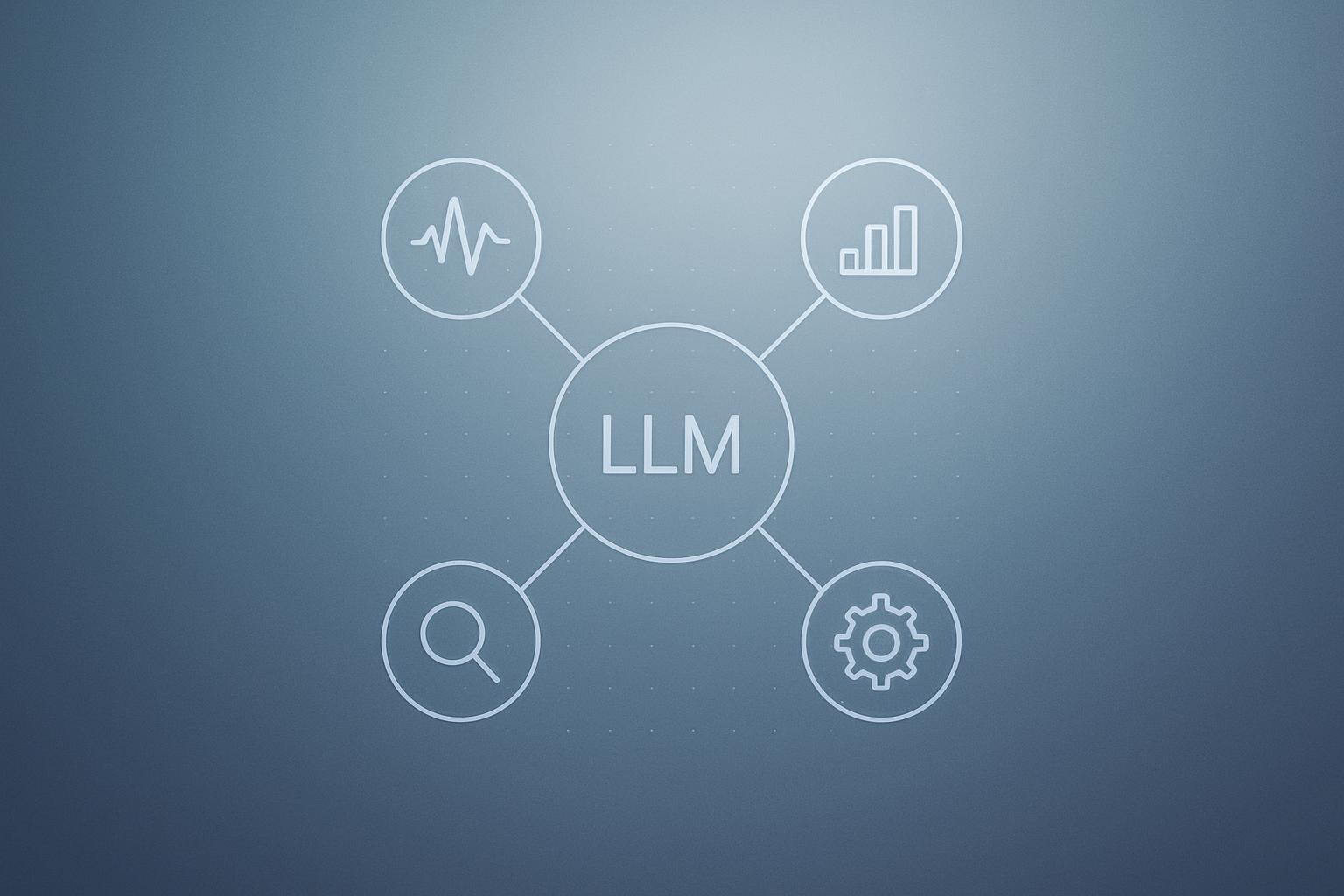
LLM observability has moved from optional tooling to core production infrastructure. As of 2026, the market is valued at $2.69 billion, according to The Business Research Company, and Gartner expects it to feature in half of all GenAI deployments by 2028. A LangChain survey of more than 1,300 AI professionals found that 57% already run agents in production, quality issues are the top barrier for 32% of teams, and nearly 30% still run zero evaluations. Here is how the main platforms stack up across the three axes that matter: tracing, evals, and production monitoring.
What happened
| Data point | Figure |
|---|---|
| LLM observability market size, 2025 | $1.97 billion |
| LLM observability market size, 2026 | $2.69 billion |
| Projected market size, 2030 | $9.26 billion |
| Forecast CAGR to 2030 | 36.2% |
| GenAI deployments with observability by 2028 (Gartner) | 50% (up from 15% in early 2026) |
| Professionals running agents in production (LangChain survey, n=1,300+) | 57% |
| Agents with observability implemented | 89% |
| Teams running no evaluation at all | 29.5% |
| Quality cited as top barrier to production deployment | 32% |
LLM applications fail differently from traditional software. A retrieval step can return the wrong document while every HTTP status code reads 200. An agent can loop through fourteen tool calls, burn thousands of tokens, and return a confident but incorrect answer. Standard application performance monitoring (APM) does not capture this kind of semantic failure. LLM observability platforms do: they record every span of a pipeline, including prompts, completions, retrievals, tool calls, token counts, latencies, and costs, then score outputs using automated evaluators.
How the market is structured in 2026
The category has split into four distinct camps, and knowing which camp a vendor sits in matters more than any individual feature comparison.
- AI-native observability platforms: Langfuse, LangSmith, Braintrust, Arize, Opik. These treat the LLM trace as the primary data object and attach evaluation scores to live production traffic.
- Open-source eval libraries: Arize Phoenix, DeepEval (Confident AI), MLflow, RAGAS. These focus on scoring outputs for faithfulness, hallucination, answer relevance, and task completion, often using an LLM as the judge.
- AI gateways: Helicone, Portkey, LiteLLM. These sit as a proxy between the application and model providers, adding logging, caching, cost tracking, and routing with minimal code changes.
- APM extensions: Datadog LLM Observability, New Relic, Dynatrace. These bolt LLM tracing onto existing infrastructure monitoring so AI signals correlate with CPU, memory, and network metrics.
What are the three axes for comparing LLM platforms?
Vendors use “observability” and “evaluation” loosely, so precise definitions matter before comparing products.
Tracing
A trace is the complete record of everything an LLM application did: the user input, each retrieval call, each model invocation with its exact prompt and parameters, each tool execution, and the final output. Depth matters because agent traces are deeply nested. A single conversation can produce megabytes of data across dozens of runs. Because the same prompt can produce different outputs, you cannot reproduce a bug without having captured the exact input, model parameters, and temperature at call time.
Evaluation
Evals answer the question tracing cannot: was the output any good? Offline evals score curated datasets before deployment, catching regressions when a prompt, model, or retrieval index changes. Online evals score live traffic, typically using LLM-as-a-judge, sampling traces and grading them for faithfulness, relevance, toxicity, or task completion. According to the LangChain survey, 52.4% of teams run offline evals, 37.3% run online evals, and 29.5% run none at all. The hardest failures are outputs that are technically valid but wrong for the domain: a hallucinated policy, drifting tone, or a retrieval miss that produces a confident but incorrect answer.
Production monitoring
This closes the loop: dashboards, cost attribution per model and user, latency percentiles, drift detection, and alerting when quality scores drop. The strongest platforms feed production traces back into eval datasets, so every real-world failure becomes a future regression test. Gateways tend to excel here but are often weaker on deep tracing and evals.
Why it matters
If you are shipping any AI feature to real users, you are already exposed to the failure modes described above. A chatbot that hallucinates a pricing policy or a support agent that loops endlessly is a customer service and liability problem, not just a technical one. The market numbers reflect teams learning this the hard way.
The good news is that one emerging standard now connects all four camps. The OpenTelemetry GenAI semantic conventions define vendor-neutral gen_ai.* span attributes for model calls, token usage, agent steps, and tool executions. Platforms including Google Cloud, AWS, Azure, and Datadog have adopted them. GitHub Copilot’s agent telemetry exposes gen_ai.* span trees, Claude Code provides opt-in OpenTelemetry tracing, and Codex includes native OpenTelemetry export support. Instrumenting once against these conventions improves backend portability and reduces vendor lock-in.
For teams exploring AI integration for their products, this standard is the first thing to check when evaluating any vendor.
Our take
The 29.5% of teams running zero evaluations is the number worth sitting with. Nearly a third of teams with agents in production have no systematic way to know if those agents are performing well. That is a significant blind spot, especially as agents handle more consequential tasks.
The four-camp structure is genuinely useful framing. A gateway like Helicone is a fast win for cost visibility and basic logging, but it will not tell you whether your retrieval step returned the right document. An AI-native platform like Langfuse or LangSmith gives you the full nested trace and scoring, but requires more setup. Most teams will end up combining a gateway for routing and cost control with a dedicated eval layer for quality scoring.
OTel compatibility deserves to be treated as a hard requirement, not a checkbox. Vendors that do not support the GenAI semantic conventions will create migration pain as the standard solidifies. The recent Claude Code updates adding opt-in OpenTelemetry tracing are a signal that even frontier model providers are aligning to this standard.
What to do about it
- Audit your current setup: do you have any tracing on your LLM calls? If not, start with a gateway (Helicone, Portkey, LiteLLM) for immediate cost and latency visibility.
- Check OTel compatibility before signing any vendor contract. Ask specifically whether the platform supports
gen_ai.*span attributes. - Add at least offline evals before your next model or prompt change. Tools like DeepEval or RAGAS are open-source and require no budget to start.
- Pick one quality metric (faithfulness, answer relevance, or task completion) and set an alert threshold in production. One metric beats none.
- Feed production failures back into your eval dataset. Every bad output is a free regression test case.
If you need help deciding which stack fits your use case and budget, the Lumien team is happy to talk through your setup.
Frequently asked questions
What is LLM observability and why do I need it?
LLM observability means recording every step of an AI pipeline: prompts, model outputs, retrieval calls, tool executions, token counts, latencies, and costs. Standard APM tools miss semantic failures like hallucinations or retrieval misses. Observability platforms capture these and score output quality using automated evaluators.
What is the difference between Langfuse, LangSmith, and Braintrust?
All three are AI-native observability platforms that treat the LLM trace as the primary data object and attach evaluation scores to production traffic. They differ in pricing, open-source availability, and depth of specific features. Langfuse is open-source, LangSmith is tightly integrated with the LangChain ecosystem, and Braintrust focuses heavily on eval workflows.
What is LLM-as-a-judge?
LLM-as-a-judge is a technique where a separate language model is used to score the outputs of your production model. It grades responses for qualities like faithfulness, relevance, toxicity, or task completion, allowing automated online evaluation of live traffic without human review of every trace.
What are OpenTelemetry GenAI semantic conventions?
These are vendor-neutral span attributes (prefixed gen_ai.*) defined by the OpenTelemetry project for logging model calls, token usage, agent steps, and tool executions. Platforms including Google Cloud, AWS, Azure, and Datadog have adopted them. GitHub Copilot, Claude Code, and Codex also expose or export gen_ai.* telemetry.