Google’s Teamwork Framework: Small AI Models Crack PhD-Level Math
Google's Antigravity team used a multi-agent framework called Teamwork to let Gemini Flash models reproduce 3 PhD-level math results. Here's what that means.
On August 27, Google's Antigravity team published a detailed technical report showing that its multi-agent orchestration framework, called Teamwork, helped Gemini models solve 7 difficult open problems in mathematics and theoretical computer science. What surprised the field: Gemini 3.7 Flash, a smaller and cheaper model in Google's lineup, fully reproduced 3 of those PhD-level results. Google itself called it the first time a Flash-class model has produced mathematical research findings at doctoral level.
What happened
| Data point | Detail |
|---|---|
| Publication date | August 27, 2026 |
| Team | Google Antigravity |
| Framework | Teamwork (multi-agent orchestration) |
| Total hard problems solved | 7 (math and theoretical computer science) |
| Problems reproduced by Flash | 3 of the 7 |
| TCSBench score (new record) | 71% (previous: 67.7%) |
| CPU simulator error rate | 0.71% |
| Hadamard quantization improvement | Leading constant factor reduced by approx. 5.93x |
Google’s Antigravity team released results across three domains: mathematics, systems engineering, and open-source contribution. The star performer was Gemini 3.7 Flash, a model positioned for speed and low cost rather than raw power.
According to Google, all 7 mathematical results were originally achieved by Gemini 3.1 Pro running in Teamwork’s Long Proof mode. Three of those results were then fully reproduced by Gemini 3.7 Flash working within the same framework.
What the three Flash-reproduced problems actually were
These were not trivial benchmarks. The three problems Flash reproduced are active open questions in academic research:
- Constructing coresets for approximating subspaces in ℓp norms
- Proving a dimension lower bound for maximum inner product search embeddings
- Hadamard quantization, where the leading constant factor was reduced by approximately 5.93 times
The four results that only Gemini 3.1 Pro could handle included Knuth’s Cycles problem, the Erdos unit distance problem (proved independently under offline conditions), a lower bound on condition numbers for sparse convex optimization, and an approximate optimal lower bound for prefix matrix factorization.
Beyond math: systems and open source
On the engineering side, the framework produced a CPU simulator written from scratch that boots a real operating system and runs with just 0.71% behavioral error. For open-source work, Teamwork optimized core routines in both Eigen and ParlayHash, two widely used libraries, and the changes were accepted directly by upstream maintainers.
How does the Teamwork framework actually work?
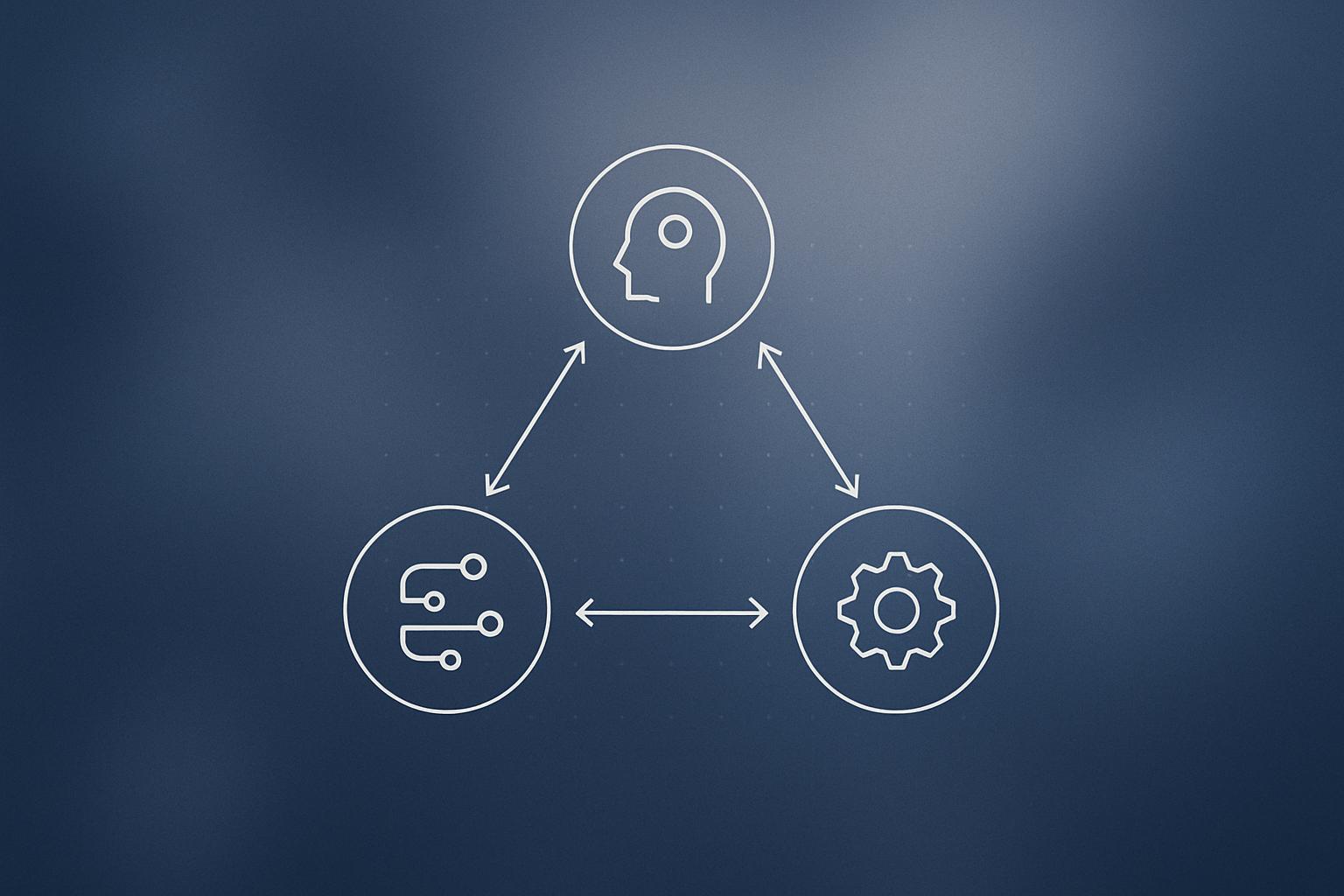
Teamwork is triggered by typing /teamwork-preview into Gemini. The model reads the prompt, selects a mode, and assembles a group of agents that then run for hours or even days. The Long Proof mode used for math works in four stages:
- Generate many candidate solutions simultaneously. Assign a dedicated “contradiction agent” to each one whose only job is to find flaws. Rejected paths stay in the process, because failed attempts often contain useful sub-ideas.
- Once a reliable strategy emerges, decompose it into dependent sub-problems and map them in a strict topology diagram.
- Agents run in parallel on those sub-problems, cross-checking and challenging each other’s intermediate results.
- A final synthesis pass assembles the verified components into a complete proof or solution.
The design philosophy is deliberately counter-intuitive. Instead of throwing a bigger model at the problem, it makes a group of smaller models argue with each other until only the defensible answers survive. This is closer to how a research team operates than how a single language model responds to a prompt.
Why it matters
The standard assumption in AI has been that harder problems require larger models. Google’s Antigravity results push back on that directly. The Flash model sitting inside Teamwork outperformed what Pro could do alone on at least some dimensions, and matched it exactly on three PhD-level proofs.
For businesses thinking about AI integration, this is a meaningful shift. If orchestration design can close the gap between a cheap model and a flagship one, cost calculations for running AI on complex tasks change considerably. Flash-class models are significantly cheaper to call than Pro-class models. Running them in a structured multi-agent loop for hours may still cost less than running a single large model with fewer guarantees of correctness.
The TCSBench result is also worth noting. The 71% score, achieved by combining Flash and Pro in Teamwork, beats the previous Google-internal record of 67.7% set by the prior generation pairing of 3.6 Flash and 3.1 Pro. Progress is coming from framework improvements, not just model upgrades.
This connects to a broader pattern we have covered before: the architecture around a model increasingly matters as much as the model itself. OpenAI’s recent work on agent disclosure frameworks reflects the same shift toward treating agent orchestration as a first-class engineering problem.
Our take
Google’s framing here is careful and worth reading closely. They are not claiming Flash got smarter. They are claiming the workflow got better designed. That is a more honest and more interesting result.
For anyone building with AI today, the lesson is not to wait for the next model generation. A well-structured multi-agent setup with a mid-tier model can outperform a single call to the best available model, at a fraction of the cost, if the verification and contradiction steps are built in properly. That is an engineering problem, not a procurement one.
The 40-page proof output with no errors on machine verification is the detail that stands out most to us. That kind of rigor is not something a single prompt-response loop produces. It requires exactly the kind of iterative, adversarial checking that Teamwork is designed around. Whether this translates to business tasks beyond research math is the real question to track over the next few months.
What to do about it
- If you are running AI on complex multi-step tasks today, audit whether you are using a single call or a structured review loop. The difference in output quality can be significant.
- Test Gemini 3.7 Flash inside Google’s Teamwork preview on a real problem from your domain. The entry point is just
/teamwork-previewin Gemini. - Track cost per verified output, not just cost per token. A longer Flash session with built-in contradiction checking may be cheaper than a single Pro call that requires human review afterward.
- Watch what Google Antigravity publishes next. The systems and open-source results suggest Teamwork is being tested well beyond pure math, and code optimization results that get merged upstream are a strong signal of real-world utility.
The takeaway: orchestration is now a core skill for anyone deploying AI seriously, not an afterthought once you have picked a model.
Frequently asked questions
What is Google's Teamwork AI framework?
Teamwork is a multi-agent orchestration framework built by Google's Antigravity team. It assembles a group of AI agents that run for hours or days, generating competing solutions, assigning contradiction agents to find flaws, and iterating until only verified results remain. It is triggered in Gemini with the /teamwork-preview command.
Can Gemini Flash solve PhD-level math problems?
According to Google's Antigravity team, Gemini 3.7 Flash running inside the Teamwork framework fully reproduced 3 PhD-level open problems in mathematics and theoretical computer science. Google called it the first time a Flash-class model has achieved mathematical research results at doctoral level.
What score did Google's AI get on TCSBench?
The combination of Gemini 3.7 Flash and Gemini 3.1 Pro inside the Teamwork framework achieved 71% on TCSBench, setting a new internal Google record. The previous record was 67.7%, set by the prior generation pairing of 3.6 Flash and 3.1 Pro.
Is a multi-agent framework better than using a single large AI model?
Google's results suggest that for complex, verifiable tasks, a structured multi-agent loop using smaller models can match or exceed what a single large model produces alone. The key is the adversarial checking design, where dedicated agents are assigned to find flaws in each proposed solution before it advances.