Google I/O Connect India 2026: Education, Health, and Data Residency
Google announced AI training, MedGemma health tools, 25+ Indian language support in Gemini Live, and data residency options at I/O Connect India 2026.
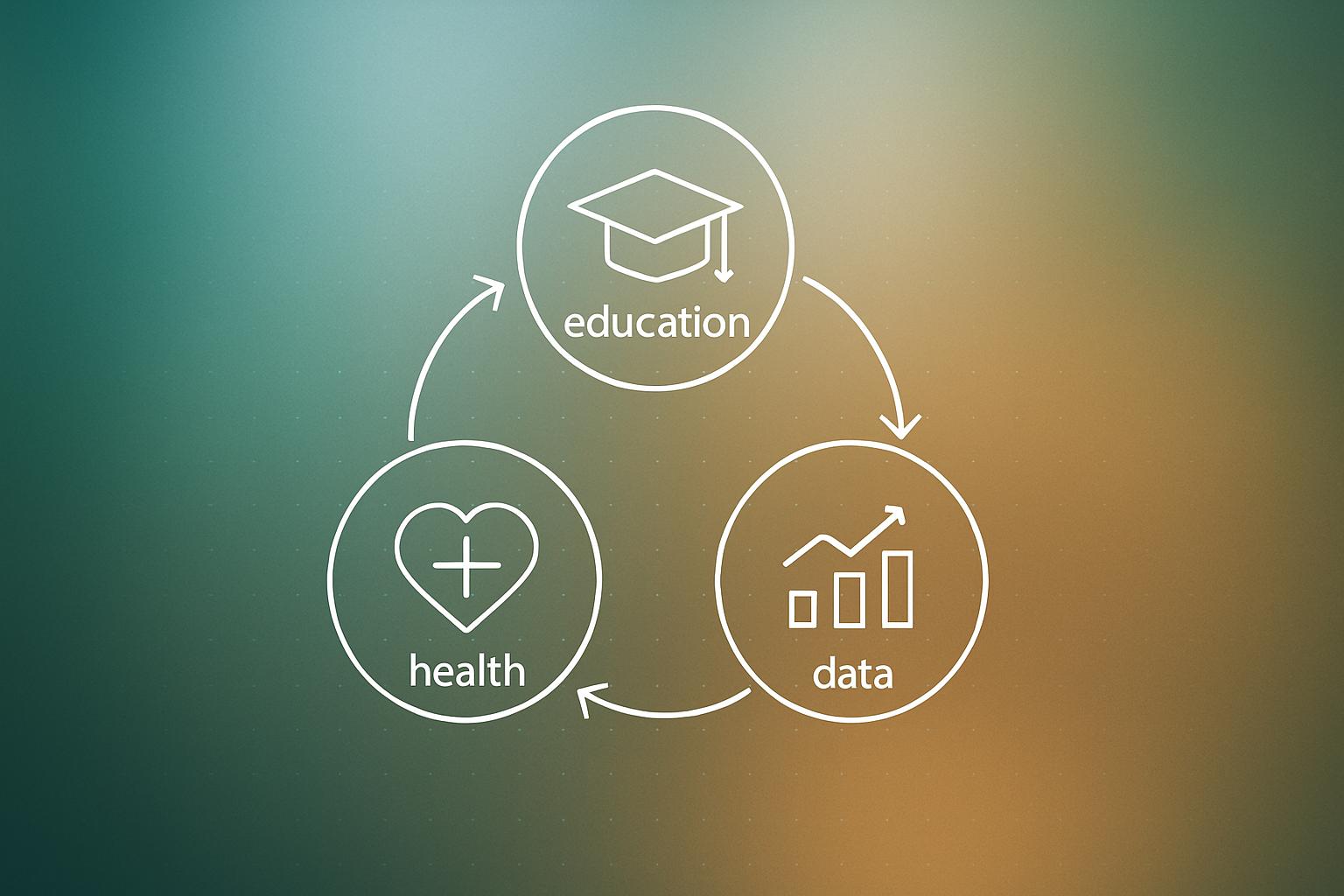
At its I/O Connect India 2026 developer conference, Google announced a cluster of AI initiatives focused on education, healthcare, Indian language access, and enterprise data residency. The headline items include a free 56-hour AI curriculum from Google DeepMind, expanded MedGemma deployments at AIIMS, Gemini Live support for more than 25 Indian languages, and the ability for Indian enterprises to run Gemini models inside local data centres. Most moves extend programmes already underway rather than introducing entirely new products.
What happened
| Item | Detail |
|---|---|
| DeepMind AI curriculum | Free, 56 hours, global learner count 38,000+ |
| Curriculum partners (India) | IISc Bengaluru, NASSCOM Future Skills Prime |
| MedGemma at AIIMS | Dermatology, outpatient triage (live); leprosy, reproductive health (in development) |
| Aarogya Setu 2.0 | Built using Gemma 4 and Google’s open-source Medical Data Toolkit |
| Gemini Live languages | 25+ Indian languages and dialects, incl. Sanskrit, Bhojpuri, Maithili |
| Project Vaani dataset | Speech and image data covering 109 Indic languages, now open-sourced |
| Data residency option | Gemini on Google Distributed Cloud, run inside Indian data centres |
| Enterprise product | Gemini 3.5 Flash via Gemini Enterprise Agent Platform and Gemini Enterprise app |
Free AI training for students and developers
Google DeepMind is rolling its AI Research Foundations curriculum out to India. The course runs 56 hours, costs nothing, and covers AI research methods, machine learning, and large language models. Completers receive Google Cloud Skill badges and certificates. The programme has attracted more than 38,000 learners worldwide, though Google did not break out an India-specific figure.
The Indian Institute of Science in Bengaluru has already woven the curriculum into its academic programmes. NASSCOM will distribute it through its Future Skills Prime platform. Funding comes from the Google.org AI Opportunity Fund for the Asia-Pacific region, with AVPN coordinating delivery through local partners.
AIIMS pushes MedGemma into new clinical areas
The All India Institute of Medical Sciences has been running MedGemma, Google’s open-source medical AI model, for dermatology screening and outpatient triage. Researchers there are now training new versions targeting leprosy detection and sexual and reproductive health, using both medical images and text. According to Google, AIIMS plans to release these localised models to India’s developer community, though access timelines were not disclosed.
On the government side, the National Health Authority used Gemma 4 and Google’s open-source Medical Data Toolkit to build Aarogya Setu 2.0, the follow-on to India’s pandemic-era health record app.
Gemini Live now speaks more than 25 Indian languages
Gemini Live, Google’s conversational AI product, now handles voice and text in more than 25 Indian languages and dialects. Sanskrit, Bhojpuri, and Maithili are among the newly added options. The expansion draws on Project Vaani, a research collaboration with IISc Bengaluru that has open-sourced speech and image datasets spanning 109 Indic languages. Google did not publish accuracy benchmarks for the new language additions.
Why it matters
India’s scale makes it a meaningful test bed for AI localisation. Supporting 25+ languages in a single conversational product is technically non-trivial, and open-sourcing the underlying Vaani datasets gives third-party developers something concrete to build on. For businesses serving non-English-speaking customers in South Asia, the language coverage gap in AI tools has been a real friction point.
The data residency announcement is the most directly commercial item here. Regulated industries in India, particularly banking and healthcare, face strict rules about where data can sit. Letting enterprises run Gemini prompts and outputs inside their own Indian data centres removes a compliance blocker that had previously pushed some organisations toward local or on-premise alternatives. The inclusion of Gemini 3.5 Flash via the Gemini Enterprise Agent Platform gives startups a faster, lower-cost model option with an in-country data commitment attached. If you are thinking about AI integration for your business, data residency requirements like these are worth factoring into any vendor evaluation now.
That said, Google’s own framing is accurate: these announcements mostly deepen existing pilots and partnerships. There are no new foundation models, no pricing details, and no independent benchmarks. The competitive context, global tech companies competing for position in India’s AI ecosystem, explains the conference timing and the breadth of the announcements.
Our take
From where we sit, the two most useful items are the open-sourced Project Vaani datasets and the MedGemma clinical model work at AIIMS. Both create assets that developers outside Google can actually use. The 56-hour curriculum and the enterprise data residency options are real, but neither is a surprise move.
The language support expansion in Gemini Live is worth watching, but the absence of any accuracy or performance data is a gap. Supporting a language and supporting it well are different things. Businesses building customer-facing products on top of Gemini for regional Indian markets should run their own quality checks before going live, regardless of how many languages appear on the spec sheet.
For businesses tracking how AI assistants are evolving across major platforms, our coverage of iOS 27’s Siri AI updates gives a useful comparison point on where the consumer AI assistant market is heading.
What to do about it
- Check whether your sector (banking, healthcare, government procurement) is covered by India’s data residency rules. If yes, the Gemini Distributed Cloud option is now worth a serious look.
- If you are building for non-English-speaking markets in India, request access to the Project Vaani datasets and test Gemini Live’s new language support against your actual use case before committing.
- If you are a developer or student in India, register for the free AI Research Foundations curriculum through NASSCOM Future Skills Prime or IISc Bengaluru.
- Watch for AIIMS releasing its localised MedGemma models. If you are building health tech for Indian users, those models could be the fastest route to India-specific clinical accuracy.
The practical takeaway: treat the data residency announcement as the most actionable item this week, and treat the language coverage claims as a starting point for your own testing, not a guarantee.
Frequently asked questions
What did Google announce at I/O Connect India 2026?
Google announced a free 56-hour AI Research Foundations curriculum from DeepMind, expanded MedGemma deployments at AIIMS for leprosy and reproductive health, Gemini Live support for 25+ Indian languages, and data residency options letting enterprises run Gemini inside Indian data centres.
How many Indian languages does Gemini Live support?
As of I/O Connect India 2026, Gemini Live supports voice and text interaction in more than 25 Indian languages and dialects, including Sanskrit, Bhojpuri, and Maithili. The expansion is built on Project Vaani datasets covering 109 Indic languages.
What is MedGemma and how is AIIMS using it?
MedGemma is Google's open-source medical AI model. AIIMS has already deployed it for dermatology screening and outpatient triage, and is now developing new versions for leprosy detection and sexual and reproductive health. AIIMS plans to release these localised models to India's developer community.
Can Indian companies keep their Gemini AI data inside India?
Yes. Google announced that Indian enterprises and government bodies can now run Gemini on Google Distributed Cloud from within Indian data centres, keeping prompts, model outputs, and workloads inside their own environment. Gemini 3.5 Flash is also available via the Gemini Enterprise Agent Platform with an in-country data commitment.