Flock Safety’s 120,000 ALPR Cameras: The Loopholes Behind the Fixes
Flock Safety announced new safeguards for its 120,000 ALPR cameras, but case numbers go unverified and agencies can still hold data indefinitely.
Flock Safety, the police-tech company behind about 120,000 automatic license plate readers (ALPRs) across the United States, announced platform changes last Thursday designed to stop officers from running illegitimate searches. The updates come after The Washington Post identified 50 cases of officer misuse, including stalking. But as MIT Technology Review reports, the fixes have serious gaps: case numbers go unverified, data retention rules are advisory only, and the broader architecture of a nationwide surveillance network remains untouched.
What happened
| Data point | Detail |
|---|---|
| Flock ALPR network size | ~120,000 cameras across the US |
| Officer misuse cases (Washington Post) | 50 identified cases, often involving stalking women |
| One stalking example | Officer searched a woman’s car 179 times |
| Flock company valuation | $8 billion |
| Searches within one week of an incident | 90% (per Flock’s own figures) |
| New recommended data retention period | 7 days (agencies can still hold data longer) |
| Case number verification | Not verified by Flock (confirmed to MIT Technology Review) |
Flock Safety announced last Thursday that it would require officers to enter a criminal case number before running any search on its platform. It is also using software to flag searches that look abnormal. Both measures are aimed at curbing abuse after The Washington Post found 50 cases of officers misusing Flock and competitor systems, most often to track or harass women. In one instance, an officer searched for a woman’s car 179 times. In another, a police chief was the alleged stalker, leaving the victim no clear person to report him to.
The problem is that Flock confirmed to MIT Technology Review that it does not check whether the case numbers entered are real. An officer can type in a made-up number and proceed exactly as before.
Why the architecture matters, not just the rules
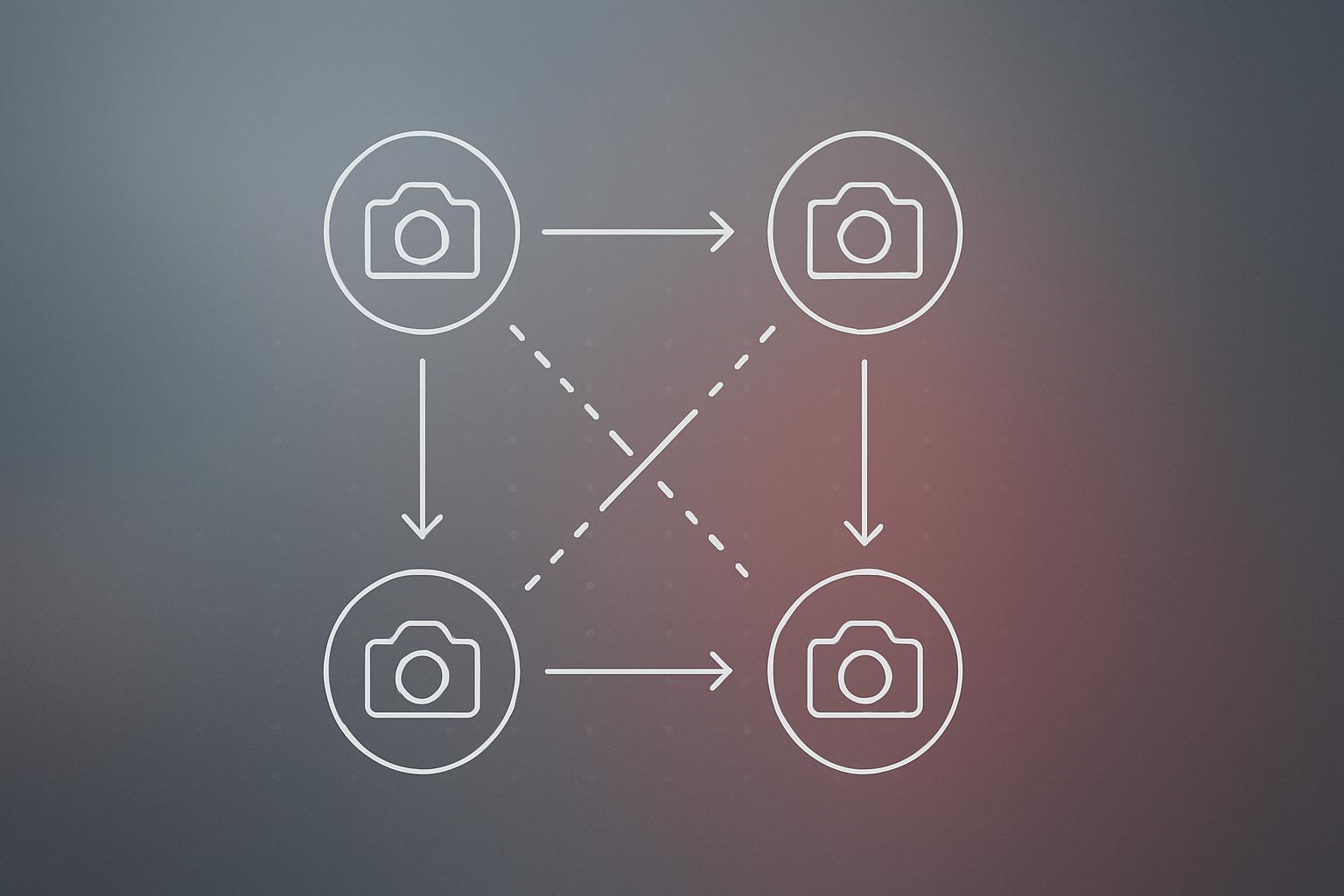
The deeper issue, according to MIT Technology Review’s analysis, is not just officer behavior but the system Flock chose to build. A series of design decisions determine what data gets collected, who can access it, how long it stays on servers, and which jurisdictions can pull records from other jurisdictions. Those choices define the actual trade-off between public safety and civil liberties, and new conduct guidelines do not change them.
Consider three specific design alternatives the article raises:
- Verified case numbers. Flock could require that entered case numbers match the relevant police department’s own records. That would be a more complex integration, but it would close the bogus-number loophole and create a stronger audit trail.
- Emergency-scoped access. Nationwide network access could be restricted to searches tied to an active Amber Alert or similar declared emergency. That would preserve the use case Flock cites most (finding kidnapping victims) without making the full network available for routine stops.
- Narrower retention. Flock’s own data shows 90% of searches happen within a week of an incident. A hard seven-day deletion rule, rather than a recommendation that agencies can ignore, would make the retained dataset far smaller and less useful for long-term surveillance.
None of these changes have been adopted. Flock recently updated its recommended retention period to seven days, but agencies are free to keep data for months or years regardless.
What Flock’s business model has to do with it
License plate readers have existed since the 1990s, used for tolls and traffic enforcement. Flock’s $8 billion valuation is not built on individual cameras. It rests on the network effect: police in one city can search data collected by cameras in another state, and the aggregated dataset becomes more valuable as it grows. Narrowing the scope of data collection or access would directly undercut that pitch to police departments.
Flock CEO Garrett Langley told MIT Technology Review he will “probably always have a different view than the ACLU.” Chad Marlow, senior policy counsel at the ACLU, said the most acceptable Flock contract by his standards is “one that is never signed,” and argued that new company guidelines are a weak substitute for new laws.
What is actually changing on the ground?
Cities are canceling contracts. Some are moving to competitors; others are pausing while residents and local legislators draft rules for how the technology may be used. Several states are considering laws that would restrict or ban ALPRs outright. The result, as MIT Technology Review frames it, may be that communities negotiate their own terms rather than accepting the default that a private company chose for them.
This connects to a wider pattern of AI-adjacent surveillance tools being deployed at scale before governing rules exist. We have covered similar dynamics with safety testing gaps at major AI labs, where the infrastructure grows faster than the accountability layer built around it.
Our take
The defenders-of-Flock argument basically says: cameras catch bad guys, so what is your problem? That argument sidesteps the actual question, which is whether the specific system Flock built is the right trade-off, not whether technology should be involved in crime-solving at all.
The unverified case number issue is a good illustration. Requiring a field that nobody checks is a compliance theater move. It creates an audit trail only for honest officers, who are not the problem. The stalking cases happened because bad actors exist inside police departments. A safeguard that a bad actor can defeat in two seconds does not address that.
From a business perspective, Flock’s situation is a useful warning for any company building infrastructure that aggregates sensitive data at national scale. The short-term growth logic (more data, more jurisdictions, more value) can produce a long-term liability when the public finally reads the fine print. Several cities are already reading it.
If you are building tools that touch personal data at any scale, the architecture decisions you make early, not the policies you write later, are what actually define your exposure. Our AI integration work always starts with a data minimization conversation for exactly this reason.
What to do about it
- If your city or county uses Flock, request the current data retention policy in writing and check whether it follows the new seven-day recommendation or something longer.
- Check whether your state legislature has any pending ALPR restriction bills and submit public comment if a window is open.
- If you manage software that stores user or customer data, audit how long you actually need each data type and set hard automated deletion schedules, not just recommendations.
- Watch whether Flock moves toward verified case number integration in the next product update. That single change would be a meaningful signal that the fixes are real, not cosmetic.
The practical takeaway: a policy that can be bypassed with a fake number is not a safeguard. Demand technical enforcement, not just procedural promises.
Frequently asked questions
How many license plate readers does Flock Safety operate?
Flock Safety operates a network of roughly 120,000 automatic license plate readers across the United States.
Can officers enter fake case numbers to bypass Flock Safety's new search requirements?
Yes. Flock confirmed to MIT Technology Review that it does not verify the case numbers officers enter, so a bogus number would pass the check.
How long can police agencies keep Flock Safety data?
Flock recently updated its recommended retention period to seven days, but that is only a recommendation. Individual agencies can retain data for months or years if they choose.
What is Flock Safety's valuation?
Flock Safety has been valued at $8 billion, a figure built on its nationwide network model rather than the cameras themselves.