Facebook AI Mode Search Pulls Answers From Public Posts
Meta has launched AI Mode on Facebook search, pulling AI-generated answers from public posts across its platforms. Here's what it means for your content.
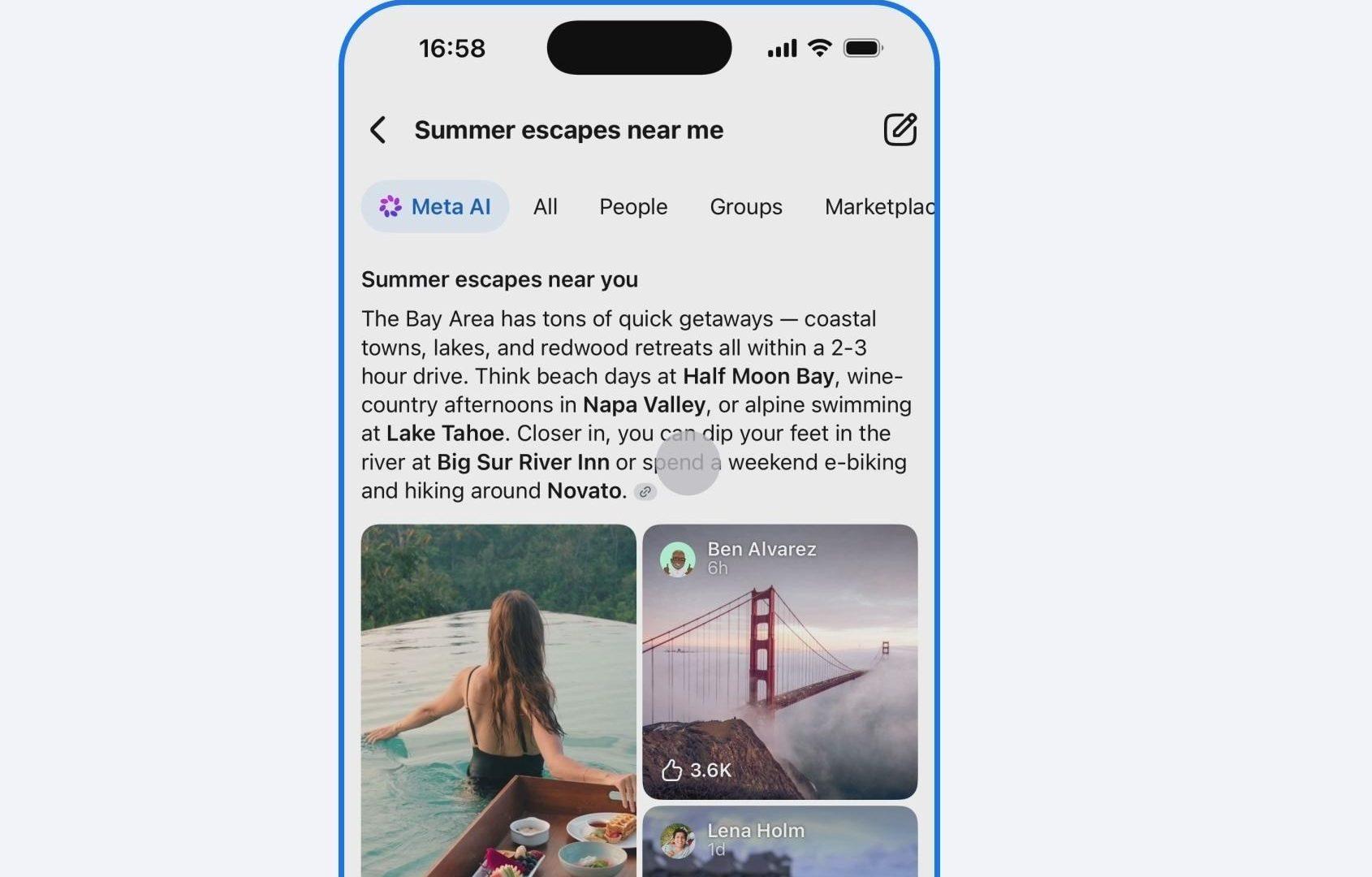
Meta has started rolling out AI Mode on Facebook search, a new tab that sits next to existing options like People and Marketplace. Instead of returning a list of links, it produces AI-generated answers drawn from public posts across Meta's platforms. The launch is part of a broader batch of AI features Meta released at the same time, including photo presets and collage template suggestions. Users can also ask follow-up questions after an initial AI search result appears.
What happened
Meta began rolling out AI Mode on Facebook search as of this week. The new tab appears in the same row as familiar search filters like People and Marketplace, so it is hard to miss.
When a user selects AI Mode, Facebook returns a generated summary rather than a list of links. According to The Verge, those summaries draw on publicly posted content from across Meta’s platforms, the same method the company uses for the AI search feature inside its new Forum app, which is structured similarly to Reddit.
After seeing an initial result, users can ask follow-up questions to dig deeper, much like a chat interface layered on top of search.
The feature launched alongside two other additions: photo presets that can swap sports jerseys onto fans in images, and suggestions for collage templates.
Why it matters
If you or your business has a public Facebook presence, your posts are now potential source material for Meta’s AI answers. That has real implications for how your content might be surfaced, summarised, or even misrepresented inside a generated result.
For businesses that rely on Facebook for organic reach, this is a structural shift. People searching for a product, service, or local recommendation may get an AI summary instead of clicking through to your page. That could reduce direct traffic to your profile or website if the AI answer satisfies the query on its own.
There is also a trust dimension. AI-generated summaries can flatten nuance or stitch together posts in ways the original author did not intend. Because the source is public content, there is currently no opt-out mechanism described in Meta’s rollout.
For context, this is part of a wider pattern. Google has done the same with AI Overviews in search, and Reddit’s own content has been licensed to Google for similar training and summarisation purposes. Meta is now doing this with its own walled garden of public posts.
Our take
This is worth watching closely, but it is not a panic moment yet. A few things stand out to us:
- Public means public. If your Facebook posts are set to public, they were already being indexed and shown to anyone. The change is that Meta can now summarise and surface them in a generated answer, which is a meaningful step further.
- Quality of public content matters more now. Vague or outdated public posts could end up representing your business in an AI answer. That is a reason to audit what is publicly visible on your page.
- The follow-up question feature is the sleeper here. A conversational layer on top of search is where user behaviour can shift fast. If people start resolving queries inside Meta’s AI chat rather than clicking through, referral traffic from Facebook drops. We have already seen this dynamic play out with Google’s AI Overviews.
- Forum is worth keeping an eye on. Meta’s Reddit-like app using the same AI search model suggests the company is building a consistent pattern across its newer surfaces, not just testing a one-off feature.
The bigger question is whether Meta’s AI summaries will be accurate and attributed clearly enough for users to trust them. That track record across the industry so far is mixed.
What to do about it
Start with a quick audit of your public Facebook posts. Remove or restrict anything outdated, incorrect, or off-brand, since that content is now eligible to appear in AI-generated search answers. Then treat your public page copy the same way you treat your website copy: clear, current, and specific about what you actually offer. That gives the AI better material to work with and reduces the chance of a misleading summary representing your business.
