Deutsche Telekom Goes AI-Native: What the OpenAI Partnership Actually Covers
Deutsche Telekom is partnering with OpenAI to rebuild customer service, employee workflows, network operations, and voice interfaces with AI. Here's what that means.
Deutsche Telekom, one of Europe's largest telecommunications companies, has announced a partnership with OpenAI to rebuild core parts of its business around AI. According to OpenAI's blog, the effort spans customer service, internal employee tools, network operations, and the future of voice interfaces. The company is positioning itself as an AI-native operator, meaning AI is designed into how the business runs rather than added on top of existing systems.
What happened
Deutsche Telekom has partnered with OpenAI with the stated goal of becoming an AI-native telecommunications company. The phrase “AI-native” means the company intends to build AI into its core operations from the ground up, rather than layering tools onto processes that were designed without AI in mind.
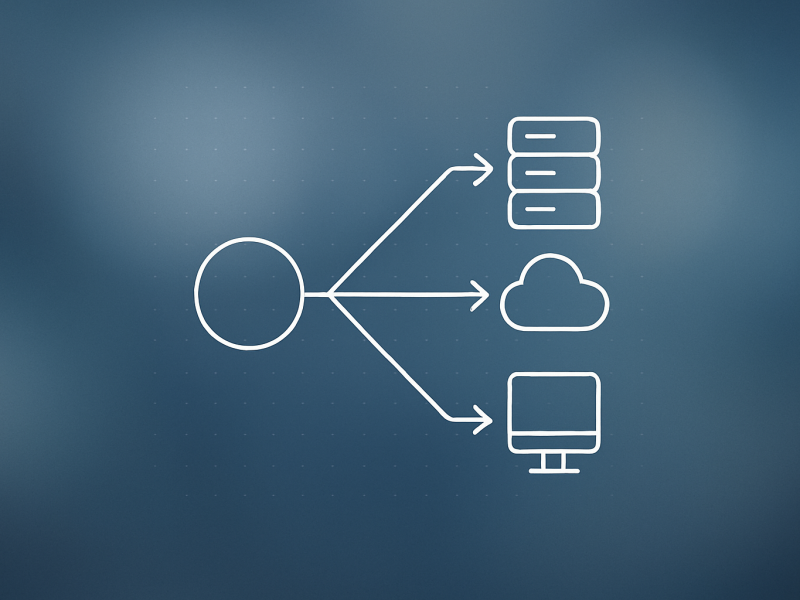
According to OpenAI’s announcement, the transformation covers four distinct areas of the business.
- Customer service: AI is being used to handle and improve customer interactions, reducing the load on human agents and speeding up resolution times.
- Employee workflows: Internal tools powered by AI are being introduced to help staff work more efficiently across the organisation.
- Network operations: AI is being applied to the technical side of running a telecoms network, which involves managing vast amounts of infrastructure and data in real time.
- Voice interfaces: Deutsche Telekom is exploring AI-driven voice as a future channel, pointing toward conversational AI as a replacement or complement to traditional phone-based service.
Why does this matter for businesses outside telecoms?
Deutsche Telekom operates across multiple countries and serves millions of customers. When a company of that scale commits to rebuilding around AI, it sets a benchmark that other large organisations will look at and measure themselves against.
The four pillars of this partnership are not unique to telecoms. Customer service automation, internal productivity tools, operational monitoring, and voice interfaces are priorities for businesses in retail, financial services, logistics, and beyond. The Deutsche Telekom model is essentially a large-scale proof of concept for AI-native operations at an enterprise level.
The voice angle is worth watching closely. Most AI deployments so far have focused on text-based interfaces: chatbots, copilots, and document tools. Telcos have a natural reason to push voice AI harder than most industries, and OpenAI’s involvement here suggests voice models are moving toward production-grade reliability. We covered OpenAI’s recent voice model work in our piece on GPT-Live-1 and its improvements to conversational AI, which gives useful context for where this technology currently sits.
What the “AI-native” label actually means in practice
The term gets used loosely, but in this context it implies a few specific things. First, AI is involved in decisions and workflows that were previously entirely human-run. Second, the data pipelines feeding those AI systems are treated as infrastructure, not a side project. Third, the organisation is restructuring roles and processes around AI capabilities rather than just giving existing staff an AI tool and hoping for the best.
For network operations specifically, AI-native means moving from reactive maintenance (fix the problem after it appears) to predictive and automated management. That is a meaningful shift for a company running mobile and fixed-line infrastructure across Europe.
Businesses considering their own AI integration often underestimate how much process redesign is required before an AI tool can deliver real value. Deutsche Telekom’s approach, at least as described by OpenAI, treats the organisational change as part of the project, not an afterthought.
Our take
The OpenAI blog post is, by nature, promotional. Deutsche Telekom is a customer, and OpenAI is publishing the case study. That means concrete metrics, timelines, and failure stories are absent. What we have is a framework and a direction, not a results report.
That said, the four-pillar structure is credible and matches what serious enterprise AI programmes actually look like when they go beyond pilots. Customer service and employee productivity are the standard entry points. Network operations and voice are harder, longer bets, and the fact that they are included suggests this is a multi-year programme rather than a press-release exercise.
For smaller businesses, the relevant question is not “how do we do what Deutsche Telekom is doing?” but “which one of these four areas would move the needle for us first?” Customer service automation and internal workflow tools are accessible at any scale. Voice is further out. Network-style operational AI requires the kind of data infrastructure most businesses do not yet have.
If you are trying to figure out where to start, talk to us before committing to a platform or vendor. The sequencing matters more than the tool choice at this stage.
What to do about it
- Identify which of the four areas (customer service, internal workflows, operations, voice) is costing you the most time or money right now, and start there.
- Audit your existing data before evaluating AI vendors. AI tools perform in proportion to the quality and structure of the data they are given.
- Run a contained pilot on one process before expanding. Deutsche Telekom can absorb a failed experiment; most businesses cannot.
- Watch how voice AI develops over the next 12 months. It is not ready to replace phone support for most businesses today, but the gap is closing faster than expected.
The practical takeaway: AI-native is a direction, not a product you can buy. Pick the one workflow where better AI decisions would save real money, prove it works, then expand.
Frequently asked questions
What is Deutsche Telekom doing with OpenAI?
Deutsche Telekom is partnering with OpenAI to become an AI-native telecommunications company. The partnership covers four areas: customer service, employee workflows, network operations, and voice interfaces.
What does AI-native mean for a telecoms company?
AI-native means AI is built into core operations from the start, rather than added on top of existing systems. For a telco, this includes using AI to manage networks, handle customer queries, support staff, and power voice interactions.
Is voice AI ready for enterprise customer service?
According to OpenAI's framing of the Deutsche Telekom partnership, voice is positioned as a future channel rather than an immediate replacement for existing support. It is part of the long-term roadmap, not a day-one deployment.
Can smaller businesses apply the same AI approach as Deutsche Telekom?
The four areas Deutsche Telekom is targeting (customer service, internal workflows, operations, and voice) apply at any scale. Customer service automation and internal productivity tools are accessible to small and mid-sized businesses today. Network-level operational AI and voice are longer-term investments.