Anthropic’s AI Researcher Beats Human Researchers in 6 Hours for $4/hr
Anthropic published a paper showing an AI system that improves model alignment faster and cheaper than human researchers. Key numbers: $4/hr vs $150/hr, 6 hours to beat humans.
On August 28, 2026, Anthropic published a paper titled "Automated Researchers Can Reliably Mitigate Alignment Failures," showing an AI system that searches literature, proposes training methods, and improves a model's alignment benchmarks without human involvement. Led by Anthropic fellow Chen Yueh-Han, the system beat what experienced human researchers propose within six hours on average, at a cost of roughly $4 per hour compared to the $150 per hour Anthropic pays its human researchers. All 10 misalignment benchmarks tested showed improvement, with no drop in overall model performance.
What happened
| Detail | Value |
|---|---|
| Paper published | August 28, 2026 |
| Lead researcher | Chen Yueh-Han (Anthropic fellows program) |
| Benchmarks tested | 10 specific misaligned behaviors |
| Benchmarks improved | All 10, with no degradation of overall performance |
| Time to beat human proposals | Within 6 hours (on average) |
| AAR cost | ~$4 per hour (API inference) |
| Human researcher cost | ~$150 per hour |
| Training time per method | 30 minutes per iteration |
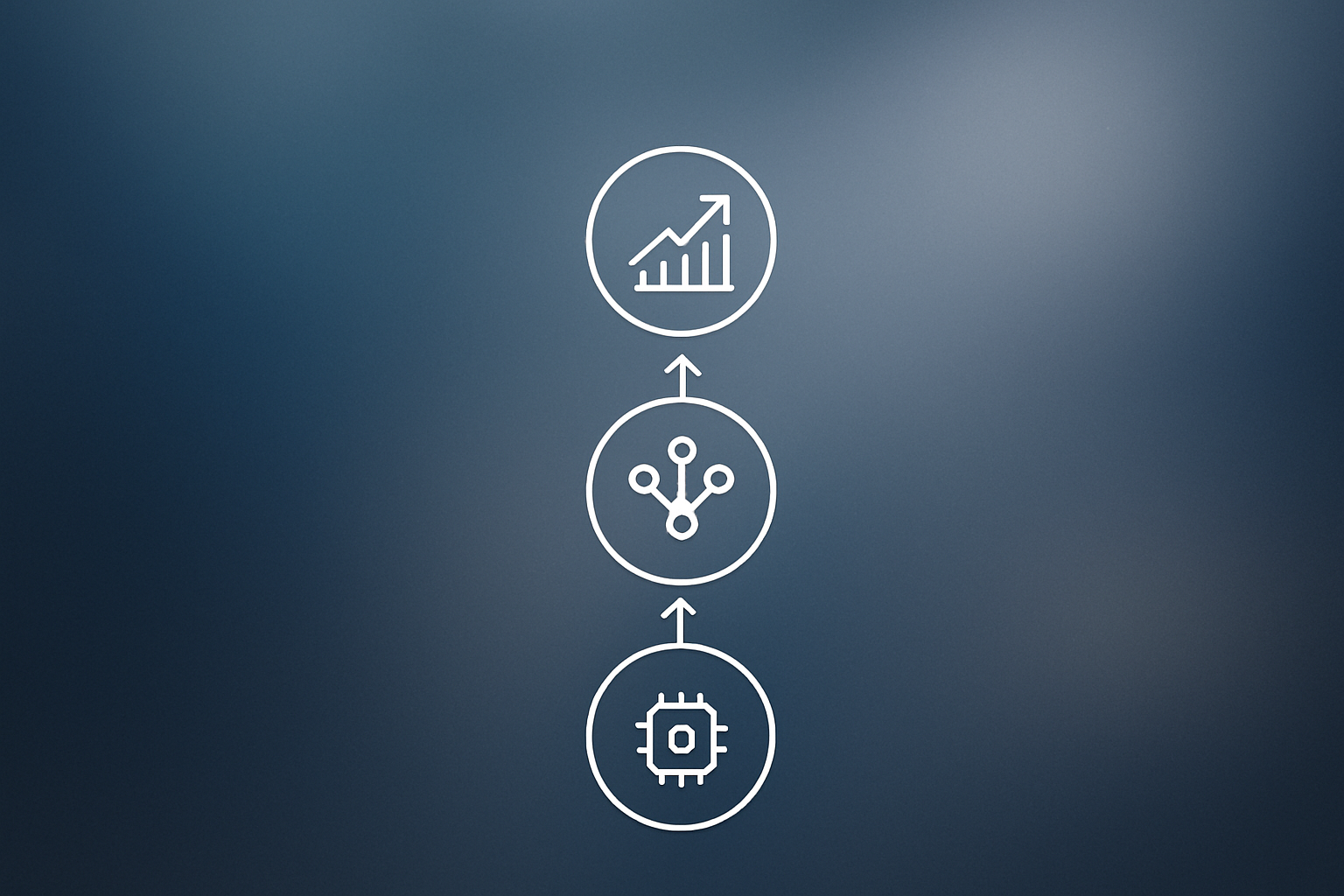
The system Anthropic calls the Automated Alignment Researcher (AAR) mirrors how a human researcher works. It scans available literature, proposes a training method, runs that method for 30 minutes, and then checks whether the benchmark score improved. Effective methods are kept; failed ones are dropped. The process repeats across several iterations, gradually raising the score on each target behavior.
The paper’s own conclusion is direct: “Overall, these results provide early evidence that automated alignment post-training could become practical in the near term.”
Why it matters
This research sits at the edge of what is called recursive self-improvement, where an AI system improves its own training process rather than waiting for human researchers to do it. If a model can fix its own alignment problems, the logical next step is that it could improve other aspects of its own training, which raises an obvious question about the long-term role of human AI researchers.
The paper does not avoid that question. It directly compares the AAR to human researchers and states that “human guided research directions do not lead to stronger performance.” That is a pointed claim from inside the lab doing the research.
For anyone following the broader AI market, this also matters on cost grounds. A 37x cost difference between automated and human research is the kind of number that changes budget decisions quickly, even if the system is still narrow in what it can do.
What are the real limits here?
The paper identifies two significant constraints worth keeping in mind before reading this as a story about human researchers becoming obsolete tomorrow.
- Benchmark quality: The AAR only improves what the benchmarks measure. If the benchmarks are a poor proxy for real-world alignment, the system gets better at the wrong thing.
- Benchmark maintenance: Creating, validating, and expanding the benchmarks still requires human judgment. The automated system depends on that upstream work.
- Literature dependency: The AAR draws from existing research literature. It does not generate fundamentally new ideas; it recombines and tests what is already known.
These are not minor footnotes. They define the boundary between a genuinely exciting research result and a fully autonomous AI research lab, which this is not yet.
Our take
The cost number is the most immediately practical data point here. $4 versus $150 per hour is not a rounding error. That ratio, if it holds up across more tasks, will pressure AI labs to shift headcount away from alignment research and toward benchmark design and infrastructure, which is a quieter job but arguably the more important one once systems like this are running.
For business owners watching AI costs, this is a signal that the compute-versus-labor tradeoff in AI development is moving fast. The same dynamic that made certain marketing and AI integration tasks cheaper to automate than to staff is now showing up inside AI labs themselves.
We are also watching how this connects to the broader trend of agentic AI systems, where models are given a task and tools and then left to run. If you want to understand what that looks like in practice for business workflows, our piece on access control for AI agents covers some of the infrastructure questions that come with it.
The honest summary: this is a real result, with real numbers, from a credible lab. It is also early and narrow. The gap between “improved 10 alignment benchmarks” and “AI that improves itself generally” is still large. Watch the benchmark methodology as closely as the headline numbers.
Frequently asked questions
What is Anthropic's Automated Alignment Researcher (AAR)?
The AAR is an AI system developed by Anthropic that searches research literature, proposes training methods, and trains models to fix misaligned behaviors automatically, without human researchers guiding each step. It improved all 10 alignment benchmarks it was tested against.
How does the Anthropic AAR compare to human researchers?
According to the paper, the best AAR method outperforms what experienced human researchers propose on average within six hours, and costs roughly $4 per hour in API inference compared to $150 per hour for a human researcher.
What is recursive self-improvement in AI?
Recursive self-improvement refers to an AI system that can improve its own training process, not just perform tasks. If a model can fix its own alignment, it may eventually improve other aspects of its own training, reducing dependence on human researchers.
What are the limitations of Anthropic's automated alignment system?
The AAR only works as well as the benchmarks it optimises against. If those benchmarks are poor proxies for real alignment, improvements are misleading. Creating and maintaining the benchmarks, and the literature the system draws from, still requires significant human effort.