The AI Workflow Trap: You’re Working More, Not Less
Solo founders using Claude, ChatGPT, and Gemini report working longer hours, not fewer. Here's what really happens when AI agents run your workflow.
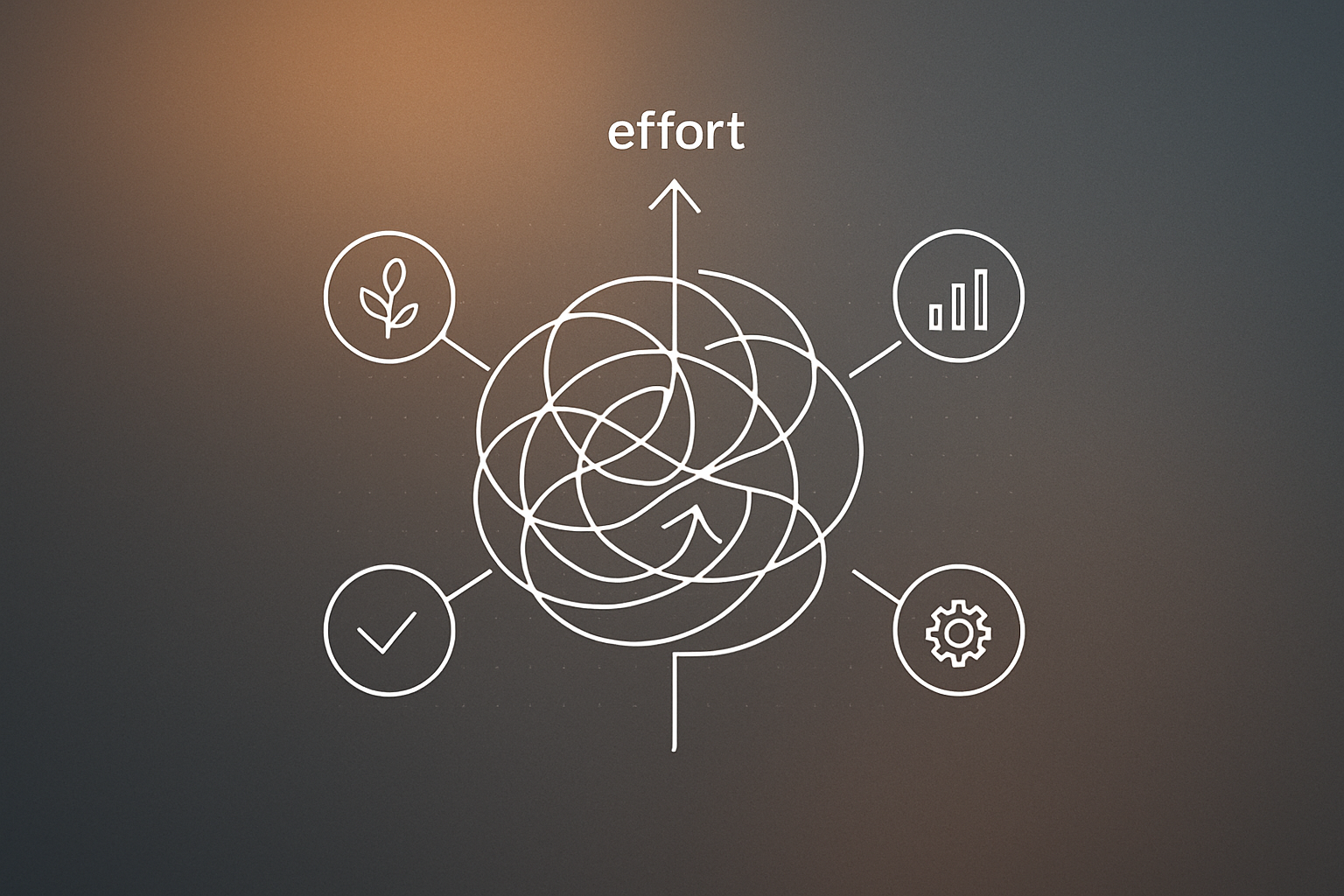
A growing number of solo founders and small-team operators run Claude, ChatGPT, and Gemini in parallel every day, briefing one tool while reviewing another's output. But the promised productivity windfall has a catch. Multiple founders interviewed by Mint describe working longer hours than before, with review, verification, and direction-giving filling the gaps that AI creates. The bottleneck has not disappeared. It has just moved.
What happened
| Detail | Fact |
|---|---|
| Watermark announcement | Anthropic said on 14 August that future Claude models will embed imperceptible watermarks in generated text, globally, to comply with the EU AI Act |
| Google DeepMind equivalent | Google DeepMind uses SynthID, a similar watermarking system, for text in the Gemini app |
| Reported daily hours | Akhilesh Bhamburkar, a tech solo-preneur based in Nagpur, says he works a minimum of ten hours a day, more than his previous corporate role |
| Concurrent agents | Aditya Malani, Bengaluru-based founder of Shopify development company Speedy Squirrel, typically runs two agents at the same time |
| Research concept | Sophie Leroy, professor at the University of Washington Bothell School of Business, calls cognitive carry-over between unfinished tasks “attention residue” |
The picture that emerges from Mint’s reporting is not the one AI vendors tend to advertise. Madhu Karuthedath, a 42-year-old solo founder of employer-brand consultancy The Quick Brown Fox Co. in Bengaluru, starts each morning with what he describes as a small control room. News-gathering tools feed summaries, Claude converts the previous day’s work into a prioritised checklist, ChatGPT handles brainstorming, Gemini critiques the output, and then Claude picks the refined brief back up for execution. The gap between each step is not rest. He is checking one tool, waiting on another, and briefing a third.
Phalgun Guduthur, 36, an independent product builder, uses Cursor and Claude to build features and analyse marketing. He is frank about the outcome: “I vehemently say it has made me cram more things into the same number of hours. I actually work a lot more now, as parked ideas move into the time saved.”
Why does AI make people busier, not less busy?
The answer is structural. When execution speeds up, the human in the middle becomes the constraint. Sankalp Sinha, 33, founder of map-based recruitment startup NextDoor.Company in Bengaluru, puts it plainly: “I have become my own bottleneck.” He spends more time reviewing completed work and supplying new direction. “AI can drive the car, but the human in the loop must hold the steering,” he says.
There is also a verification cost that tends to get ignored in productivity comparisons. Before AI, a developer searching Stack Overflow could read community votes and accepted answers to gauge whether a solution was trustworthy. AI output arrives fast but without that social filter. Bhamburkar notes that the need to verify at least slows down the spread of unchecked AI-generated content.
Sophie Leroy’s research on attention residue is relevant here. Her work found that people who switch from one unfinished task to another carry mental load from the first task into the second, and perform worse as a result. Running three or four AI agents at once multiplies exactly these unfinished loops. Guduthur admits his concern is that he moves too quickly to think decisions through properly.
The abundance problem
AI has also created what several founders describe as an abundance problem. Through vibe coding (building software by describing what you want in plain language rather than writing code directly), almost any idea now feels executable. But speed does not filter for the right ideas. Building the wrong thing faster is still building the wrong thing. The productivity gain shows up as capacity. The judgment about what to do with that capacity remains entirely human.
Malani describes his two agents as junior developers who need specific instructions. “The challenge right now feels like reviewing AI output and deciding what goes in,” he says. Priyanka Iyer, a 32-year-old principal engineer in Chicago, tries to stay in work mode the entire time an agent is running, comparing it to watching someone work continuously in front of you until the effort wears you out.
If you are thinking about integrating AI tools into your own business workflows, the real planning question is not which tool to use. It is how you will manage review, verification, and decision-making at higher throughput.
What the watermarking news means
Anthropic’s 14 August announcement that future Claude models will add imperceptible watermarks to generated text is a practical signal. The EU AI Act is driving this, and Google DeepMind’s SynthID system is already doing something similar for Gemini. As watermarking becomes standard, the boundary between AI-authored and human-authored content becomes traceable, which will affect how businesses use AI for client-facing copy, legal documents, and published content.
For context on how AI tools are evolving at the platform level, see our coverage of Google bringing Gemini voice AI to Gmail, Docs, and Keep.
Our take
The framing of “AI saves time” is not wrong, but it is incomplete. What these founders describe is a real pattern we see with clients too: AI compresses execution, which surfaces more decisions per hour, which fills the saved time almost immediately. The net result is often more output, not more rest.
The founders who seem to cope best treat AI agents the way a good manager treats a junior team: clear briefs, structured review cycles, and defined acceptance criteria before the work starts. The ones who struggle tend to run agents reactively and spend the saved seconds firefighting the output.
Watermarking is also worth watching. Once Claude and Gemini outputs are routinely detectable, clients, editors, and regulators will start asking harder questions about provenance. Start building internal habits around labelling and reviewing AI-generated work now, before the tools or the rules force it.
What to do about it
- Audit how many AI tools you currently run and map the review steps each one requires. Most people undercount the verification time.
- Write a short brief before you start any agent, including what “done” looks like. This reduces back-and-forth and attention residue from open-ended tasks.
- Block defined review windows rather than checking output the moment it arrives. Context-switching between tools mid-task compounds cognitive load.
- Plan now for watermarked content. Decide which outputs are client-facing and build a human-review step into those workflows before regulations require it.
- If the bottleneck is genuinely you, consider whether you need a structured automation layer that routes output through defined approval steps rather than relying on your attention to catch everything.
Running more AI tools without redesigning your review process just means more half-finished loops competing for the same human attention.
Frequently asked questions
Does using AI tools actually save time for solo founders?
Based on interviews with several solo founders, AI compresses individual task execution but fills the saved time with reviewing output, verifying accuracy, and directing the next step. Multiple founders report working ten or more hours a day, more than in previous corporate roles.
What is attention residue and how does it relate to AI workflows?
Attention residue is a concept from Sophie Leroy, a professor at the University of Washington Bothell School of Business. It refers to the cognitive carry-over when you switch from one unfinished task to another, which reduces performance on the next task. Running multiple AI agents simultaneously can multiply these unfinished mental loops.
Are Claude and Gemini adding watermarks to AI-generated text?
Anthropic announced on 14 August that future Claude models will embed imperceptible watermarks in generated text globally to comply with the EU AI Act. Google DeepMind already uses a similar system called SynthID for text produced in the Gemini app.
What is vibe coding?
Vibe coding means building software by describing what you want in plain language rather than writing the code yourself, with an AI agent handling the implementation. It lowers the barrier to starting projects but does not reduce the risk of building the wrong thing faster.