Shopping Ad CTR Is Up, But Impressions Are Falling. Here’s Why.
Shopping ad CTRs are rising while impressions fall. An ecommerce analyst links the pattern to Google AI Overviews filtering out lower-intent queries from ad auctions.
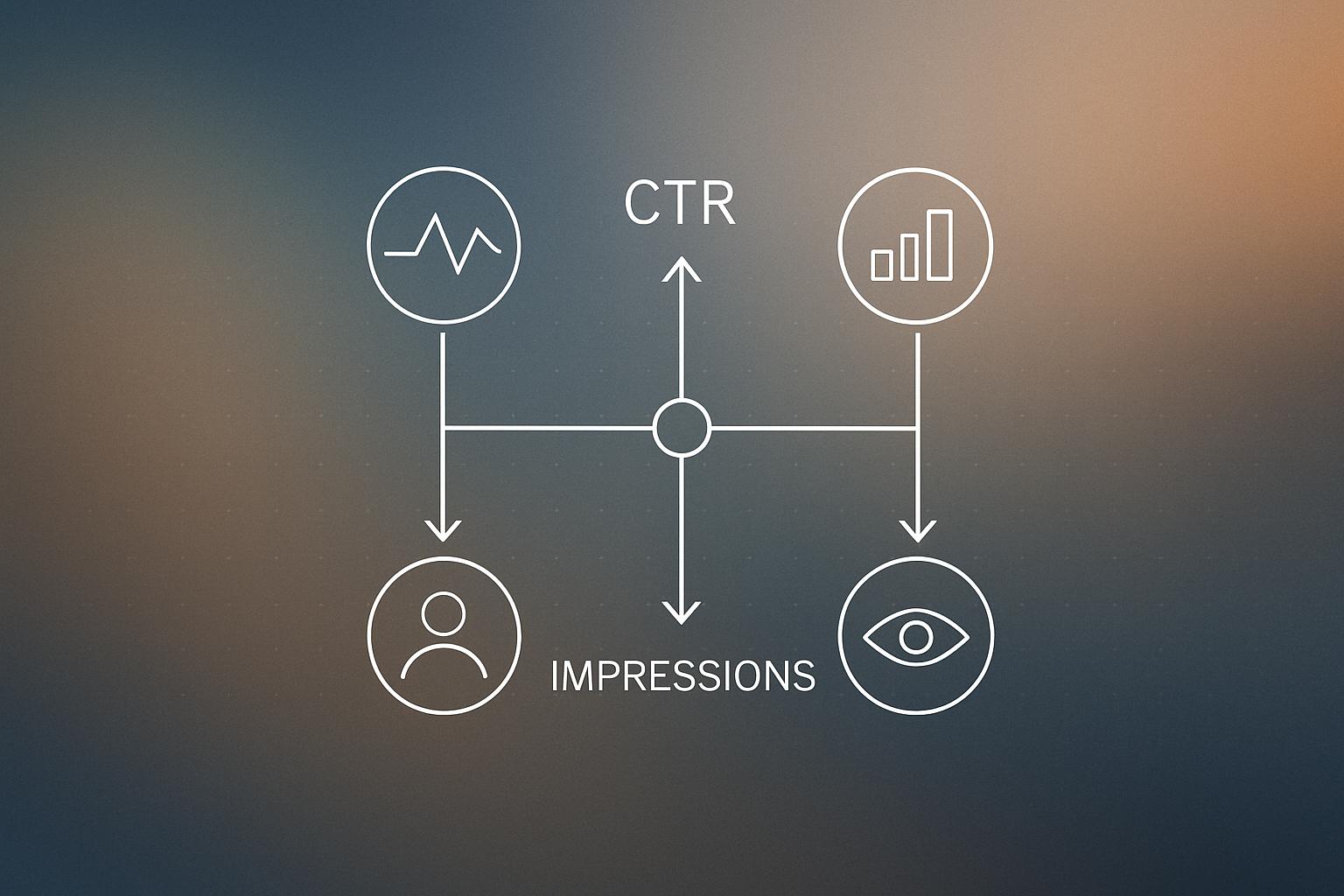
Shopping ad click-through rates are up roughly 17 to 20% year over year, but the reason is not what advertisers might hope. Mike Ryan, head of ecommerce at Smarter Ecommerce, found that across thousands of Shopping and Performance Max campaigns covering hundreds of accounts, impressions have dropped noticeably while clicks stayed relatively flat. His hypothesis: Google's AI Overviews may be absorbing lower-intent queries that would have generated Shopping ad impressions but rarely produced clicks, leaving the remaining inventory to look more efficient on paper.
What happened
| Signal | What the data shows |
|---|---|
| Shopping ad CTR change (year over year) | Up approximately 17-20% |
| Shopping ad clicks | Relatively flat or slightly down |
| Shopping ad impressions | Fallen more noticeably than clicks |
| Data source | Thousands of Shopping and Performance Max campaigns, hundreds of advertiser accounts (Smarter Ecommerce Market Observer + Optmyzr) |
Mike Ryan, head of ecommerce at Smarter Ecommerce, noticed Shopping CTRs climbing in his company’s Market Observer benchmark data. When separate data from Optmyzr showed a 17% year-over-year CTR increase that closely matched his own roughly 20% figure, he investigated further. The pattern held consistently: impressions were down, clicks were roughly flat, and CTR was rising as a mathematical result of the gap between them.
Rising CTR produced by shrinking impressions is not a sign of better ads. It is a sign that fewer searches are triggering Shopping ads at all.
Is AI Overviews causing Shopping ads to appear less often?
Ryan describes this as a “reverse crocodile effect.” In SEO, AI Overviews have created what he calls the crocodile effect: publishers gain impressions but lose clicks. For Shopping ads, the jaw appears flipped: fewer impressions, but a higher share of those impressions converting to clicks.
His hypothesis is that Google may be routing lower-intent queries toward AI Overviews rather than Shopping ads. If Google can predict that a query is unlikely to generate an ad click, it may serve an AI Overview instead, reserving Shopping placements for searches with stronger purchase intent. The result would be a smaller but more commercially concentrated pool of ad impressions.
He calls the broader dynamic “experience switching.” Google already serves very different Shopping layouts depending on the query. Anecdotally, Ryan says he rarely sees Shopping ads and AI Overviews coexisting on the same results page. It tends to be one or the other.
What this means for campaign performance measurement
Ryan is clear that this remains a hypothesis. The timing of the impression drop could be coincidental, AI Overviews could be contributing through a separate mechanism, or another factor entirely could explain the pattern. The data does not prove causation.
But the implication for how advertisers read their reports is concrete. If a higher CTR is partly a product of Google filtering the auction to show ads on fewer, more commercially intent-driven queries, then CTR benchmarks are no longer telling the same story they used to. A rising CTR alongside flat clicks and falling impressions should be read as a warning sign, not a success metric.
For businesses running Google Shopping or Performance Max campaigns, the metrics to watch closely are impression volume, absolute click counts, and overall traffic to product pages. CTR alone will mislead.
What comes next
Ryan expects the current either/or dynamic to be temporary. His view is that Google will move toward placing Shopping ads directly inside AI Overviews, turning what is now a split experience into a combined one. When that happens, advertisers may see impression volume recover as the two formats are no longer competing for the same page real estate.
Until then, the pattern is worth monitoring. For context on how AI features are reshaping organic search alongside paid, see our coverage of Google’s expanding AI surface area in search and desktop products.
Our take
Ryan’s framing is careful and honest: this is a pattern looking for a cause, not a confirmed finding. That caution is worth respecting. But the practical point stands regardless of the mechanism. If your Shopping CTR is up but your traffic and revenue are flat, the CTR number is noise. Dig into impressions first.
We’ve seen this play out with clients where headline metrics looked healthy while the underlying reach was quietly shrinking. The fix is not to chase CTR. It is to track impression share, monitor absolute clicks, and cross-reference with site analytics so a drop in ad-driven sessions shows up clearly. If you are unsure how your current tracking setup handles this, a proper review of your measurement and attribution stack is worth the time before Google’s AI formats evolve further.
What to do about it
- Open Google Ads and segment your Shopping and Performance Max campaigns by impressions over the past 12 months. Look for a consistent downward trend alongside rising CTR.
- Compare absolute click volume to the same period last year. If clicks are flat or down while CTR is up, the CTR gain is a denominator effect, not a performance gain.
- Check impression share and lost impression share (budget vs. rank) to rule out budget or bid changes as the cause.
- Cross-reference paid Shopping traffic in your analytics platform against product page sessions to confirm whether revenue exposure has changed.
- Avoid optimizing toward CTR targets in this environment. Focus bid strategies on conversion volume and return on ad spend instead.
Treat a rising CTR alongside flat clicks as a prompt to investigate, not a reason to celebrate.
Frequently asked questions
Why is my Google Shopping ad CTR going up but clicks staying flat?
If impressions are falling faster than clicks, CTR will rise mathematically even with no improvement in actual performance. Analyst Mike Ryan found this pattern across hundreds of advertiser accounts, with impressions dropping more noticeably than clicks.
Are AI Overviews hurting Google Shopping ads?
Mike Ryan at Smarter Ecommerce hypothesizes that Google may be serving AI Overviews for lower-intent queries instead of Shopping ads, reducing overall impression volume. He rarely sees Shopping ads and AI Overviews on the same page. However, he is clear this remains a hypothesis, not a confirmed finding.
What is the reverse crocodile effect in Google Shopping?
Ryan coined this term to describe the opposite of what AI Overviews do to organic publishers. In SEO, AI Overviews increase impressions but reduce clicks (the crocodile). For Shopping ads, it appears to be reversed: fewer impressions, but a higher CTR from those that remain.
Will Google put Shopping ads inside AI Overviews?
Ryan expects Google to eventually move from an either/or model (Shopping ads or AI Overviews on a given page) to a both/and model where Shopping ads appear directly inside AI Overviews. He sees the current pattern as a transitional phase.