AI Agents Change When Engineers Should Say Yes to Scope
GitHub Engineering argues that AI agents now make the debate about small features more expensive than building them. Here's what that means for scope decisions.
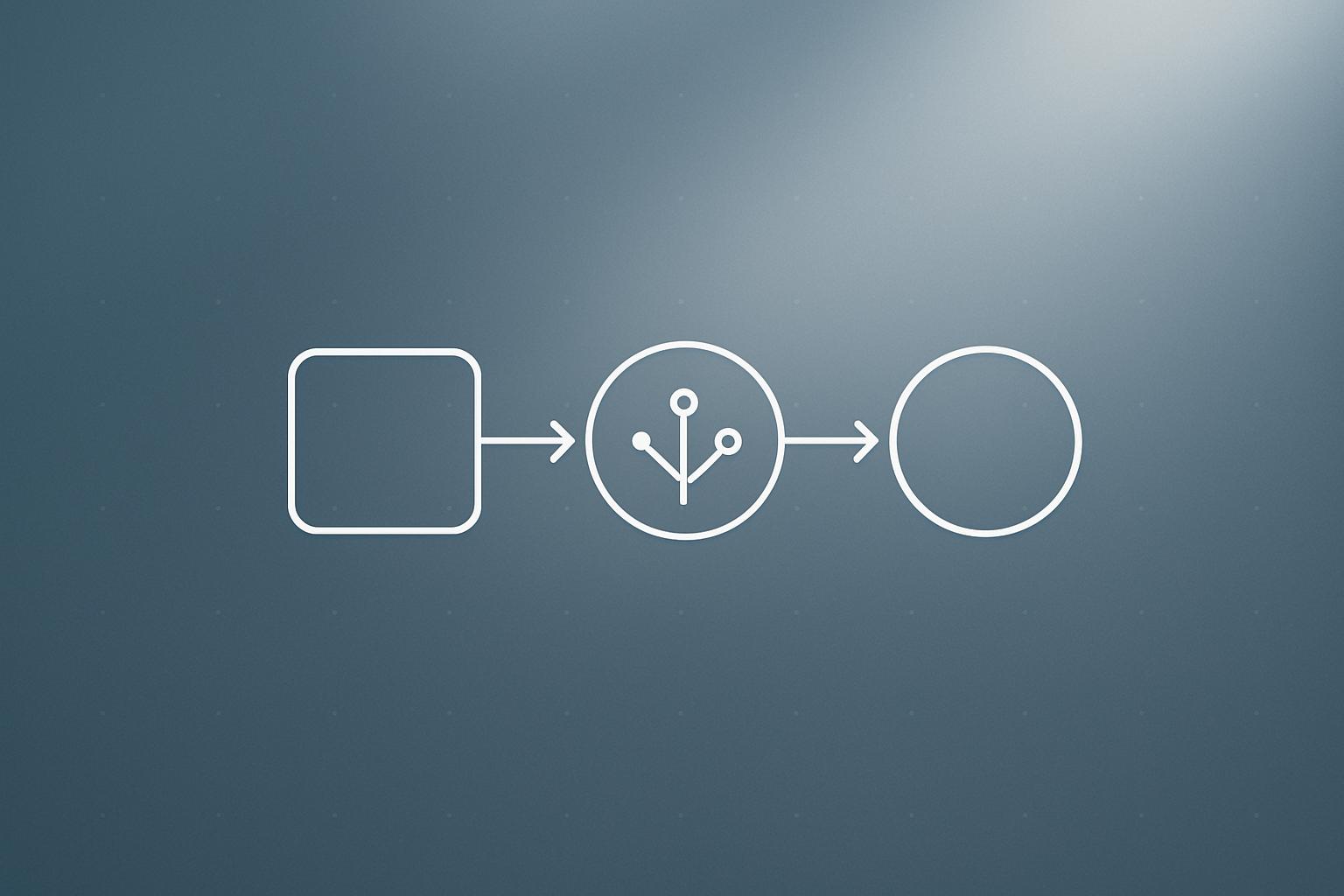
GitHub Engineering published a post arguing that AI coding agents have quietly broken a core engineering instinct: push back hard on small feature requests because implementation is expensive. For a specific class of low-risk changes, that is no longer true. An agent can produce a first patch in the time a Slack thread takes to warm up, which means the forty-minute scope debate now often costs more than the change itself. The post lays out a practical framework for telling those cheap changes apart from the ones that only look cheap.
What happened
GitHub Engineering published a piece arguing that the cost structure of small feature requests has shifted in a meaningful way. The most expensive part of a minor change used to be writing the code. For a specific class of tasks, that is no longer true.
The post illustrates this with a concrete example: a team spends forty minutes debating whether to surface a last_active_at timestamp (already stored in the backend) on a settings page. Nobody has actually tried it. An AI agent could have produced a first draft of that patch in roughly the same time the thread took to start.
| Old cost structure | New cost structure (AI-assisted) |
|---|---|
| Writing the first version of code | The meeting about whether to write the code |
| “Try it” meant pulling a developer off other work | “Try it” means handing an agent a bounded task |
| Scope discipline happens before implementation | Some scope discipline can move to the review stage |
| Abstract argument about risk and effort | Concrete diff to interrogate for risk and effort |
Why it matters
The first patch is a price check, not a deliverable
The key mental shift in the post is treating an agent-generated patch as a probe rather than a product. Once you have a real diff, you can ask better questions than “does this feel like scope creep?”
- Does the change touch the files you expected, or does it sprawl across multiple packages?
- Are the tests straightforward, or does the change resist being tested at all?
- Does it preserve existing abstractions, or quietly introduce a new product decision?
- Would you be comfortable owning this behavior six months from now?
If the last_active_at field comes back as a four-line diff with a passing test, ship it. If the same request surfaces as a change touching auth middleware, you have learned in thirty minutes what would have taken two days of debate to uncover.
Cheap to generate is not the same as cheap to own
The post is explicit about this distinction, and it matters. A thousand-line diff that technically passes but nobody wants to own is not a cheap change. It is a deferred cost. The dividing line is not “can an agent write this?” It is “can a person validate and own it?”
The post gives clear examples of what still carries a real ownership cost regardless of how simple the code looks:
- Changing authorization behavior
- Touching data-retention semantics
- Moving the public product contract
- Anything involving billing, privacy, or compliance
According to the post, AI lowers the cost of producing a candidate solution. It does nothing to lower the cost of owning one.
Constrained attempts replace open-ended planning
Rather than relitigating small changes in long threads, the post recommends asking for a constrained agent attempt with explicit guardrails:
- Produce the smallest possible patch.
- Keep it behind an existing feature flag.
- Do not change the public contract.
- Add or update tests.
- List every file touched and flag anything risky.
If the agent cannot produce a clean patch under those constraints, the request was larger than assumed and carries a real ownership cost before anyone commits. If it can, that is useful information too. Either way you have replaced “is this in scope?” with “here is what it costs, do we want to pay it?”
Our take
This is one of the more grounded takes on AI-assisted development we have seen. It does not claim agents replace engineers. It identifies a specific inefficiency (the pre-implementation debate) and explains how to use a cheap first draft to make that debate shorter and better-informed. That is practical.
The warning about ownership cost is the part most teams will skip over, and it is the part that matters most. We have seen this pattern with clients: a generated change passes review, gets shipped, and then becomes an undocumented behavior that nobody wants to touch six months later. The diff was cheap. The maintenance was not.
The framework also applies outside pure engineering teams. If you are working with an agency or a developer on AI integration for your business, the same logic holds: a quick prototype is a price check, not a commitment. Use it to decide whether the full build is worth funding, not as a shortcut to skip that decision entirely.
For teams already thinking about how AI agents can introduce unexpected risks, this framework is a useful complement: constrain the agent’s scope up front, and treat the output as evidence rather than an answer.
The practical takeaway: before your next scope debate, ask for a constrained patch first. If the diff is clean and small, the debate was already the most expensive part.
Frequently asked questions
How do AI agents change the cost of small software features?
According to GitHub Engineering, AI agents can produce a first draft of a small change in the time a team discussion takes to start. This means the debate about whether to build something can now cost more in time than actually building a candidate version to evaluate.
Should you let an AI agent decide which features to ship?
No. The GitHub Engineering post is explicit that using an agent-generated patch is about making human judgment cheaper and better-informed, not replacing it. A human still needs to review, own, and decide on every change.
What kinds of changes are still expensive even with AI assistance?
Changes that touch authorization behavior, data-retention semantics, billing, privacy, compliance, or the public product contract carry a high ownership cost regardless of how clean the generated code looks. Cheap to generate is not the same as cheap to own.
What constraints should you give an AI agent for a scoping probe?
The GitHub post recommends: produce the smallest possible patch, keep it behind an existing feature flag, do not change the public contract, add or update tests, and list every file touched with any risky areas flagged explicitly.