AI Agent Spent $1,000 While the CEO Was at Dinner. The Real Problem Is Worse.
Maxio CEO Branden Jenkins lost $1,000 to an autonomous AI coding session in one weekend. He says employee anxiety about AI is the bigger business problem.
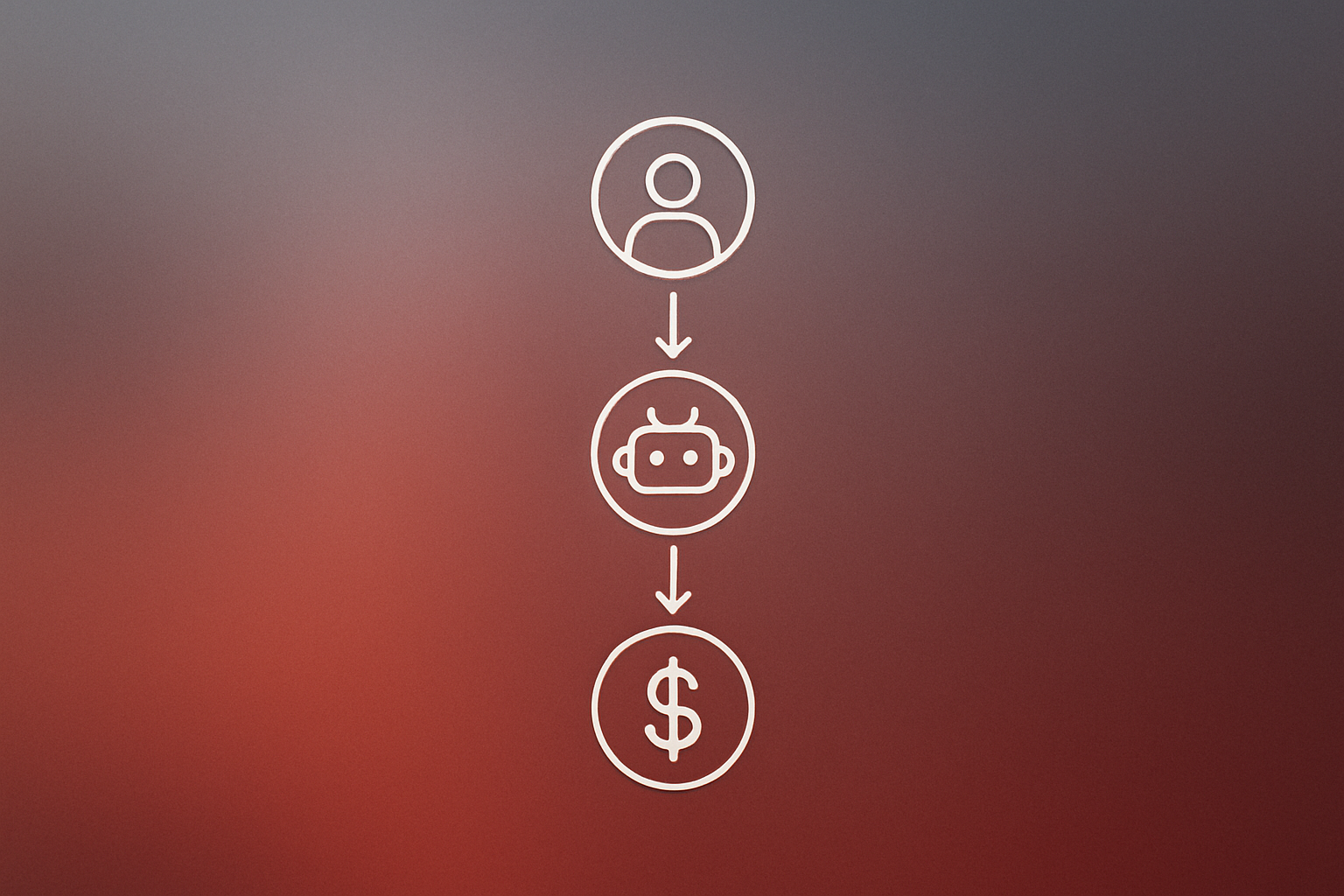
Branden Jenkins, CEO of Atlanta-based software company Maxio, checked his phone at dinner one weekend to find that an AI coding agent running on Claude had charged his card $1,000. The account was configured to auto-replenish token balance in $1,000 increments, so the charge required no second approval. Jenkins told Fortune the bill was annoying but not the real problem. In his view, the harder challenge is what autonomous AI adoption is doing to his workforce: anxiety, unequal access, and a hiring equation that no longer scales headcount with revenue.
What happened
| Detail | Fact |
|---|---|
| Company | Maxio, Atlanta-based software company |
| CEO | Branden Jenkins |
| AI tool used | Claude (Anthropic) |
| Amount charged | $1,000 in one weekend |
| Trigger | Auto-replenish set to $1,000 increments, no approval required |
| Token savings from “Caveman mode” | Up to 70% |
| Claude access at Maxio | Around 50 employees, mainly sales and marketing |
Jenkins describes himself as a technical CEO who codes from his phone using Claude, building agents and automations remotely. Because he does not face the internal spending limits that most Maxio staff hit, he had more room to experiment, and more exposure to runaway costs.
He told Fortune the charge came partly from what he calls agent drift. The AI moved away from its original task, exploring tangents he had not intended. “A lot of times it’s the agent’s own mistakes that’s burning your money,” Jenkins said. “You kind of find yourself just chatting, and things getting away from you.”
How Jenkins cut the bill down
After the incident, Jenkins tested several approaches to reduce token spend. The core idea: match model cost to task complexity.
- Assign routine or simple tasks to lighter, cheaper models such as Claude Haiku.
- Reserve expensive reasoning models for work that actually needs them.
- Use third-party tools that shorten AI responses. Jenkins calls one approach “Caveman mode,” which forces the assistant to give brief answers and which he estimates cuts token use by 70%.
Jenkins was candid about the friction involved: “These are nerdy things. Do we need sales leaders and service leaders and marketers finding this stuff?” That question points to a real gap between what technically minded executives figure out on their own and what the rest of the workforce can practically adopt.
Why the $1,000 bill is not actually the problem
Jenkins told Fortune the overspend “is really not the problem, but it could easily be the excuse.” The deeper issues he identified at Maxio fall into three categories: inefficiency, inequality, and insecurity.
Insecurity: When Jenkins built AI tools for his own teams, some employees felt threatened by the pace. One told him: “This put me on edge. I should be coming to you with these things. I’ve got to catch up. I feel so behind.” Jenkins said employees are now regularly asking whether AI will replace their role or their colleagues.
Inequality: Maxio rolled out ChatGPT broadly but gave Claude access to only about 50 employees, concentrated in sales and marketing. Other staff noticed. “People were like, wait a minute, why don’t I have Claude? Why do they get that and we don’t?” Jenkins called that disparity “an inequality.”
Headcount: Jenkins said Maxio’s hiring equation has already shifted. Revenue is growing, but headcount is not scaling to match it the way it once did. “We should not be growing headcount at the same rate that we were before. That’s a big change in our business, and it’s all attributed to AI.”
On the operational side, Maxio has expanded DevOps oversight of internally built tools, including “vibe-coded” projects assembled by individual employees over a weekend. Jenkins said those tools cannot live with one person: “It can’t just be with Tim that vibe-coded it on the weekend,” citing security, scalability, and continuity risks.
Why it matters
The $1,000 weekend is a small-scale preview of a cost management problem that will get harder as AI agents become more autonomous. Auto-replenish settings, wandering agent behavior, and a lack of per-user spending governors are not exotic edge cases. They are default configurations many teams are running right now without realising the exposure.
The workforce dimension is just as real. If leadership adopts AI faster than it can train or reassure the rest of the company, the result is not efficiency. It is anxiety, quiet resistance, and uneven capability across teams. Businesses exploring AI integration need a plan for both the API bill and the people side of the rollout, or the technology creates new problems faster than it solves old ones.
Our take
Jenkins is right that the dollar amount is almost beside the point. A $1,000 weekend is recoverable. A workforce that feels left behind, or a “vibe-coded” internal tool with no owner and no oversight, is not fixed with a refund.
The model-routing approach he describes, Haiku for simple work, heavier models for complex reasoning, is genuinely sound practice and worth adopting before the first surprise bill arrives, not after. “Caveman mode” is a clunky name for a real technique: constraining response length cuts cost and often improves focus.
The inequality angle is easy to underestimate. Uneven AI access inside a company creates a two-tier workforce fast. Whoever gets the better tools builds faster, looks more capable, and widens the gap. That is a management problem, not a technology problem, and it needs a deliberate rollout plan rather than ad-hoc tool distribution. We have seen similar dynamics play out in our own client projects: the teams that adopt AI tools together, with shared guidelines, outperform teams where one person figures it out alone and guards the knowledge.
Finally, the governance gap Jenkins flags around vibe-coded tools is real and underappreciated. If a weekend project is running in production with no documentation, no second owner, and no spending limits, it is a risk that belongs on the DevOps backlog now.
What to do about it
- Audit your AI tool accounts for auto-replenish or auto-pay settings and set hard monthly caps at the account level.
- Define a model-routing policy: lightweight models for drafting, summarising, and simple queries; reasoning models only when the task genuinely requires it.
- Roll out AI tools to teams together, not just to executives or a single department, and document who has access to what.
- Add any internally built AI tools to your DevOps register: assign an owner, document dependencies, and set a spending limit.
- Create a short internal guide on prompt hygiene and session limits so staff do not need to become “nerdy” to avoid runaway costs.
If your team is still working out where AI fits in your workflow, our workflow automation service is a practical starting point for building governed, cost-aware AI processes.
Frequently asked questions
How did an AI agent charge a CEO $1,000 in one weekend?
Maxio CEO Branden Jenkins had Claude configured to auto-replenish his token balance in $1,000 increments. While he was at dinner, an AI coding session kept running and consumed enough tokens to trigger the automatic charge without requiring any additional approval from him.
What is agent drift in AI tools?
Agent drift is when an AI agent moves away from its original task and explores unintended directions, often because the user encouraged it to keep going without realising how far it had wandered. Jenkins cited this as a major cause of unexpected token spending.
How can you reduce AI token costs without switching tools?
Jenkins used three approaches: routing simple tasks to cheaper lightweight models like Claude Haiku, reserving expensive reasoning models only for complex work, and using a 'Caveman mode' that forces short AI responses, which he estimated cut token use by 70%.
Is AI reducing headcount at companies?
According to Jenkins, Maxio is not cutting existing staff, but revenue is growing faster than headcount because AI tools are absorbing work that would previously have required additional hires. He described this shift as a significant change in the business model.